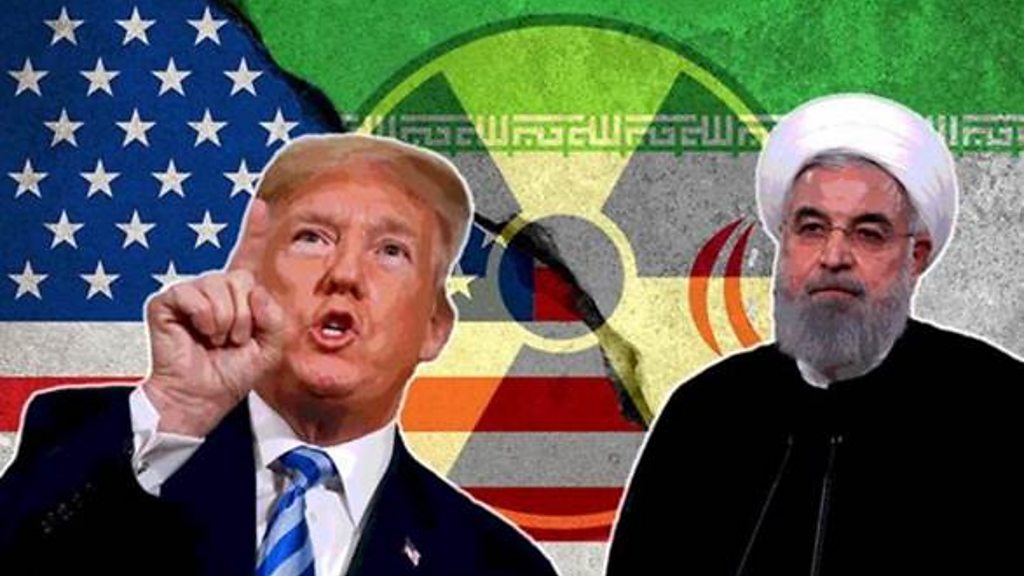
The escalation between the United States and Iran has revealed tangible negative effects on global financial markets, as stock markets experienced a sharp decline amid fears of escalating conflict between the two parties. These developments occurred at a sensitive time, with investors closely monitoring geopolitical developments.
In detail, tensions increased after officials from the United States indicated the possibility of new actions against Iran, while the latter responded with stern warnings against any intervention. These stances heightened uncertainty in the markets, which have already been suffering from multiple shocks over the past two years.
Event Details
According to financial reports, stocks on Wall Street fell immediately after the American statements. The decline affected various sectors, including energy and technology, reflecting a lack of confidence among investors. Economic sources also indicated that oil prices saw a limited increase as markets reacted to potential crisis fears, which could impact supply-demand balance.
The reciprocal statements between the United States and Iran recall a long history of ongoing conflicts between the two, which have witnessed tragic events over the past decades. This escalation reaffirms all of that and reminds us of the situation's seriousness in the Gulf region, which is considered one of the world’s major oil production centers.
Background & Context
Relations between the United States and Iran have severely deteriorated since the United States’ withdrawal from the nuclear agreement in 2018, which aimed to restrain the Iranian nuclear program. Following that, the United States imposed new sanctions on Iran, leading to a further decline in the economic conditions in the country.
Iran's response to American economic techniques has included a series of military skirmishes and escalatory rhetoric, posing a serious security challenge to the region. In recent years, we have witnessed an intensification of Iranian military activities in the region, involving support for armed groups in Iraq, Syria, and Yemen.
Impact & Consequences
These developments have profound implications for the global market, which is closely linked to oil prices. Due to increasing tensions, energy prices may rise unexpectedly, affecting inflation rates and the global economy in general. This surge could create pressures on governments and companies, which may have to face sudden changes in production and consumption costs.
Seeking stability in markets requires rapid adjustments from economic policymakers, who face pressures to create a secure investment environment. Undoubtedly, investors will be on the lookout for any new developments that might affect their investments.
Regional Significance
For Arab countries, the escalating tensions between the United States and Iran mean that regional security is at risk. Many countries in the region heavily depend on trade and oil; therefore, any escalation could negatively impact economic growth. Tensions could quickly spread to involve other Arab nations, especially those sharing borders or strategic interests with Iran.
In conclusion, the recent events will undoubtedly remain under scrutiny, particularly from investors and decision-makers who need to devise strategies to cope with increasing geopolitical risks.