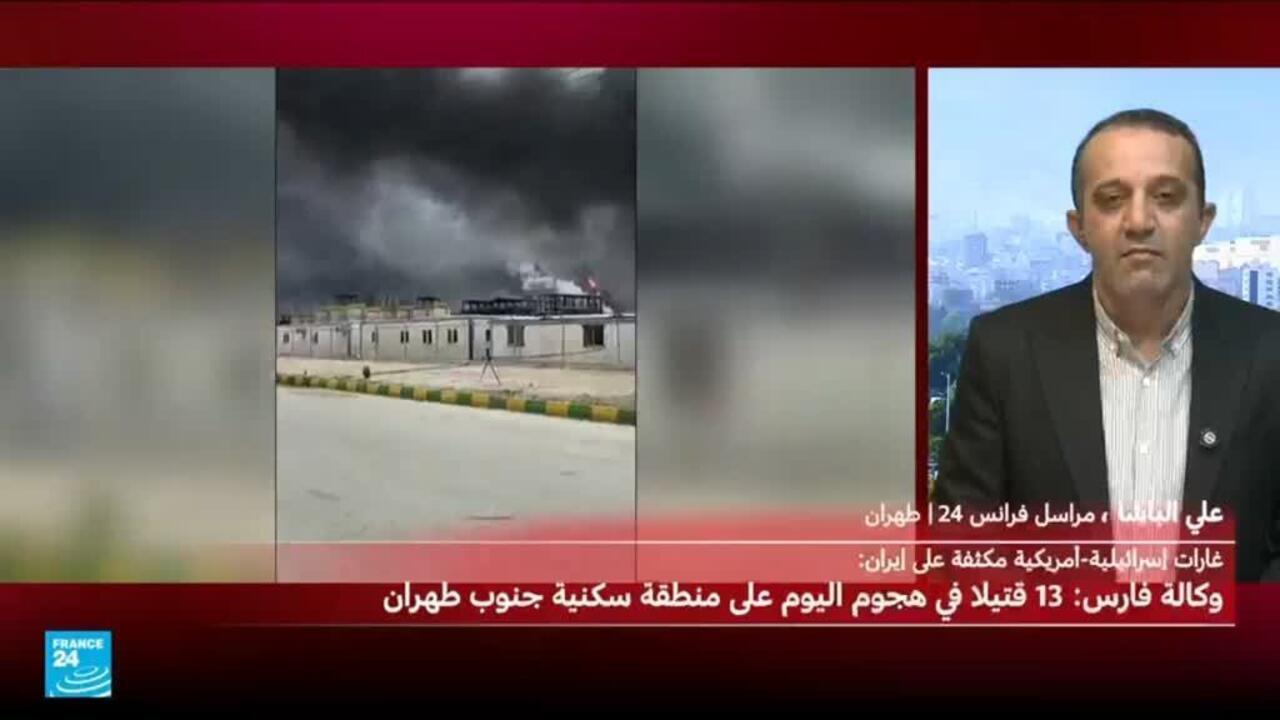
The Iranian Revolutionary Guard reported the death of Brigadier General Majid Khadami, the head of the Islamic Revolutionary Guard Corps intelligence, during U.S.-Israeli airstrikes that targeted various locations in Iran. The incident occurred early Monday morning, with the Revolutionary Guard describing the attack as "criminal and terrorist" by what it termed the American-Zionist enemy.
These airstrikes come at a time when the conflict has seen a significant escalation, with airstrikes continuing for over five weeks, resulting in thousands of casualties and severe damage to infrastructure. These events have greatly impacted the global economy, particularly with rising oil prices due to ongoing tensions.
Details of the Incident
According to available data, the airstrikes targeted a range of strategic sites in Tehran and other areas, leading to widespread destruction. Brigadier General Khadami was a prominent figure in the Revolutionary Guard and played a key role in Iranian intelligence operations. His death was announced via the Revolutionary Guard's channel on the Telegram app, highlighting the significance of the event in the Iranian context.
These strikes coincided with rising tensions between Iran and the United States, with Tehran accusing Washington of inciting violence in the region. The Revolutionary Guard indicated that these attacks would not go unanswered, further escalating tensions in the Middle East.
Background & Context
Historically, relations between Iran and the United States have been marked by increasing tensions since the Islamic Revolution in 1979. U.S. policies in the region, including economic sanctions and proxy wars, have exacerbated the situation. In recent years, pressures on Iran have intensified due to its nuclear program, making it a target for military strikes.
Additionally, Israel views Iran as an existential threat, prompting it to conduct preemptive military operations against Iranian targets. These complex dynamics contribute to the ongoing conflict and increase the likelihood of military escalation.
Impact & Consequences
The death of Brigadier General Khadami could have significant implications for Iranian intelligence operations, as the loss of a prominent figure in the Revolutionary Guard represents a severe blow to its intelligence capabilities. This event may also lead to military responses from Iran, increasing the chances of conflict escalation.
Economically, these developments could lead to further increases in oil prices, affecting global markets. Moreover, the continuation of the conflict may hinder peace and stability efforts in the region, exacerbating civilian suffering.
Regional Significance
Events in Iran directly affect Arab countries, as Iran is a key player in many regional conflicts. The escalation of tensions could have negative repercussions on security and stability in Iraq, Syria, and Lebanon, where Iranian-backed militias are present.
Arab nations may find themselves compelled to reassess their security and political strategies in light of these developments, potentially altering the balance of power in the region.
In conclusion, recent events in Iran reflect a serious escalation in the regional conflict, necessitating international intervention to contain the situation before it deteriorates further.