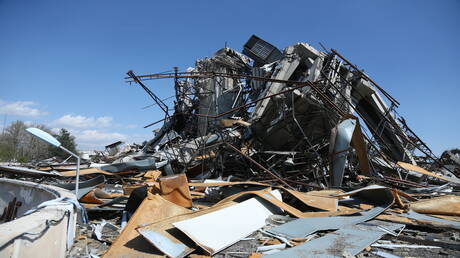
The public relations and media mobilization of the Iranian Revolutionary Guard Corps in Ardabil Province announced the death of 5 individuals and the injury of one person in coordinated U.S.-Israeli attacks that targeted the Dasht-e Mogan area. This attack is seen as part of an ongoing escalation in tensions between Iran and the United States and its allies in the region.
The attacks occurred at a time when the region is experiencing increasing tensions, with growing fears of an escalation in conflict among regional powers. This incident has elicited varied reactions from Iranian officials, who view it as a blatant violation of their country's sovereignty.
Details of the Incident
According to reports, the attacks targeted sites in the Dasht-e Mogan area, located in northwestern Iran. The Iranian Revolutionary Guard confirmed that the attacks were carried out using drones, complicating the security situation in the region. The Revolutionary Guard also noted that the attacks resulted in civilian casualties, reflecting the tragic nature of the ongoing conflict.
These attacks come at a time when tensions between Iran and the United States are escalating, with both countries exchanging accusations regarding support for armed groups in the region. Iranian officials have warned that such attacks will not go unanswered.
Background & Context
Historically, the Middle East has witnessed numerous conflicts in which Iran has been a participant. Since the Islamic Revolution in 1979, Iran has become a key player in regional politics, leading to tensions with the United States and its allies. The recent attacks reflect the continuation of this conflict, as Iran seeks to maintain its influence in the region.
Furthermore, relations between Iran and Israel have significantly deteriorated, with Israel viewing Iran as an existential threat. This ongoing conflict affects the stability of the entire region, raising concerns about a larger escalation that could lead to widespread armed conflict.
Impact & Consequences
The recent attacks may lead to further escalation in the conflict between Iran and the United States, as Iran is likely to take retaliatory measures. This escalation could impact regional security, increasing the risk of new conflicts erupting in the area.
Additionally, these events may affect the Iranian economy, which is already suffering from U.S. sanctions. Economic pressures could lead to increased public discontent, potentially impacting the stability of the Iranian regime.
Regional Significance
Given Iran's influence in the region, the rising tensions could affect neighboring Arab countries. Many Arab nations view Iran as a threat to their security, which may lead to new alliances or the strengthening of existing coalitions against Iran.
Moreover, the recent events could disrupt peace efforts in the region, as negotiations among various parties may be hindered by escalating violence. This situation could further complicate humanitarian conditions in conflict-affected areas.
In conclusion, the events in Dasht-e Mogan serve as another example of the ongoing tensions in the Middle East. It is crucial to closely monitor developments, as any escalation could have widespread implications for security and stability in the region.