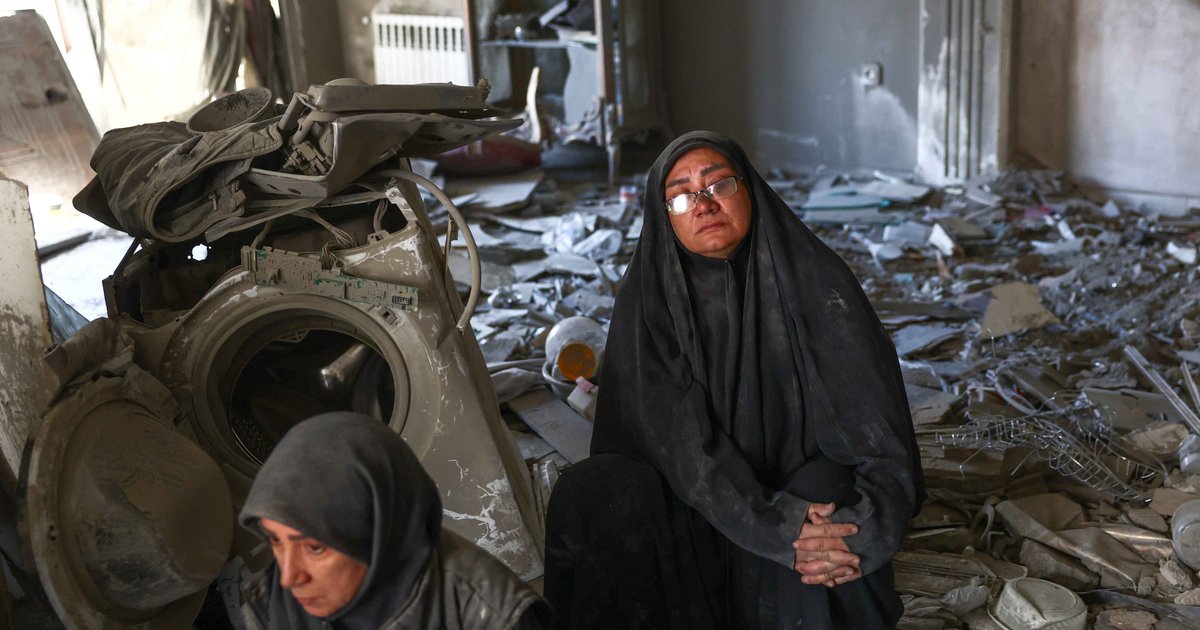
The US-Israeli airstrikes have persisted in the Iranian capital, Tehran, and its surroundings, targeting residential areas and vital infrastructure in recent hours, as reported by official Iranian media. These strikes have caused significant damage, affecting affluent areas in the northern part of the city, as well as neighborhoods near Mehrabad International Airport.
Reports have confirmed that the strikes were not limited to Tehran alone but extended to other cities such as Isfahan, Boroujen, Bushehr, and Abadan, where industrial and civil facilities, including steel plants, were targeted. Local sources indicated that a residential complex in Malard, west of Tehran, was also bombed, along with a building linked to the former US embassy complex.
Details of the Incident
Iranian authorities reported that the airstrikes targeted a pharmaceutical facility in Tehran, resulting in the complete destruction of production and research units, which was considered a significant blow to the national medical supply chain. These developments come at a sensitive time, as tensions escalate between Iran and the United States and its allies in the region.
The airstrikes targeting civil infrastructure have raised significant international concern, as targeting civilian facilities is a clear violation of international laws. Many observers have condemned these actions, pointing out that they could exacerbate the humanitarian situation in the country.
Background & Context
Historically, relations between Iran and the United States have seen increasing tensions since the Islamic Revolution in 1979, leading to multiple conflicts in the region. In recent years, military and political pressures on Iran have intensified, especially following the US withdrawal from the nuclear agreement in 2018.
The current airstrikes are considered part of a broader strategy aimed at undermining Iran's ability to develop its nuclear program and enhancing US influence in the region. This strategy also includes supporting US allies in the area, complicating the security situation further.
Impact & Consequences
The airstrikes targeting civil infrastructure will inevitably worsen the humanitarian situation in Iran, where citizens are already suffering from the effects of economic sanctions. The destruction of vital facilities such as factories and healthcare facilities will significantly impact people's daily lives and increase their suffering.
Moreover, these strikes may lead to an escalation of military tensions in the region, increasing the likelihood of new conflicts. Many are questioning how Iran will respond to these attacks and whether it will take escalatory steps against US forces or their allies in the region.
Regional Significance
These events are of great importance to Arab countries, as the rising tensions between Iran and the United States could affect the stability of the entire region. Many Arab nations, especially those sharing borders with Iran, are closely monitoring the situation, as any escalation could lead to direct security and economic repercussions.
In conclusion, the situation in Iran remains volatile and requires careful monitoring by the international community. The continuation of airstrikes could exacerbate humanitarian conditions and complicate relations between Iran and Western countries.