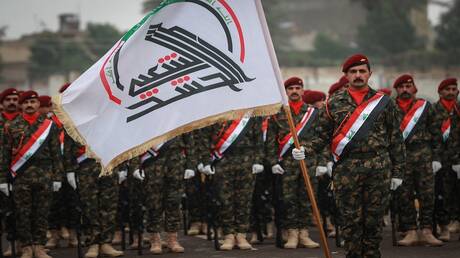
On Thursday, the Popular Mobilization Forces in Iraq announced that the fourth battalion of Brigade 14, operating in Nineveh, was subjected to a dual attack by U.S. and Israeli forces. This assault comes at a sensitive time as the region experiences increasing tensions, raising concerns about the future of security and stability in Iraq.
These strikes are part of a series of military operations targeting armed factions in Iraq, which the United States and Israel accuse of threatening their interests in the region. The authority confirmed that the attack resulted in material damage, but did not provide details on human casualties.
Details of the Incident
According to reports, the airstrikes targeted the fourth battalion while it was carrying out security operations in Nineveh, a region considered one of the strategic areas in Iraq. These strikes follow a period of relative calm, raising questions about their true motives.
Nineveh, which was a major center for ISIS, remains a sensitive area where armed factions still play a significant role in local security. Observers indicate that these strikes may be part of a broader strategy aimed at undermining the influence of the Popular Mobilization Forces in Iraq.
Background & Context
The Popular Mobilization Forces were established in 2014 in response to the emergence of ISIS and have achieved significant successes in combating the organization. However, the relationship between the Popular Mobilization Forces and the United States has seen increasing tensions, especially following the withdrawal of U.S. forces from Iraq.
Historically, there have been several attempts by the United States and Israel to target armed factions in Iraq, as these factions are viewed as threats to their interests in the region. These attacks have led to heightened tensions between Iraq and the United States, complicating the security situation in the country.
Impact & Consequences
These strikes raise questions about the future of the Popular Mobilization Forces and their role in Iraq. The authority has confirmed that it will respond to these aggressions, which could lead to military escalation in the region. Additionally, these events may affect relations between Iraq and the United States, potentially pushing the Iraqi government to adopt a more hardline stance against U.S. presence.
Furthermore, these strikes could lead to increased political polarization in Iraq, as some political forces may exploit these events to bolster their positions against the current government. This could exacerbate the political and economic crises in the country.
Regional Significance
The events in Iraq are indicative of increasing tensions in the region, where regional and international interests intersect in a complex manner. These strikes could heighten tensions between armed factions and Western countries, potentially impacting regional security overall.
Moreover, the escalation in Iraq could affect neighboring countries, potentially leading to an influx of refugees and increased terrorist activities. Thus, the situation in Iraq is not merely an internal issue but has far-reaching implications for security and stability across the entire region.
In conclusion, these events underscore the urgent need for comprehensive dialogue among all concerned parties to achieve stability in Iraq and prevent the exacerbation of crises in the region.