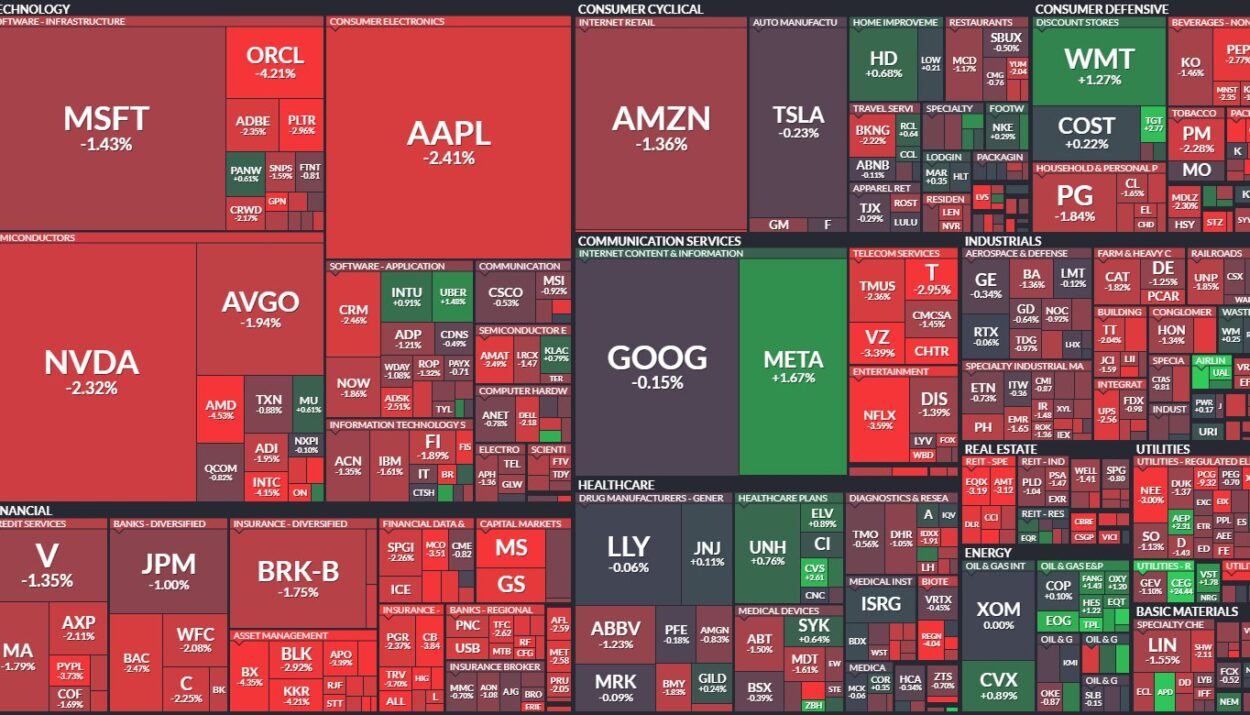
U.S. financial markets are showcasing a notable ability to adapt, avoiding significant downturns despite tough economic conditions. This resilience reflects the strength of the American economy and its capacity to confront crises. Amid global challenges, U.S. markets maintain stable levels, raising questions about the factors contributing to this positive response.
Reports indicate that the markets have not experienced significant declines, reflecting investor confidence in the economy's ability to recover and grow. While many other economies are facing sharp downturns, the United States remains positioned to capitalize on available opportunities.
Event Details
Recent data shows that most U.S. stock indices have not suffered major declines, indicating relative stability in the market. Despite challenges such as inflation and rising interest rates, investors remain optimistic about economic growth prospects. This optimism is attributed to a range of factors, including strong performance in the technology and financial sectors.
The U.S. government's response to economic crises, through stimulus packages and financial support, has also contributed to boosting confidence in the markets. This support is deemed essential for maintaining economic stability amid changing conditions.
Background & Context
Historically, the United States has faced numerous economic crises, from the Great Depression in the 1930s to the global financial crisis in 2008. However, U.S. markets have always been able to recover quickly, making them one of the most attractive markets for investors. This history of economic resilience is part of the American identity, as the country relies on innovation and adaptability to face challenges.
In recent years, technological advancements have transformed the financial markets landscape, with tech companies playing a pivotal role in driving economic growth. This shift demonstrates how technology can enhance the economy's ability to adapt to rapid changes.
Impact & Consequences
Analyses suggest that the continued strength of U.S. markets could have positive implications for the global economy. In an era of globalization, other countries' economies are closely linked to the U.S. economy, meaning that the stability of U.S. markets can contribute to fostering growth in other regions.
However, caution must be exercised regarding potential risks. If economic pressures, such as inflation or geopolitical crises, persist, markets could be negatively affected. Therefore, it is crucial to monitor developments closely to ensure market stability.
Regional Significance
U.S. markets are pivotal for Arab economies, as many countries rely on investments and trade with the United States. Given the relative stability of U.S. markets, Arab nations could benefit from investment flows and increased economic cooperation.
Moreover, the strength of the U.S. dollar may impact Arab economies, especially those dependent on oil exports. Thus, understanding the dynamics of U.S. markets can assist Arab countries in making strategic economic decisions.
In conclusion, U.S. financial markets demonstrate remarkable resilience in the face of challenges, reflecting the strength of the American economy and its adaptability. Investors and decision-makers in the Arab region should closely monitor these developments, as they can have far-reaching effects on the regional economy.