In a new escalation, a US official announced on Wednesday that the US military conducted airstrikes targeting a military site in Iran, where US forces downed four Iranian attack drones that posed a threat in the Strait of Hormuz.
According to the official, who preferred to remain anonymous, the targeted site was a ground control station located in Bandar Abbas, which was about to launch a fifth drone at the time of the strikes.
Details of the Incident
Iranian media reported three explosions in the area around 1:30 AM local time on Thursday, reflecting the scale of the blow dealt to the military site. The US airstrikes come at a sensitive time, as negotiations to end a three-month-long war continue, which has resulted in thousands of deaths and a sharp rise in global energy prices.
The US official confirmed that these actions are calculated and purely defensive, indicating that they aim to maintain the fragile ceasefire in place. In contrast, the Iranian Tasnim news agency quoted a military source stating that US forces fired upon land in Bandar Abbas following an encounter with the Iranian Revolutionary Guard.
Background & Context
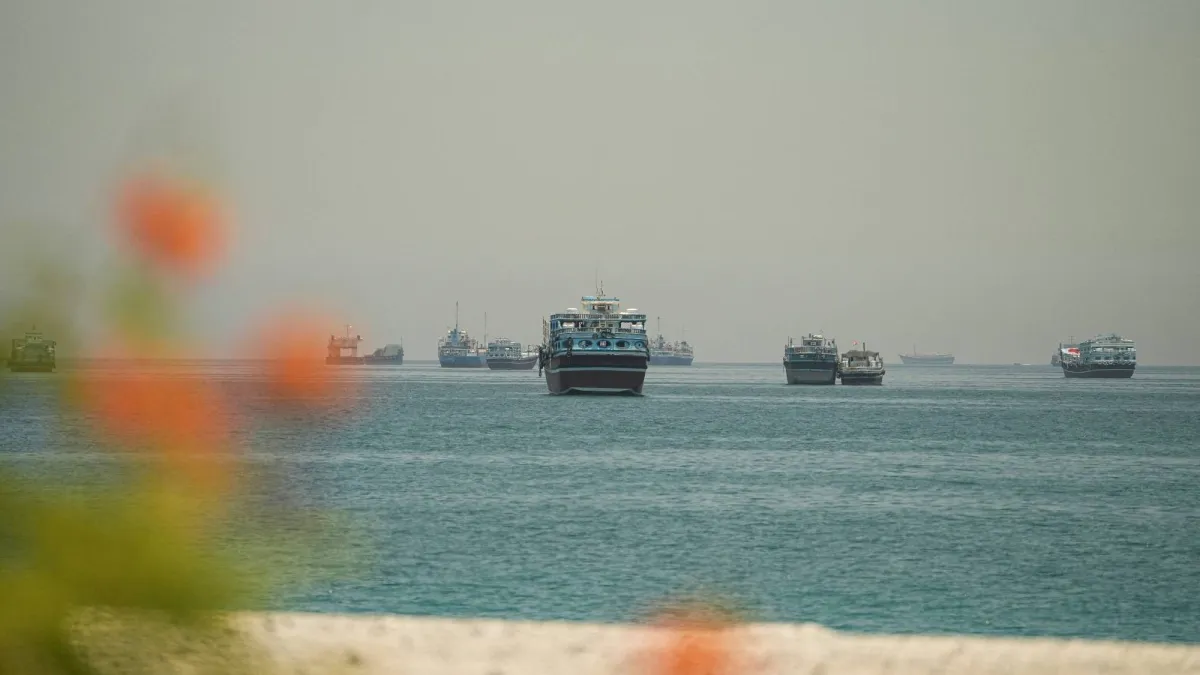
These airstrikes occur amid increasing tensions in the Strait of Hormuz, a vital waterway for oil shipments and global trade. The United States has previously launched strikes against Iran, which Tehran viewed as a violation of the ceasefire. US President Donald Trump denied Iranian reports that Iran and Oman would jointly manage navigation in the strait, asserting that the waterway would remain open.
Diplomatic pressures are mounting as negotiations continue, with Iran seeking guarantees from Washington following its withdrawal from the nuclear deal in 2015. An Iranian delegation recently visited Qatar for talks related to ending the war.
Impact & Consequences
The US strikes could lead to greater escalation in tensions between the United States and Iran, increasing the risk of a broader conflict in the region. Additionally, these events could significantly impact global oil prices, as any escalation in the area may lead to a noticeable rise in prices.
On the other hand, military pressures may push Iran to take a more hardline stance in negotiations, complicating the situation further. The continuation of military pressures could also affect the overall stability of the region.
Regional Significance
Arab countries are directly affected by the ongoing events in the Strait of Hormuz, as this passage is vital for oil trade. Any escalation in tensions could disrupt oil supplies and increase energy prices, negatively impacting Arab economies.
In conclusion, the situation in the region remains tense, with ongoing negotiations that may lead to unexpected outcomes. It is crucial to closely monitor developments, as any escalation could alter the balance of power in the region.