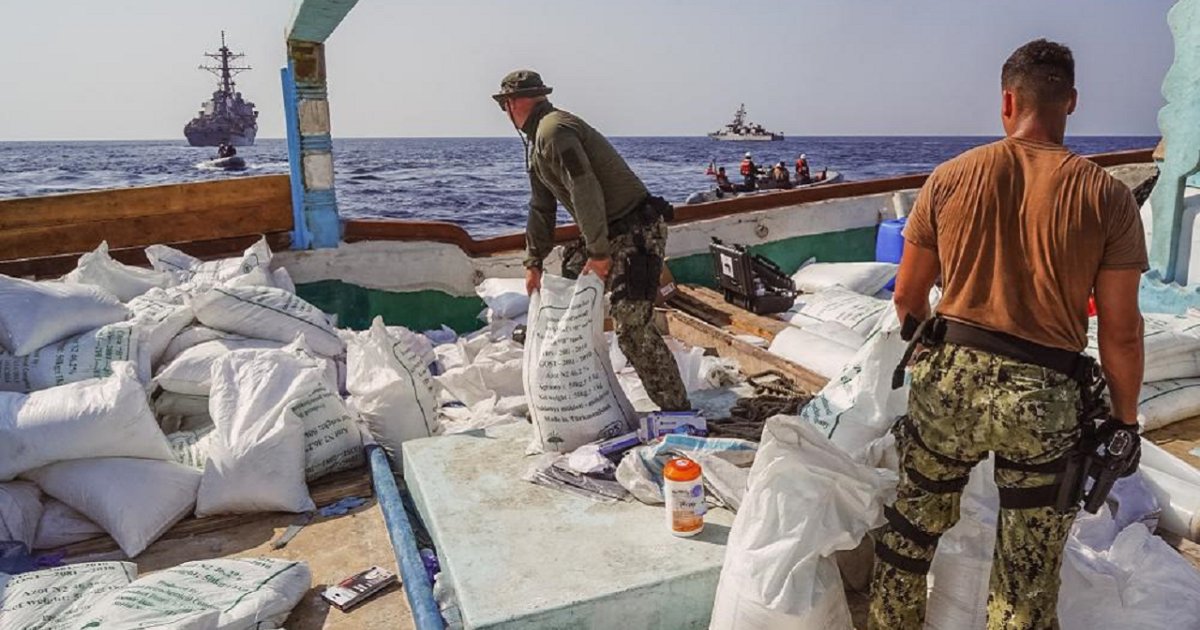
The US military announced late Saturday that it intercepted an Iranian oil tanker in the Arabian Sea, forcing it to return to Iranian ports. This action is part of the maritime blockade imposed by the United States on Tehran, aimed at reducing Iran's ability to export oil.
This step is considered part of the maximum pressure policy adopted by Washington against Iran, which includes a range of economic and military sanctions. US military sources confirmed that this operation is in the context of protecting American interests in the region and ensuring maritime safety.
Details of the Incident
According to statements from the US military, the operation was executed by an American destroyer and helicopter, which spotted the Iranian tanker while it was crossing in international waters. Warnings were issued to the tanker, which led to its forced return to its ports. Further details about the type of tanker or its cargo were not disclosed, but it is believed to have been carrying oil shipments.
This incident comes at a sensitive time, as tensions between the United States and Iran are escalating, especially following Washington's withdrawal from the nuclear agreement in 2018. This move also reflects the United States' commitment to enhancing its military presence in the region to counter potential threats.
Background & Context
Historically, US-Iranian relations have seen increasing tensions since the Islamic Revolution in 1979. These tensions have led to multiple economic sanctions imposed on Iran, significantly impacting its economy. Iran has responded to these sanctions by enhancing its military capabilities and expanding its influence in the region, further intensifying the conflict.
In recent years, Iran has developed its nuclear programs, raising concerns within the international community. The United States and its allies have attempted to impose restrictions on Iranian oil exports as part of their strategy to pressure Tehran.
Impact & Consequences
This incident could escalate tensions in the region, as Iran may respond to these actions in various ways, including increasing military activities in the Arabian Gulf. Additionally, these events could affect global oil prices, as any escalation in the region could raise concerns about oil supply.
Moreover, this incident may impact relations between the United States and its allies in the region, as some allies may feel uneasy about the rising military tensions. Washington must balance its pressure on Iran with the need to maintain regional stability.
Regional Significance
This incident is significant for the Arab region, as any escalation in tensions between the United States and Iran could affect security and stability in Gulf countries. Arab nations that rely on oil may also be impacted by fluctuations in oil prices resulting from these events.
At the same time, some regional parties may exploit these tensions to enhance their influence in the area, complicating the political landscape further. Arab countries must be prepared to face any potential repercussions resulting from these developments.
As the situation in the region remains tense, the United States continues to implement its strategy against Iran. It is crucial to closely monitor developments, as any escalation could significantly impact security and stability in the region.