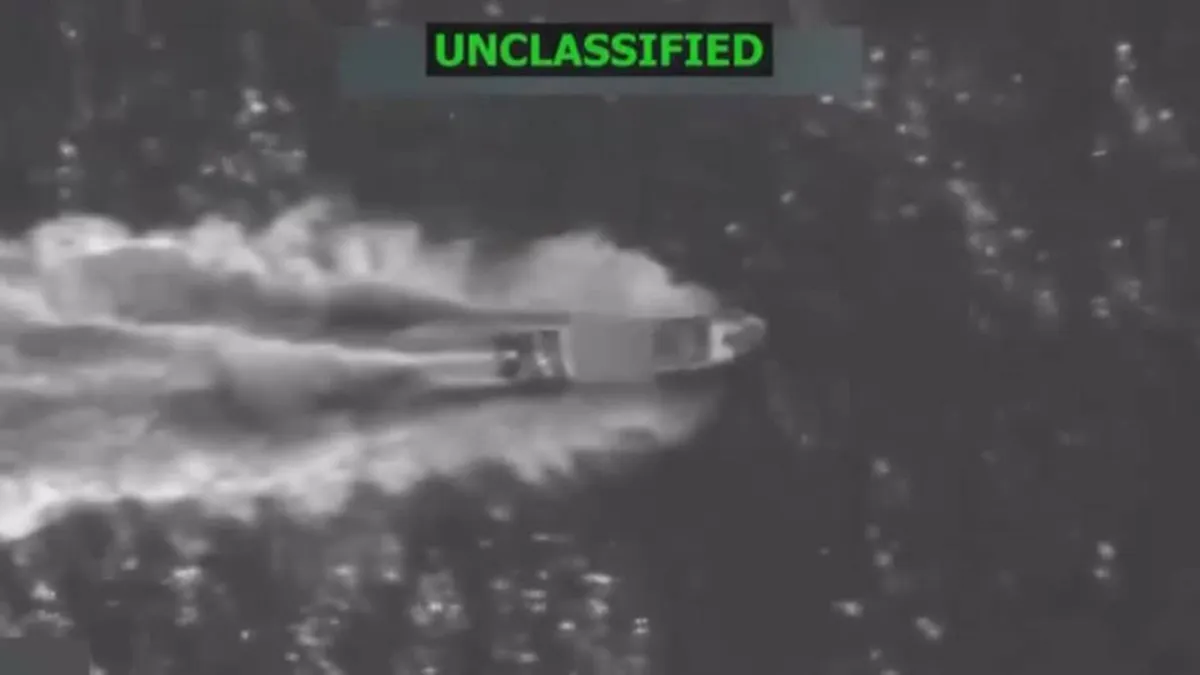
The US military announced on Wednesday that two men were killed in the eastern Pacific as part of an ongoing military campaign targeting boats suspected of involvement in drug smuggling operations. This strike is part of Washington's efforts to combat drug trafficking, which has resulted in the deaths of approximately 200 people so far.
The US Southern Command reported via X that the targeted boat was "involved in drug trafficking operations," indicating that the deceased were "terrorist drug dealers." It also mentioned that a previous strike resulted in the death of another individual, while two others survived at sea, with no information provided by the US Coast Guard regarding their condition.
Details of the Incident
The United States continues to carry out airstrikes in the Pacific and Caribbean regions, targeting boats believed to be participating in drug smuggling. The death toll from these military operations has reached at least 195, according to a count by Agence France-Presse. However, the US administration has not provided conclusive evidence proving the involvement of these boats in smuggling activities, raising debates about the legality of these operations.
Experts and officials from the United Nations have condemned these strikes, arguing that they may amount to arbitrary killings. Additionally, US media reported that an internal oversight body within the Pentagon will conduct an investigation into the legality of these operations.
Background & Context
These strikes come at a time when concerns are growing about the impact of drug smuggling on domestic security in the United States. Washington has increased its efforts to combat this phenomenon, especially amid rising activity from drug trafficking gangs in the region. These operations are part of a broader strategy to combat organized crime, but criticisms are mounting regarding the methods used to execute these operations.
Historically, the region has witnessed similar military operations, with the United States intervening militarily in several Latin American countries to combat drug smuggling. However, these operations often spark debates about human rights and legal legitimacy.
Impact & Consequences
These strikes raise questions about the effectiveness of the US strategy in combating drug smuggling, as some believe that the use of military force may exacerbate the situation instead of improving it. The lack of clear evidence regarding the involvement of the targeted boats in smuggling intensifies the criticism.
On the other hand, these operations may escalate tensions between the United States and the countries involved, especially if they are viewed as violations of sovereignty. This situation reflects the complex challenges facing Washington in its foreign policy, particularly in a region that is sensitive both geographically and politically.
Regional Significance
Although this event pertains to the Pacific, its repercussions may affect the Arab region, especially amid increasing international tensions. US military operations could lead to greater divisions among countries, negatively impacting regional cooperation efforts to combat organized crime.
In conclusion, the question of the legality of these military operations remains, necessitating a transparent investigation to ensure that human rights are not violated in the fight against drug smuggling.