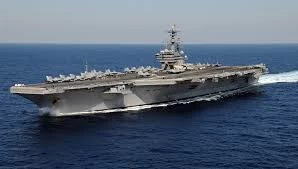
On the 33rd day of the war against Iran, US sources revealed the deployment of the USS George H.W. Bush aircraft carrier to the Middle East, accompanied by three destroyers, reflecting a military escalation in the region. The carrier strike group includes over 6,000 sailors, enhancing the US military presence in the area.
Reports also confirmed that thousands of soldiers from the 82nd Airborne Division have started arriving in the Middle East, with a significant portion of these troops being part of a pre-planned rotation. However, approximately 1,500 paratroopers were urgently sent to the region last week.
Details of the Deployment
Although the US administration has not disclosed the missions of these forces, the 82nd Division is trained to parachute into hostile or contested territories, aiming to secure vital sites and airfields. Additionally, a US Navy ship carrying around 2,500 Marines has arrived in the region, with plans to deploy 2,500 more.
These reinforcements come at a time when pressures on US forces deployed in the region are increasing, as US Secretary of Defense Pete Hegseth has avoided answering questions regarding the use of ground troops against Iran. Hegseth emphasized the importance of not informing the adversary of what the US military is prepared for, asserting that the goal is to reach an agreement with Tehran through negotiations.
Background & Context
These developments coincide with rising tensions in the region, where the world's largest aircraft carrier, the USS Gerald Ford, experienced a fire in its laundry room on March 12, forcing it to leave the Red Sea and return to the Mediterranean for necessary repairs. The fire caused damage to seven sleeping quarters within the ship, forcing hundreds of sailors to seek alternative sleeping arrangements.
Currently, the Ford carrier is stationed in Croatia for rest, and naval leaders have confirmed that its deployment will set a record for duration. It is expected that the carrier will enter the eleventh month of operations, meaning it will return to Norfolk, Virginia, around the end of May.
Impact & Consequences
These US military movements in the Middle East indicate an increasing readiness to confront any potential escalation from Iran, which may affect regional security dynamics. Additionally, these reinforcements come at a sensitive time as the US administration seeks to achieve its strategic objectives in the region.
Concerns are growing that any military escalation could exacerbate conditions in the area, potentially impacting the security and stability of neighboring countries. Furthermore, these events may reshape political and military alliances in the Middle East.
Regional Significance
These developments are particularly significant for Arab countries, as Arab governments closely monitor US military movements in the region. These reinforcements could heighten tensions between Iran and Arab states, especially those sharing borders with Iran.
In conclusion, the situation in the Middle East remains unstable, with ongoing military and political pressures. Arab countries must be prepared to deal with any potential repercussions resulting from these military movements.