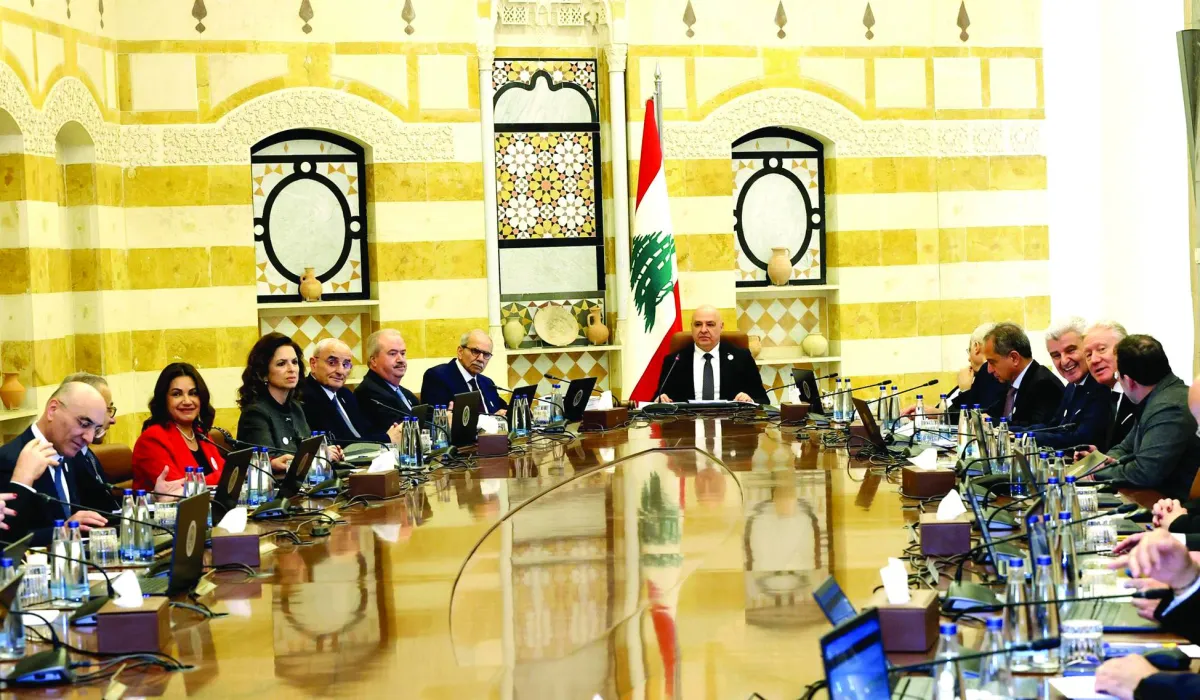
The US Treasury Department has imposed new sanctions on Lebanese and Iranian figures associated with Hezbollah, reflecting an escalation of pressure on the Lebanese state and its security institutions. These sanctions come just before a crucial security meeting in Washington, raising questions about the future of security cooperation in Lebanon.
The recent sanctions were not merely a transient political measure but carried deep implications indicating a shift in the United States' strategy towards Lebanon. For the first time, these sanctions targeted officials in official security institutions, reflecting Washington's concern over the lack of implementation of government decisions related to controlling illegal weapons.
Details of the Sanctions
The announced sanctions include prominent figures such as the Iranian ambassador in Beirut, Mohammad Reza Sheibani, members of Hezbollah, as well as officers in the Lebanese Army and General Security. This step comes at a time when international pressure on Lebanon to fulfill its security commitments is increasing, placing the Lebanese state before significant challenges.
Lebanese ministerial sources expressed their astonishment at the timing of these sanctions, noting that there had been no indications of such a move. They considered that these sanctions could negatively impact the course of negotiations with Washington.
Background & Context
Historically, the United States has relied on sanctions as a tool to pressure Hezbollah and its allies, but this time it seems the message is directed straight at the Lebanese state. The sanctions reflect Washington's concern over the inability of Lebanese security institutions to implement decisions related to controlling arms, which threatens stability in the region.
Dr. Sami Nader, head of the Levant Institute for Strategic Affairs, confirmed that the sanctions target what could be termed the 'deep state' in Lebanon, pointing out that the problem lies in the failure to implement security decisions within official institutions. Washington believes that there are entities within the state obstructing the implementation of these decisions, allowing Hezbollah's influence to persist.
Impact & Consequences
The US sanctions could exacerbate the situation in Lebanon, increasing pressure on the Lebanese government to fulfill its security obligations. Additionally, this step may deepen internal divisions, as the government will find itself in a difficult position between international commitments and local pressures.
The Lebanese military leadership confirmed that all officers and military personnel are performing their national duties with professionalism, emphasizing their loyalty to the military institution and the nation. In contrast, Hezbollah considered these sanctions an attempt to intimidate the Lebanese people, asserting that they would not affect its choices.
Regional Significance
These developments come at a sensitive time for the region, where international pressures on Arab countries to adopt stricter stances towards armed groups are increasing. The US sanctions may affect relations between Lebanon and Western countries, reflecting the growing tensions in the region.
In conclusion, the recent US sanctions appear to represent a shift in American strategy towards Lebanon, placing the Lebanese state before new challenges related to sovereignty and security. This step could impact the course of events in the region, especially amid ongoing tensions between regional and international powers.