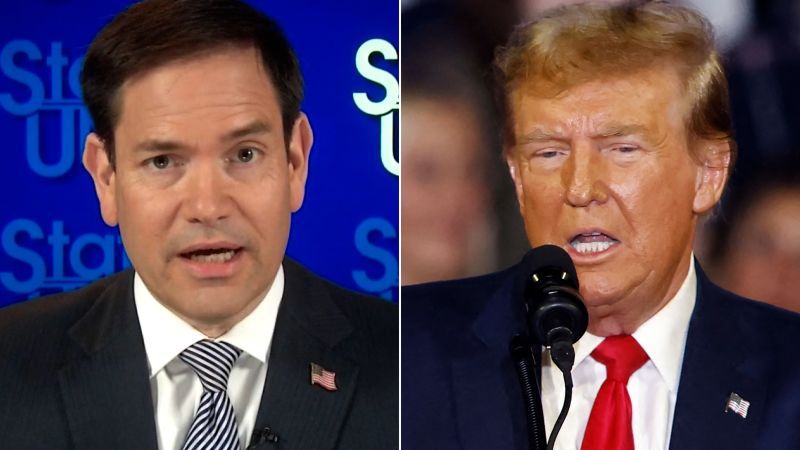
U.S. Secretary of State Marco Rubio announced on Tuesday that the United States "will need to reassess" its relationship with the North Atlantic Treaty Organization (NATO) after the military conflict against Iran concludes. During an interview with Sean Hannity on Fox News, Rubio emphasized that this review will be essential to determine NATO's value to U.S. interests.
Rubio noted that he has been a strong advocate for NATO during his time in the Senate, seeing significant value in the presence of American military bases in Europe, which allow the U.S. military to "project power in various regions of the world." However, he questioned NATO's utility if member states refuse to allow the United States to use those bases to defend its interests.
Details of the Statement
Rubio's remarks come at a critical juncture, as several European countries have imposed restrictions on the use of American military bases. For instance, it was revealed that Italy prevented an American aircraft from landing while en route to the Middle East for a combat mission, while Spain closed its airspace to American planes conducting operations against Iran. These developments raise questions about NATO's effectiveness as a military alliance under such constraints.
Rubio added, "If we are at a point where NATO means we cannot use those bases, and we cannot defend American interests, then NATO becomes a one-way street." These statements reflect growing concern in Washington regarding the commitment of European allies to support American military operations.
Background & Context
NATO was established in 1949 as a military alliance aimed at enhancing collective security among member states, particularly in response to Soviet threats during the Cold War. Over time, NATO has evolved to include new missions, such as military interventions in conflict zones like the Balkans and Afghanistan.
However, recent years have seen a divergence in positions between the United States and its European allies, especially following the administration of former President Donald Trump, who criticized member states for not spending enough on defense. These criticisms have affected relations within NATO and raised questions about the future of the alliance.
Impact & Consequences
If Rubio's proposed reassessment is implemented, it could lead to significant changes in U.S. foreign policy towards NATO. Such changes may impact the military balance in Europe, where many European nations rely on American protection in the face of increasing threats from Russia and others.
Furthermore, a reduction in American support for NATO could heighten tensions among member states, potentially weakening the alliance and affecting regional security stability. Should restrictions on military base usage persist, the United States may find itself compelled to reevaluate its military strategies in Europe.
Regional Significance
The U.S. relationship with NATO has direct implications for conditions in the Arab region, especially amid ongoing conflicts in the Middle East. Any changes in U.S. policy towards NATO may affect American support for Arab states facing regional threats, such as Iran.
Additionally, a decline in American commitment to NATO could open the door for other powers to enhance their influence in the region, potentially leading to a reshaping of regional alliances. Under these circumstances, Arab states must be cautious in evaluating their relationships with major powers.
In conclusion, Rubio's statements reflect a potential shift in U.S. policy towards NATO, raising questions about the future of the alliance and its impact on regional and international security.