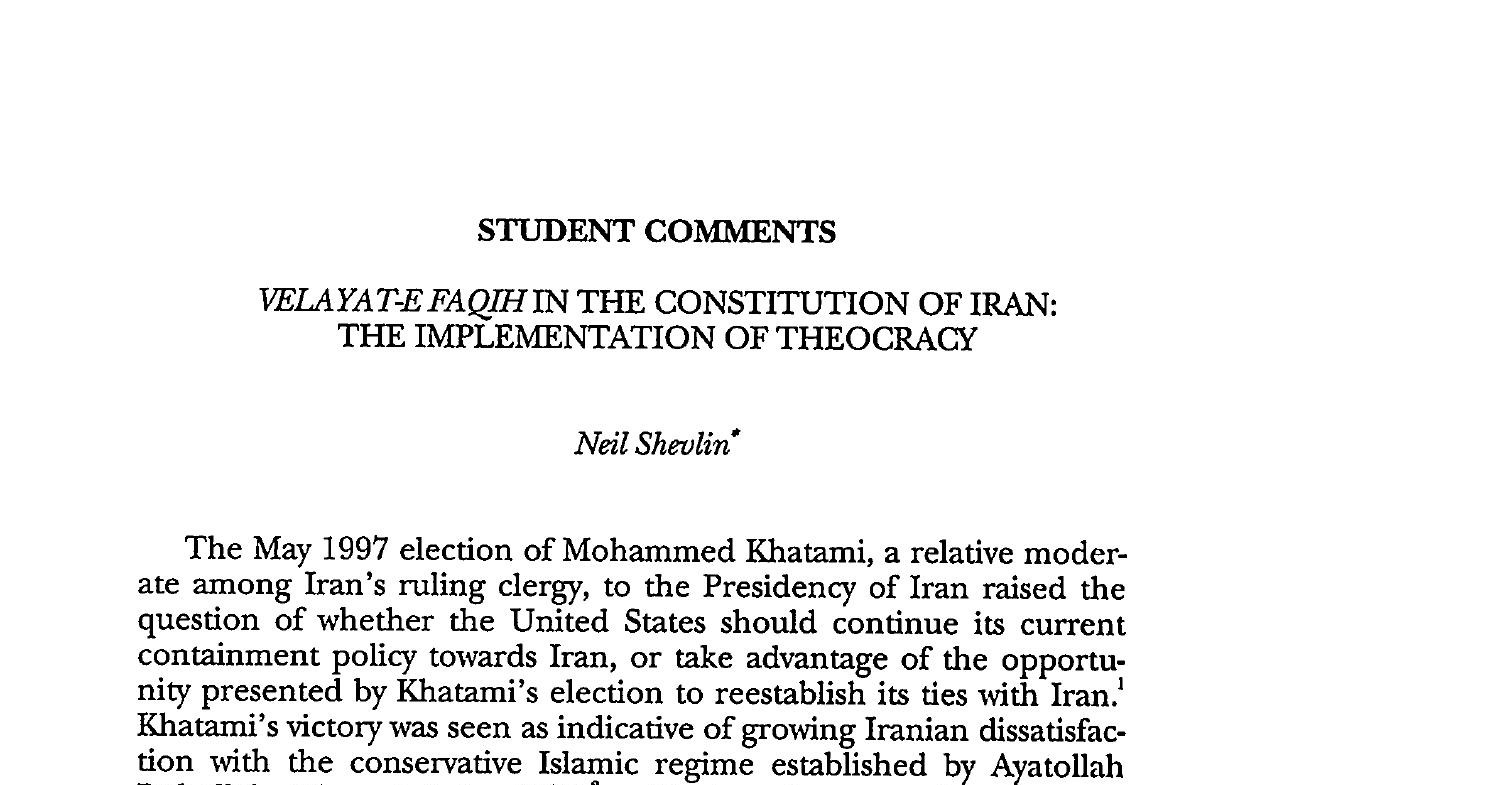
Velayat-e Faqih serves as a foundational element of the Iranian Revolution, representing a political system based on religious leadership. This system, established by Imam Khomeini, defines the relationship between religion and state in Iran.
The roots of Velayat-e Faqih lie in Shia thought, where supporters view the faqih as the legitimate ruler who must lead the nation in the absence of the infallible Imam. This concept was officially announced after the victory of the revolution in 1979, becoming an integral part of the Iranian system.
Details of the Event
Velayat-e Faqih was established as a legal and political framework that ensures the continuation of religious authority in Iran. This concept was reinforced by the Iranian constitution, which states that the faqih is the supreme leader of the country. This arrangement granted religious authority significant influence over various aspects of political and social life.
The importance of Velayat-e Faqih is evident in how it manages Iran's internal and external affairs. The supreme leader, who holds this position, possesses extensive powers that include appointing military leaders, heads of government institutions, and even influencing foreign policy.
Background & Context
Historically, Iran has witnessed significant political transformations that led to the emergence of the idea of Velayat-e Faqih. The country has suffered from external interventions and internal conflicts, making the need for a strong system to lead the nation urgent. The Islamic Revolution contributed to the reinforcement of this system, presenting it as a solution to the country's problems.
It is noteworthy that Velayat-e Faqih is not merely a religious concept but also a political tool used by the government to justify its decisions. This idea has sparked widespread debate among thinkers and politicians, with some considering it a means to consolidate power, while others see it as reflecting traditional trends in Iranian society.
Impact & Consequences
Velayat-e Faqih has significantly influenced Iranian politics, contributing to the strengthening of the theocratic system. These extensive powers have marginalized the role of democratic institutions, making elections in Iran subject to strict oversight by religious authority.
Moreover, the influence of Velayat-e Faqih extends to foreign policy, as Iran seeks to enhance its regional influence by supporting its allies in the area. This has led to tensions with many countries, especially amid ongoing conflicts in the Middle East.
Regional Significance
Velayat-e Faqih represents a model that has sparked debate in the Arab world, where some Islamic groups adopt similar ideas. These concepts have contributed to the exacerbation of sectarian divisions in the region, intensifying conflicts among different states and groups.
At the same time, Iran's experience in applying Velayat-e Faqih may serve as a lesson for Arab countries seeking to achieve a balance between religion and politics. While some view this model as a means to stabilize regimes, others consider it a threat to freedom and democracy.
In conclusion, Velayat-e Faqih remains a contentious topic, reflecting the tensions between religion and politics in the contemporary world. Understanding this concept helps to grasp the complex dynamics that govern relationships in the region.