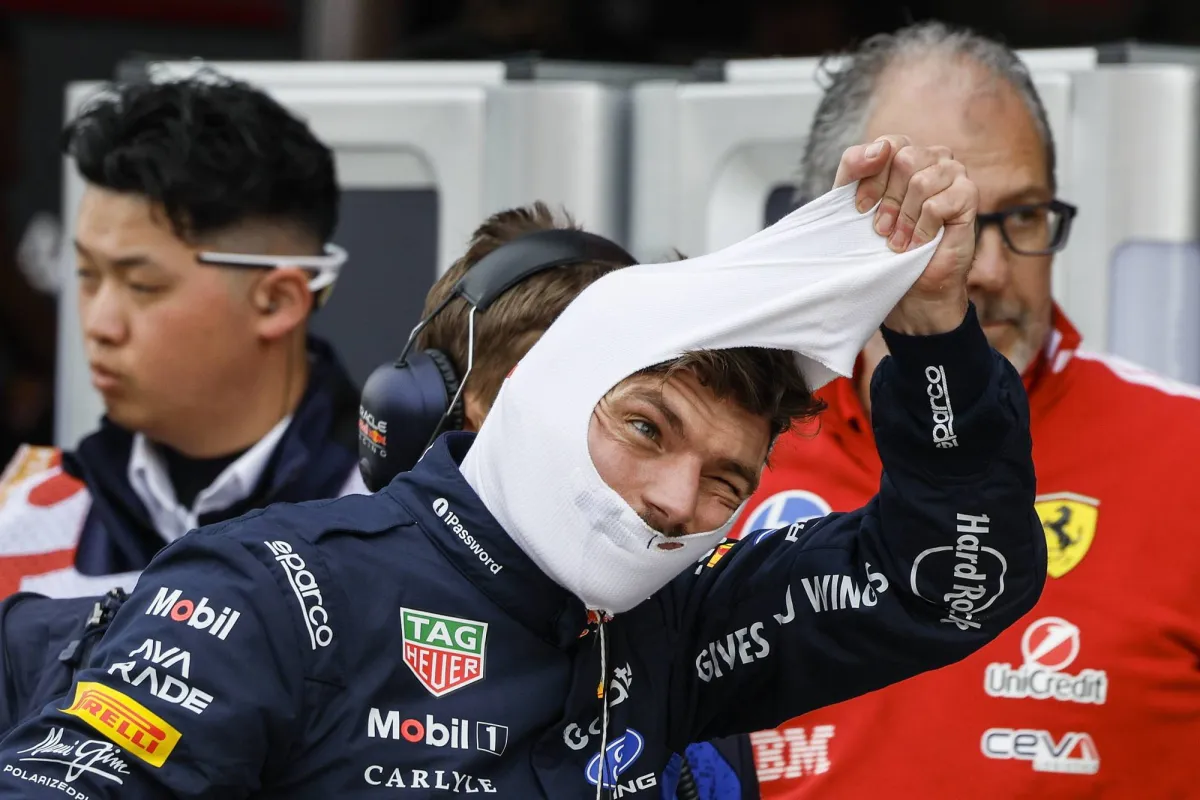
Four-time world champion Max Verstappen expressed his frustration with the performance of his Red Bull car, describing it as 'undriveable' after qualifying in a modest eleventh place for the Japanese Grand Prix. This underwhelming performance comes at a time when Verstappen has dominated the Suzuka circuit for the past four years.
Verstappen exited the second qualifying session in a new nightmare, complicating the start of the season for him. He had previously suffered an incident in the opening round in Australia, which affected his performance in subsequent races. He has also consistently criticized the new Formula 1 regulations that mandate a split between thermal and electric energy.
Event Details
In statements to Sky Sports F1, Verstappen said: "The car never turns in the middle of the corner, but at the same time, it suffers from excessive sliding upon entry. It's extremely difficult and unpredictable." He added, "We thought we had improved the situation a bit in the third free practice session, but in qualifying, driving became impossible for me, and this is something we need to analyze."
Verstappen finished the Melbourne race in sixth place and withdrew from the Chinese Grand Prix two weeks ago, raising questions about Red Bull's performance this season. He also got into a public spat with a journalist during a press conference, reflecting the pressures he is facing.
Context and Background
The Suzuka circuit is considered one of the most challenging tracks in the world of Formula 1, and it has seen Verstappen's dominance in recent years. However, the new regulations introduced in Formula 1 have significantly impacted the performance of teams and drivers, leading to changes in the competitive dynamics.
In this context, young Italian driver Kimi Antonelli secured pole position for the second consecutive time, ahead of teammate George Russell, ensuring that the Mercedes team occupies the front row for the third race in a row. Antonelli clocked a time of 1:28.778, reflecting an outstanding performance in qualifying.
Implications and Effects
These results indicate the challenges faced by Verstappen and the Red Bull team under the new regulations. With Verstappen's performance declining, his chances of competing for the title this season may be affected. On the other hand, the performances of Antonelli and Russell highlight Mercedes' ability to adapt to the new changes.
These events may also impact the morale of other teams, as everyone strives for positive results amid fierce competition. The continuation of these dynamics could lead to changes in the standings of the championship.
Impact on the Arab Region
Formula 1 racing is one of the most popular sports in the world and has a significant impact on fans in the Arab region. With the increasing interest in this sport, race results may influence the fan base in Arab countries, where many young people aspire to engage in the world of motorsports.
Moreover, Verstappen's declining performance may raise questions about the future of major teams in the championship, potentially affecting Arab companies' investments in this field. Following these events could encourage the development of motorsports in the region and enhance interest in participating in major events.