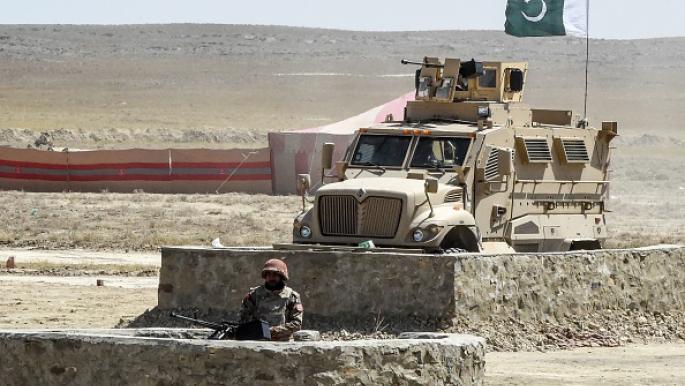
Violent clashes broke out between Afghan and Pakistani forces along the border, coinciding with negotiations between the two countries in China aimed at resolving outstanding issues. These clashes reflect the ongoing tensions between both sides, as each seeks to strengthen its position under the current circumstances.
Reports indicate that the clashes began in a disputed border area, where both parties exchanged gunfire, resulting in several casualties. These events have raised concerns within the international community, which is closely monitoring the developments between the two countries.
Details of the Incident
These clashes coincide with negotiations taking place in China, where Afghan and Pakistani officials are attempting to reach solutions to outstanding issues, including border and security matters. These negotiations represent an opportunity for both sides to ease tensions, yet the events on the ground may complicate these efforts.
This escalation comes at a sensitive time, as Pakistan seeks to bolster its security along the border with Afghanistan, while the Afghan government faces internal and external challenges. Reports have shown an increase in military activities on both sides, raising the likelihood of further clashes.
Background & Context
Historically, relations between Afghanistan and Pakistan have been strained, with both countries disputing border areas. Recent years have witnessed a rise in armed conflicts, especially following the withdrawal of U.S. forces from Afghanistan, which left a security vacuum exploited by armed groups.
The border between the two countries is one of the most sensitive regions, home to numerous armed groups that exploit ongoing disputes. Previous governments in both countries have attempted to reach agreements aimed at improving the security situation, but these efforts have often failed.
Impact & Consequences
The recent clashes may lead to a greater escalation of the conflict between Afghanistan and Pakistan, potentially negatively impacting regional stability. If these clashes continue, both governments may find themselves in a difficult position, having to deal with the repercussions of the conflict on both internal and external security.
Moreover, the continuation of tensions may affect the ongoing negotiations in China, as an escalation of violence could undermine peace efforts. The failure to reach effective solutions may exacerbate humanitarian conditions in border areas, where civilians live in fear and instability.
Regional Significance
The events between Afghanistan and Pakistan are of particular importance to the Arab region, as they can influence regional security. The escalation of conflicts in areas such as South Asia may reflect on the situation in the Middle East, especially amid existing tensions in many Arab countries.
These events also highlight the need for enhanced regional and international cooperation in addressing security challenges. Arab countries should be aware of developments in Afghanistan and Pakistan, as stability in these areas can directly affect regional security.
In conclusion, the recent clashes between Afghan and Pakistani forces reflect the ongoing tensions between both sides and come at a sensitive time as both parties seek to reach diplomatic solutions. Hope remains pinned on the ongoing negotiations in China, but events on the ground may complicate these efforts.