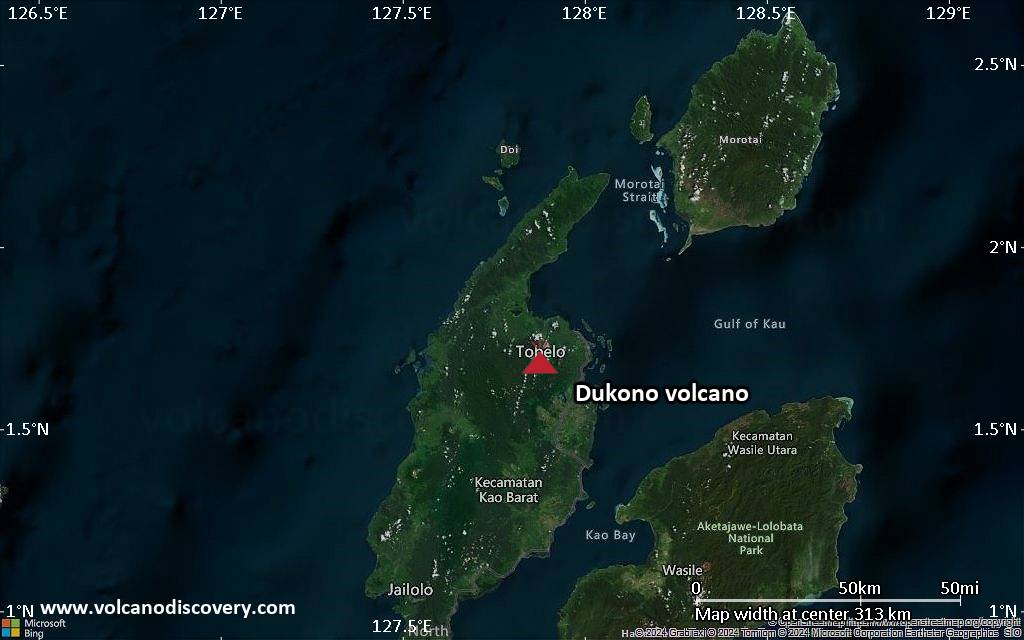
The Ducono volcano located in North Halmahera, Indonesia, has shown notable volcanic activity, with monitoring stations recording 76 explosions in a single day on April 6, 2026. Bambang Sugiyono, an official at the volcanic monitoring center, indicated that the volcanic ash clouds were moving northwest, with the ash column rising to approximately 1400 meters above the volcano's summit.
Sugiyono added that the ash clouds varied in color between white and gray, with medium to high density. Volcanic earthquakes were recorded with magnitudes ranging from 6 to 34 mm, lasting between 19.33 to 90.65 seconds. Continuous seismic activity (microtremor) was also observed, with magnitudes between 1 to 6 mm, where the predominant magnitude was 4 mm.
Details of the Event
The weather conditions in the area surrounding the volcano continue to change, with temperatures ranging from 27 to 31 degrees Celsius and humidity levels between 61% and 90%. The region has recorded light rainfall averaging 2 mm daily. Under these conditions, the volcano's status has been classified as Level II or Alert Status.
In light of the warnings, local residents and visitors have been advised not to approach the Kawah Malupang Warirang area within a 4-kilometer radius around the volcano. This warning is due to the likelihood of continued eruptions and the release of volcanic ash following wind directions.
Background & Context
The Ducono volcano is considered one of the active volcanoes in Indonesia, characterized by its continuous activity over the years. The area has witnessed numerous past eruptions, making it a site of particular interest for geologists and researchers.
Historically, Ducono has had a significant impact on the surrounding communities, as its volcanic activity has led to changes in the local environment, affecting agriculture and tourism. Many significant eruptions have been documented over the past decades, highlighting the importance of continuous monitoring of this natural phenomenon.
Impact & Consequences
The volcanic activity directly affects the lives of local residents, necessitating precautionary measures to protect public health. Volcanic ash can cause respiratory issues, so residents are advised to wear protective masks.
Additionally, the eruptions may impact air travel in the region, as ash clouds can lead to airspace closures, resulting in flight delays and cancellations. This situation requires coordination between local authorities and airlines to ensure passenger safety.
Regional Significance
Although Indonesia is geographically distant from the Arab world, natural events such as volcanic eruptions remind us of the importance of preparedness for natural disasters. The impact of such events on the global economy can reflect on the prices of goods and services, affecting Arab countries that rely on international trade.
In conclusion, the activity of the Ducono volcano underscores the importance of continuous monitoring and preparedness for natural disasters, as local communities and neighboring countries must be ready to respond to any emergencies that may arise from this volcanic activity.