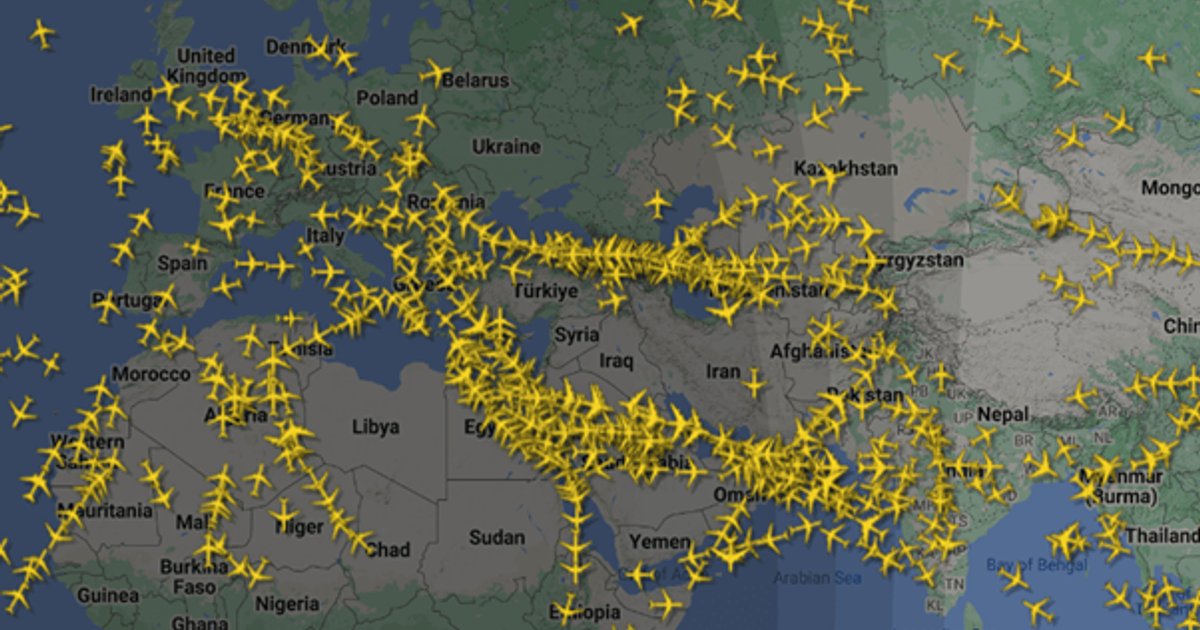
The repercussions of the war in the Middle East continue to affect all aspects of life, extending beyond military conflicts to reshape global trade maps. From the Strait of Hormuz, one of the most crucial maritime corridors for energy transport, to the railways connecting China with Europe, the transformations in trade routes are evident.
As transit costs rise in the disrupted maritime corridors and pressures increase on air travel networks, transcontinental railways emerge as a new strategic option. These shifts reflect deeper changes in the structure and pathways of globalization.
Details of the Event
The crisis began in the Strait of Hormuz, where disruptions to navigation freedom confused oil and jet fuel supplies. The Chinese People's Daily reported that many travelers who planned to travel during the May 1 holiday were surprised by the cancellation of their pre-booked flights.
Shocking figures show that the crisis in the Strait of Hormuz led to an increase in jet fuel prices from $99.4 per barrel at the end of February to $209 in early April, an increase of over 110% in less than two months. This spike in costs resulted in a widespread wave of international flight cancellations, with Southeast Asia and Oceania being the most affected.
Background & Context
The jet fuel crisis is part of a broader wave affecting the economy and supply chains. Fatih Birol, the Director of the International Energy Agency, warned that conflicts in the region are triggering the worst energy crisis in history. These crises not only affect fuel prices but also extend to rising air ticket prices and production costs.
Reports indicate that airlines, especially low-cost carriers, are suffering more from these crises, threatening to reduce flight operations and increase financial burdens on travelers.
Impact & Consequences
The repercussions of the war in the Middle East extend beyond its impact on air travel, directly affecting production costs and cross-border trade. With rising production costs, pressures on companies are increasing, which could lead to scenarios of global stagflation.
Conversely, reports reveal a silent shift in trade routes between China and Europe, where the China-Europe freight train network has become a major alternative for certain types of maritime and air shipping. This network connects 26 European countries and 230 cities with 120 cities in Asia, reflecting a transformation in transport strategies.
Regional Significance
These transformations significantly impact Arab countries, as the Middle East is a vital hub for energy trade. Any disruption in supplies or maritime security directly reflects on energy security in the region, increasing economic challenges.
Arab countries are striving to enhance their logistical and trade capabilities to face these challenges, necessitating new strategies to adapt to changing conditions.
In conclusion, the war in the Middle East is reshaping global trade routes, as countries and companies seek alternative paths that are less vulnerable to risks. These transformations may open new horizons for economic cooperation, but they also require a swift and effective response from all stakeholders involved.