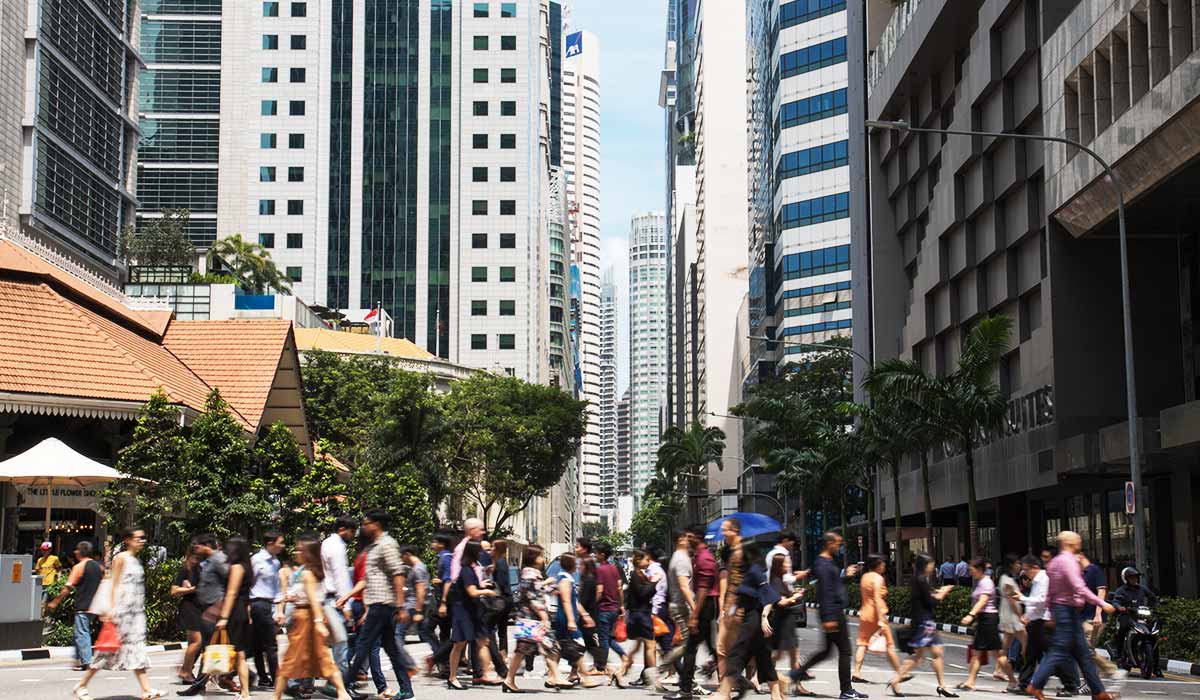
Singapore's Deputy Prime Minister Gan Kim Yong has issued a warning that the country's economic activity may experience a slowdown in the near future, amid global disruptions in trade and energy. This warning comes as concerns grow over the impact of the conflict in the Middle East on the global economy.
Despite these warnings, a survey conducted by CNA with 11 economists revealed that most still maintain their growth forecasts for Singapore's economy. Only two of these economists indicated that they had lowered their growth expectations.
Details of the Event
Shiana Yui, chief economist at Oxford Economics, reported that the firm had downgraded its GDP growth forecast for Singapore from 4.5% to 4.1% last March. She explained that the conflict in the Middle East may persist longer than anticipated, increasing the need for adjustments to forecasts.
The Economic Intelligence Unit also revised its GDP growth forecast for Singapore for 2026 from 3.2% to 2.7%. Analyst Tai Chi Hang noted that rising energy costs are already putting pressure on industrial activity and consumer spending in Singapore's key export markets.
Background & Context
Historically, Singapore has experienced robust economic growth, recording a growth rate of 5% in 2025. However, global crises, including regional conflicts and rising energy prices, could negatively impact this growth. Singapore relies heavily on international trade, making it vulnerable to global economic fluctuations.
In recent years, there have been increasing warnings that conflicts in the Middle East could lead to higher oil prices, affecting production costs and economic growth in oil-importing countries like Singapore.
Impact & Consequences
Many economic institutions expect that the increase in energy costs will reduce industrial activity in Singapore. Bryan Lee, an economist at Maybank Securities, pointed out that rising fuel and raw material costs will negatively impact growth across various sectors.
Edward Lee from Standard Chartered anticipates that the impact will extend beyond just a few sectors, as price increases will exert pressure on consumers. Inflation forecasts have been raised from 1.5% to 2.5%, exceeding the estimates of the Singapore central bank.
Regional Significance
Arab countries are also affected by global economic fluctuations, especially given their heavy reliance on oil exports. Rising energy prices due to conflicts in the Middle East could lead to increased costs in oil-importing countries, impacting economic growth in the region.
Additionally, the crises in Singapore may affect trade with Arab countries, as Singapore is an important trading hub in Asia. Therefore, any slowdown in economic growth there could reflect on trade relations with Arab nations.