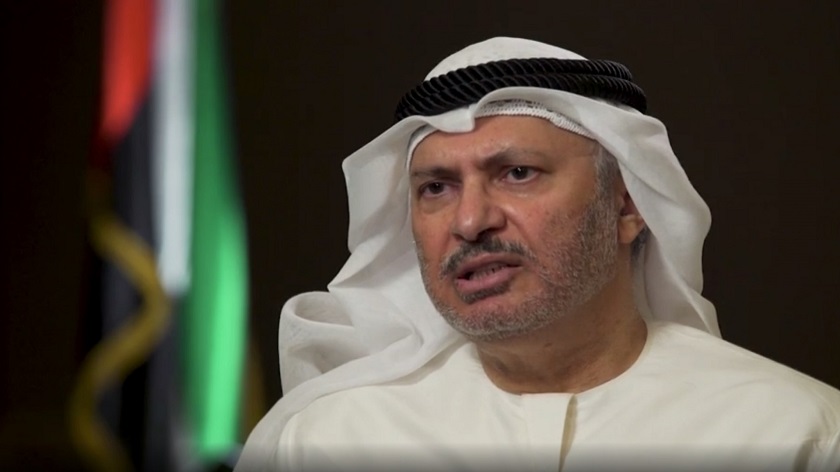
Anwar Gargash, the UAE Minister of State for Foreign Affairs, emphasized that the Iranian escalation against the Gulf Cooperation Council (GCC) countries is a premeditated act and not merely a reaction to events. This statement was made during a press conference in Abu Dhabi, where he noted that these actions pose a threat to regional security and necessitate responses from the concerned nations.
Gargash clarified that Iran seeks to destabilize the region by supporting armed groups and interfering in the internal affairs of Gulf states. He also pointed out that these Iranian policies contradict the peace and stability efforts pursued by Gulf countries.
Details of the Iranian Threats
During the conference, Gargash addressed a range of issues related to Iranian policy, stressing that Gulf states will not remain passive in the face of these threats. He affirmed that cooperation among Gulf countries is the only way to confront these challenges. He also called for the need to enhance regional security through strategic partnerships with other nations.
Gargash mentioned that the Iranian escalation could take various forms, including cyberattacks or support for armed groups. He highlighted that these activities require a coordinated response from the GCC countries.
Background & Context
Historically, relations between Iran and Gulf states have been marked by increasing tensions, especially following the Iranian revolution in 1979. These tensions have escalated with Iran's involvement in regional conflicts, such as the wars in Syria and Yemen. Additionally, Iran's support for armed groups like Hezbollah in Lebanon and the Houthis in Yemen has heightened concerns among Gulf nations.
In recent years, fears surrounding Iran's nuclear program have prompted Gulf countries to strengthen their alliances with the United States and other Western nations. These dynamics provide important context for understanding Gargash's recent statements.
Impact & Consequences
The Iranian escalation could exacerbate security conditions in the region, threatening economic and social stability. If Iran continues its current policies, this may lead to military escalation, negatively impacting all countries in the region.
Moreover, these tensions could affect oil prices and financial markets, as the Gulf region is one of the most significant oil-producing areas in the world. Any escalation could result in rising oil prices, impacting the global economy.
Regional Significance
The Iranian threats require a coordinated response from Gulf states to ensure regional security. The implications of these developments extend beyond the immediate region, influencing global economic stability and international relations.
In conclusion, the situation demands vigilance and proactive measures from Gulf nations to mitigate the risks posed by Iranian actions and to maintain regional peace and stability.