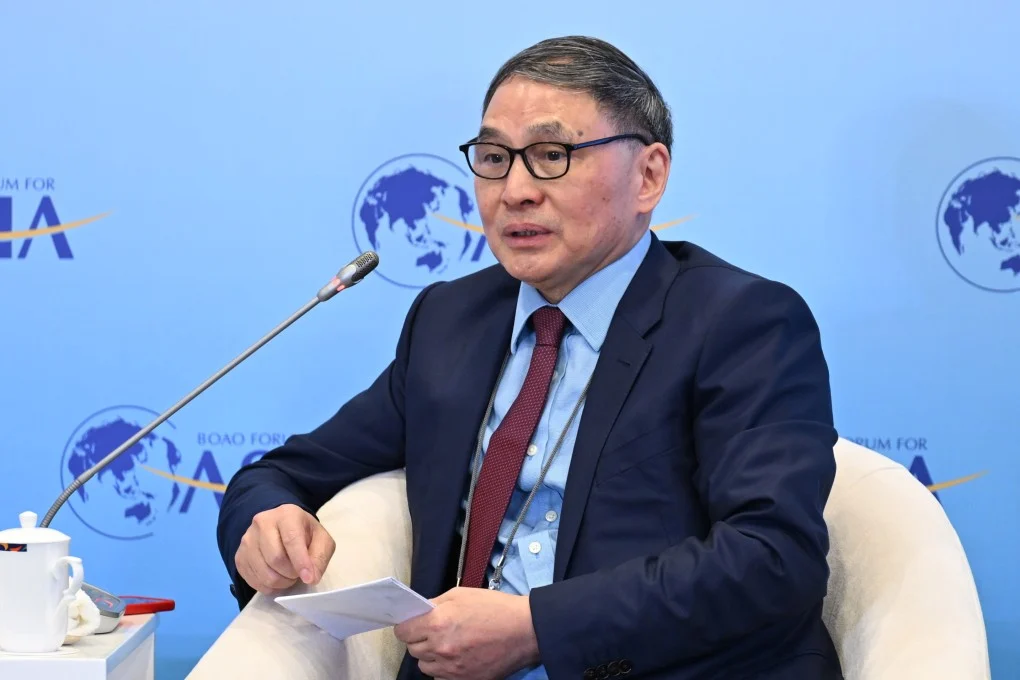
Chinese political scientist Zheng Yongnian warned Southeast Asian nations about the dangers of exploiting the increasing tensions between the United States and China for short-term benefits, noting that such strategies could lead to adverse outcomes. This warning came during his remarks at the Boao Forum for Asia held on Friday, where he discussed sovereignty issues and disputes in the South China Sea.
Zheng, who serves as the Dean of the School of Public Policy at Shenzhen Chinese University of Hong Kong, emphasized that the main challenge lies in how countries interpret the competition between the United States and China. He explained that many nations might be tempted to exploit this tension for immediate gains, but this could negatively impact their long-term interests.
Details of the Event
Zheng's statements come at a sensitive time when relations between the United States and China are increasingly strained, particularly in the South China Sea, where several countries are disputing sovereignty. Zheng pointed out that some nations might believe they can benefit from this tension; however, history shows that such strategies often exacerbate situations rather than improve them.
He added that Southeast Asian countries should be cautious in how they navigate these dynamics and focus on building stable, long-term relationships with both the United States and China, rather than aligning with one side.
Background & Context
Historically, the South East Asia region has seen increasing tensions due to regional disputes, especially in the South China Sea, where the maritime and economic interests of nations overlap. This area is considered one of the busiest regions in the world, with vital trade routes passing through it.
In recent years, tensions between the United States and China have escalated, with both seeking to enhance their influence in the region. The United States, through its alliances with countries like the Philippines and Vietnam, aims to counter the growing Chinese influence. Meanwhile, China seeks to assert its sovereignty over disputed waters, further heightening tensions.
Impact & Consequences
The short-term strategies adopted by some countries could potentially worsen conditions in the region, threatening regional stability. If these dynamics persist, we may witness an escalation in conflicts, which could affect both regional and global security.
Moreover, any escalation in tensions could negatively impact the global economy, as the South China Sea is a crucial route for international trade. Therefore, governments in the region need to think long-term and avoid making decisions that could exacerbate the situation.
Regional Significance
For the Arab region, the tensions between the United States and China could impact economic and political interests. Many Arab countries rely on trade with both the United States and China, and any escalation in tensions could affect these trade relations.
Furthermore, stability in the South East Asia region has indirect implications for regional security in the Middle East, as any escalation could lead to shifts in regional and international alliances, prompting Arab nations to be aware of these dynamics and adapt accordingly.
In conclusion, it is clear that the tensions between the United States and China are not merely a bilateral issue but one that affects many countries around the world, including Arab nations. Therefore, these countries must be cautious in how they navigate these dynamics and strive to secure their interests in a way that ensures long-term stability.