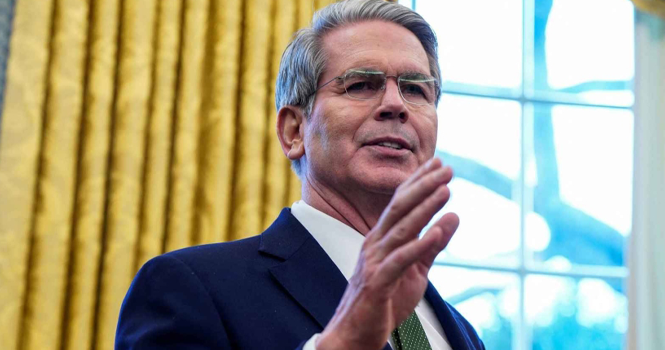
U.S. Treasury Secretary Scott Pisent has warned that the Iranian oil industry is beginning to suffer from severe pressures due to the expansion of American sanctions. He indicated that Tehran's energy sector faces an imminent risk of halting production, which could lead to acute fuel crises domestically.
Pisent elaborated in statements via X platform that Iranian oil operations are visibly weakening under the intense economic pressures exerted by Washington, describing the situation as a direct result of what he termed the "American blockade" aimed at crippling the financial arteries of the Iranian regime.
Details of the Situation
Pisent confirmed that crude oil pumping is set to "collapse soon," pointing out that the deterioration of Iran's aging infrastructure, coupled with strict export restrictions, will consequently lead to a severe shortage of gasoline supplies within Iranian local markets in the near future. Reports have shown that Iranian oil production has significantly decreased in recent months, reflecting the impact of the imposed sanctions.
This warning comes at a sensitive time for the Iranian economy, which has been suffering from the repercussions of ongoing American sanctions for several years. These sanctions have led to a substantial decline in oil revenues, which is considered the primary source of government income.
Background & Context
Since the United States withdrew from the Iranian nuclear deal in 2018, Washington has imposed a series of economic sanctions specifically targeting the oil sector. These sanctions have caused Iranian oil exports to plummet to unprecedented levels, negatively impacting the Iranian economy and exacerbating social and economic crises.
In recent years, Iran has attempted to seek alternative markets for exporting its oil, but American sanctions have effectively hindered these efforts. Additionally, political tensions in the region have complicated the situation, as Iran faces pressure from various international entities.
Impact & Consequences
If the decline in Iranian oil production continues, it will exacerbate economic and social crises within the country. Unemployment rates may rise, and living crises could intensify, potentially leading to new public protests.
Moreover, fuel shortages could impact transportation and the local economy, increasing pressure on the Iranian government. Under these circumstances, Tehran may be forced to take unpopular measures to address the escalating crises, which could worsen the internal situation.
Regional Significance
Iran is a key player in the Middle East, and any deterioration in its economy could affect the balance of power in the region. Other countries may benefit from Iran's decline, potentially leading to shifts in political and economic alliances.
Furthermore, economic crises in Iran could lead to an influx of refugees into neighboring countries, increasing the pressures on those nations. Thus, the situation in Iran does not only affect Iranians but extends its impact across the entire region.
In conclusion, it appears that the Iranian oil industry faces significant challenges due to American sanctions, warning of economic and social crises that could impact regional stability.