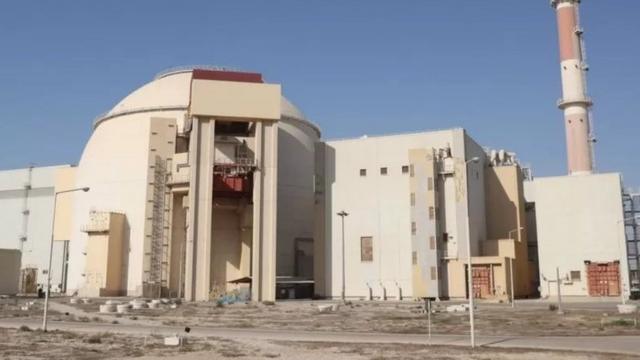
The Trump administration is studying plans and options for the potential "extraction" of Iranian nuclear material stocks, according to CBS News sources familiar with the discussions.
The proposed plans focus on the potential deployment of forces from the Joint Special Operations Command (JSOC), an elite military unit typically tasked with sensitive missions related to nuclear non-proliferation. Sources indicated that the timing of any such operation is not yet determined, and the president has not made a final decision.
A White House spokesperson stated that the preparations for this mission fall under the responsibility of the Department of Defense (Pentagon), and there was no immediate comment from a spokesperson for the department on the matter.
These discussions align with earlier statements from U.S. officials indicating that the option to retrieve Iran's stock of highly enriched uranium remains on the table for the administration. White House Press Secretary Karine Jean-Pierre told reporters that this option is "on the table."
Estimates from the IAEA indicate that by last summer, Iran had accumulated approximately 972 pounds of uranium enriched to 60%, a level close to materials usable for nuclear weapons. The agency noted that a significant portion of this uranium remains buried under the debris of nuclear sites that were bombed during military operations in the 12-day war in June last year.
IAEA Director General Rafael Grossi warned that the task of confiscating such materials would be "arduous and fraught with risks." In an interview with CBS, he stated that the cylinders contain hexafluoride gas that is highly radioactive and enriched to 60%, making handling them extremely difficult, while acknowledging that military capabilities might allow for the execution of the task but describing it as a very complicated operation.
For his part, Iranian Deputy Foreign Minister Abbas Araqchi confirmed that some "nuclear materials" have ended up in the rubble after the facilities were bombed during the 12-day war, and while they could be recovered, it could only occur under the supervision of the IAEA. He added that Iran does not currently have a plan to extract these materials, and any future steps will take place through international and official channels.
It is noteworthy that the U.S. and Israeli attacks on Iran on February 28 targeted, in its initial phase, the undermining of Iran's conventional military capabilities, including air defenses, missile systems, and the infrastructure associated with the Revolutionary Guard. Despite the intensive air campaign, CBS reports that Iran carried out counterstrikes targeting Israel and U.S.-allied countries in the Gulf region, affecting oil shipping by threatening vessels.