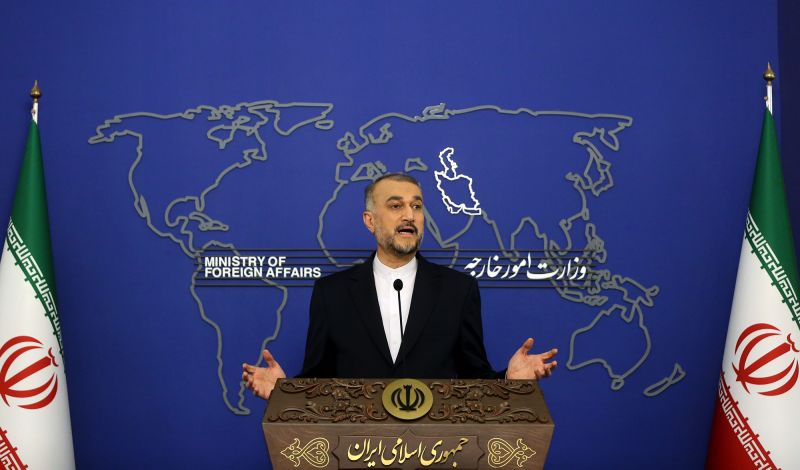
U.S. Defense Secretary Pete Hegseth confirmed during a press conference held on Wednesday that the United States has successfully destroyed Iran's defense industrial base entirely. Hegseth explained that this destruction means that Iran is no longer capable of manufacturing missiles, shells, launch platforms, and drones, reflecting the success of U.S. military operations in the region.
He added that the military operation dubbed "Epic Fury" has achieved a historic and overwhelming victory, indicating that this achievement represents a turning point in the conflict between the United States and Iran. He emphasized that Washington will continue to monitor Iranian activities, warning that any attempt by Tehran to retain uranium will face severe consequences.
Details of the Event
Hegseth's statements came at a sensitive time, as a ceasefire between the United States and Iran was announced after a prolonged period of escalating tensions. This ceasefire presents an opportunity for both parties to reassess their strategies, but it also puts Iran in a difficult position, as it needs to rebuild its defense capabilities under imposed restrictions.
Hegseth did not hesitate to confirm that the United States would act to reclaim uranium if Iran refused to relinquish it. This statement reflects Washington's stringent policy towards Iran's nuclear program, which has long been a focal point of international controversy.
Background & Context
Historically, Iran has sought to develop its defense capabilities increasingly, raising concerns within the international community. In recent years, the United States has imposed strict sanctions on Tehran, impacting its economy and leading to a decline in its military capabilities. However, Iran had managed to achieve some successes in developing advanced weapons, prompting Washington to take more stringent actions.
The current ceasefire comes after years of military and political tensions, during which the region has witnessed numerous armed conflicts and foreign interventions. These complex dynamics make it challenging to predict the future of U.S.-Iran relations, especially given the ongoing unresolved issues related to the nuclear program.
Impact & Consequences
Recent statements by Hegseth could escalate tensions between the United States and Iran, particularly if Tehran continues to advance its nuclear program. This situation could negatively impact regional security, increasing the likelihood of new conflicts erupting in the area.
Furthermore, the destruction of Iran's defense industry may alter the balance of power in the Middle East, as other countries may seek to enhance their military capabilities in response to potential threats. This could lead to a new arms race in the region, complicating security situations further.
Regional Significance
Arab countries neighboring Iran find themselves in a sensitive position, as recent developments may affect their defense strategies. Many of these nations may feel concerned about the rising Iranian influence, which could drive them to strengthen their alliances with the United States and other Western nations.
Under these circumstances, Arab countries must be cautious in their dealings with Iran and develop effective strategies to counter any potential threats. Regional cooperation may be essential to address the new security challenges that could arise from these developments.
In conclusion, the situation in the region remains volatile, and the future of U.S.-Iran relations depends on numerous internal and external factors. The forthcoming challenges require all parties to take prudent steps to ensure security and stability in the region.