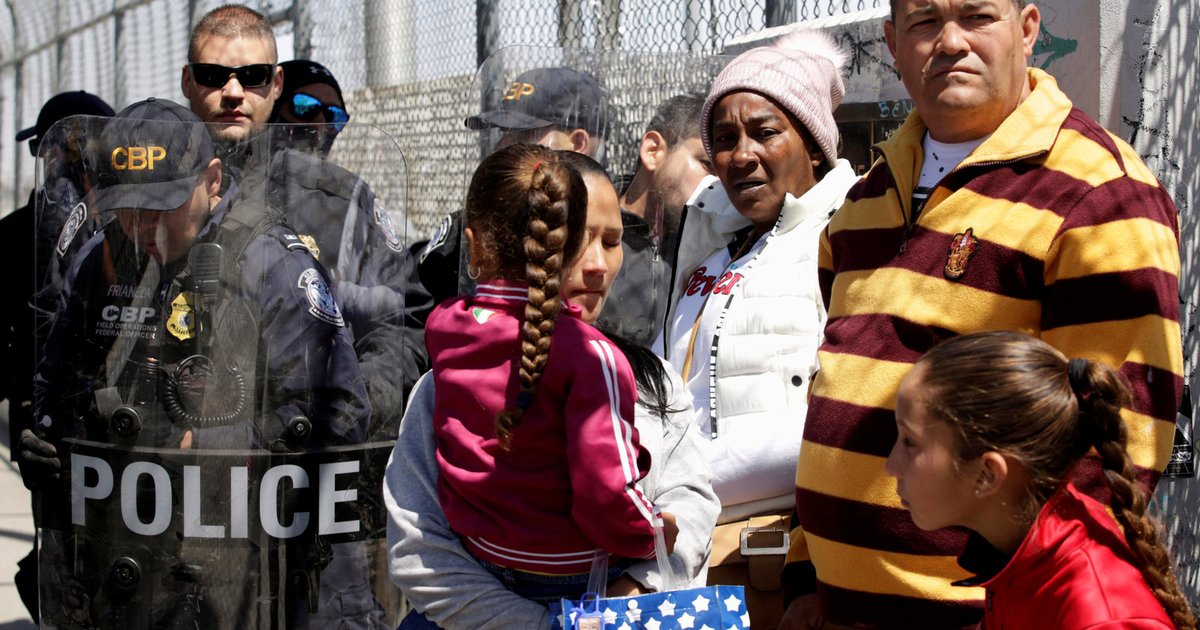
In a new move aimed at restricting the entry of asylum seekers into the United States, the U.S. administration has issued new orders to its diplomatic missions, requiring them to ask applicants for entry visas if they fear returning to their home countries. These measures are part of President Donald Trump's policy, which seeks to reduce the number of refugees accepted into the country.
A report published by the Washington Post noted that the new rules announced on Tuesday could significantly impact asylum applications, complicating the process for those seeking protection. This approach is considered part of a broader strategy aimed at decreasing the flow of migrants into the United States, especially amid increasing humanitarian crises worldwide.
Details of the New Rules
The new rules issued by the U.S. administration include detailed inquiries about the conditions faced by asylum seekers in their home countries. Applicants must clarify whether they feel afraid of returning, which could affect their chances of obtaining visas. This step reflects the administration's trend toward tightening immigration oversight, sparking mixed reactions in political and social circles.
This decision comes at a time when humanitarian crises are escalating in many countries, increasing the number of people seeking asylum in safer nations. However, these new measures may make it more challenging for these individuals to obtain the protection they need.
Historical Context
Historically, the United States has been seen as a safe haven for many refugees from around the world, especially during times of crisis. However, recent years have witnessed significant changes in immigration policy, with numerous steps taken to reduce the number of migrants. These policies are often linked to domestic political pressures, as some officials seek to meet the demands of voters who prefer to limit immigration.
These measures coincide with rising global tensions, where conflicts are flaring in multiple regions such as the Middle East and Africa, leading to increased numbers of displaced persons. Nevertheless, the new restrictions may mean that many of these individuals will find it harder to secure protection in the United States.
Potential Consequences
These new rules could lead to a decrease in the number of asylum seekers accepted into the United States, negatively impacting many families and individuals seeking safety. Additionally, these policies may exacerbate humanitarian crises in conflict-affected countries, leaving many people trapped in dangerous conditions.
Furthermore, these measures could provoke negative reactions from human rights organizations, which may view them as violations of individuals' fundamental rights. Pressure on the U.S. administration from these organizations is expected to increase, calling for a reassessment of current policies.
Impact on the Arab Region
The Arab region is one of the most affected areas by the repercussions of these policies, as many countries are experiencing escalating humanitarian crises. Refugees from Syria, Iraq, and Yemen, for example, may find it increasingly difficult to obtain protection in the United States, heightening their suffering.
These restrictions may also increase pressure on neighboring countries hosting large numbers of refugees, potentially worsening humanitarian conditions in those nations. Under these circumstances, there remains hope that the U.S. administration will reconsider its policies and open its doors to those in need of protection.