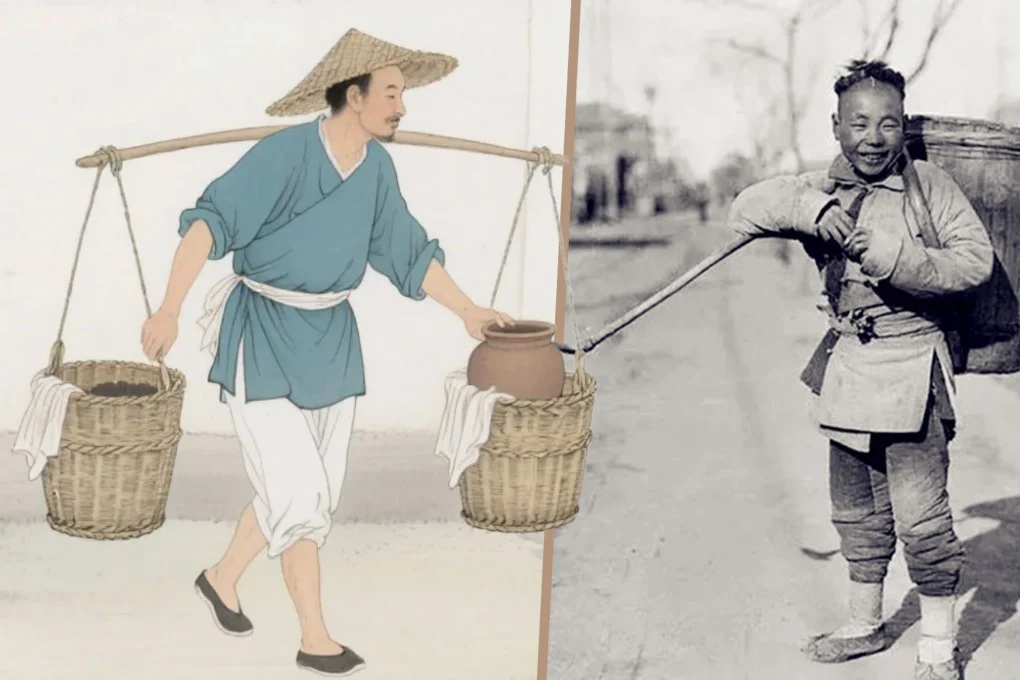
In ancient China, the profession of waste collection was considered one of the most profitable and competitive jobs, with workers earning significant profits. These workers, known as 'night soil collectors', were responsible for collecting human waste, or what was referred to as 'night soil', from the toilet pots used by residents. In the absence of modern toilets and sewage systems, people stored waste in special pots and were not allowed to dispose of it freely.
Waste was collected from every household by specialized workers, making this profession essential in daily life. As the population in ancient Chinese cities grew, the demand for this service increased, leading to a rise in the need for waste collectors.
Details of the Profession
The roots of the waste collection profession date back to ancient times, where it was considered a job that lacked respect but was vital for maintaining public cleanliness. These workers were paid well, making the profession attractive to many individuals. At times, this profession was formally organized, with a set number of workers required for each area, intensifying competition among them.
Despite the challenges faced by waste collectors, such as unpleasant odors and difficult working conditions, they managed to achieve substantial profits. This profession was seen as a good source of livelihood, as waste was sold as fertilizer for agricultural fields, increasing its economic value.
Background & Context
Historically, ancient China relied heavily on agriculture, making the need for natural fertilizer essential. With no chemical fertilizers available, human waste was considered an important source for nourishing the soil. In this context, the role of waste collectors was pivotal in supporting agriculture and, consequently, the local economy.
This profession evolved over the ages, witnessing changes in working methods and techniques used. Over time, communities began to recognize the importance of public cleanliness, leading to improved working conditions for waste collectors and greater appreciation for their work.
Impact & Consequences
The profession of waste collection in ancient China illustrates how an unconventional job can play a vital role in society. Despite often being viewed as a disrespected profession, it was essential for maintaining public health and hygiene. Additionally, this profession contributed to boosting the local economy by providing natural fertilizer for agriculture.
This phenomenon exemplifies how societies evolve and social values change. Recognizing the importance of jobs that are considered unconventional can lead to improved living conditions for those working in them and enhance awareness of the significance of cleanliness and public health.
Regional Significance
Despite differing cultural and social contexts, the experience of waste collection in ancient China offers valuable lessons for the Arab region. With the increasing population in Arab cities, the need for improved sanitation and public hygiene services is becoming more evident. There may be opportunities to develop new professions that contribute to environmental improvement and bolster the local economy.
Ultimately, the waste collection profession in ancient China demonstrates how an unconventional job can have a significant impact on society. It is important to learn from these historical experiences and apply the lessons learned in our communities today.