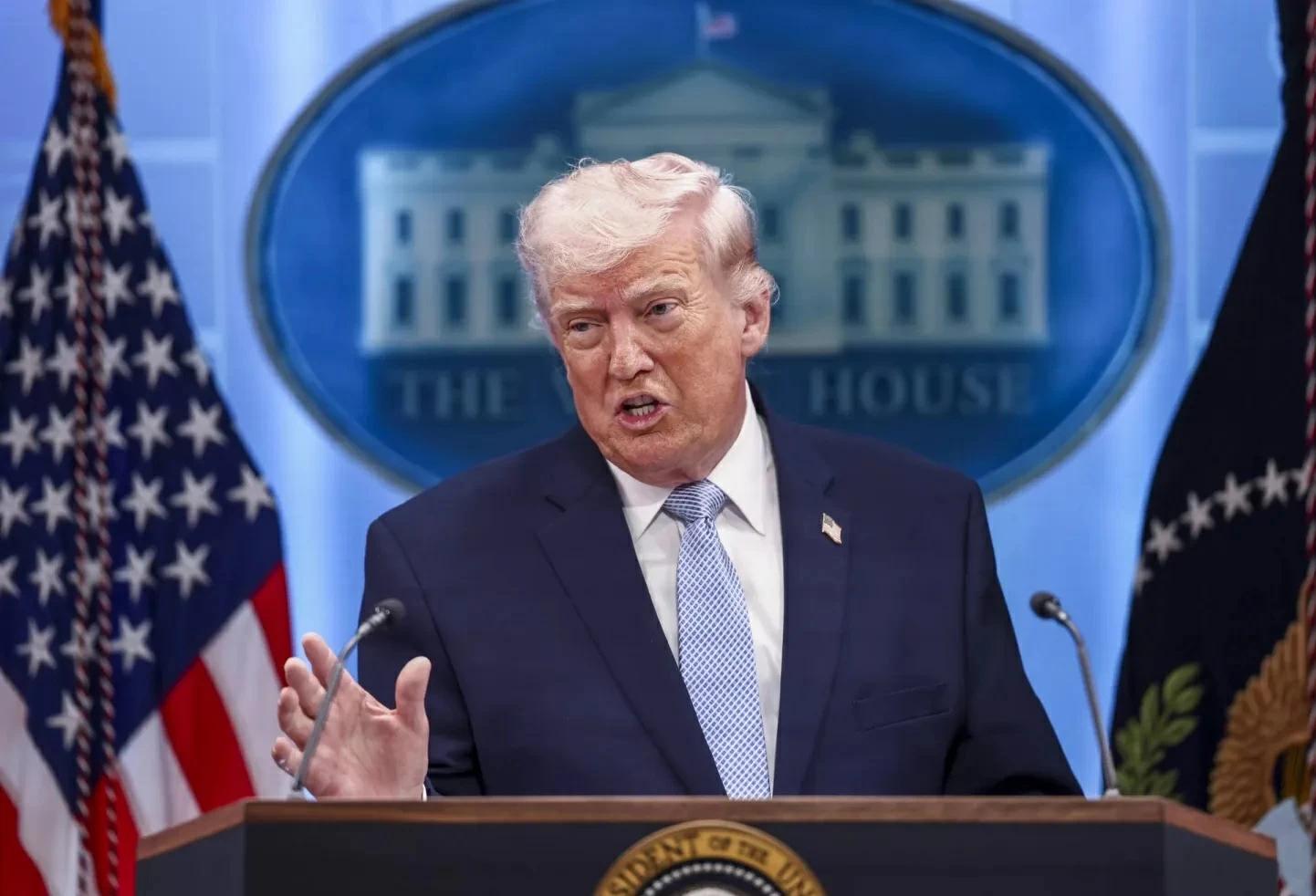
The White House denied any intention to use nuclear weapons against Iran on Tuesday, following provocative remarks from President Donald Trump, who stated that "a whole civilization will die tonight." This denial was made in a strong message published on the White House's account on the platform 'X', where it emphasized that "nothing said by the Vice President here hints at that, you big clowns."
These statements come at a sensitive time, as U.S. Vice President J.D. Vance raised concerns about the possibility of the United States using nuclear weapons against Iran. During a visit to Budapest, Vance indicated that the U.S. possesses tools that have not yet been used to deal with Iran, expressing hope that negotiations would spare Washington from resorting to them.
Details of the Event
During his remarks, Vance told reporters that the United States has largely achieved its military objectives in Iran, clarifying that the coming hours will witness intense negotiations before the deadline set by Washington for Iran at 00:00 GMT on Wednesday. He asserted that "they need to know that we have tools in our arsenal that we have not yet decided to use," suggesting that the U.S. President might opt to use them if the Iranians do not change their approach.
Earlier, Trump threatened Iran with the annihilation of its entire civilization, writing on his platform 'Truth Social': "A whole civilization will die tonight, and it will never come back. I don’t want that, but it’s likely to happen." These remarks have raised widespread concern in political and media circles.
Background & Context
These developments occur amid escalating tensions between the United States and Iran, with fears of potential military escalation increasing. Relations between the two countries have been strained since the U.S. withdrawal from the Iranian nuclear agreement in 2018, which led to the re-imposition of strict economic sanctions on Tehran.
Historically, the United States and Iran have been in a state of ongoing tension, experiencing numerous crises, from the hostage-taking at the U.S. embassy in Tehran in 1979 to mutual military attacks and repeated threats.
Impact & Consequences
The recent statements could lead to heightened tensions in the region, potentially affecting relations between the United States and its allies in the Middle East, including Gulf states. Any military escalation could negatively impact regional stability and exacerbate existing conflicts.
Moreover, the use of nuclear weapons is an extremely sensitive topic, as it could lead to dire consequences on an international level, including strong reactions from the international community and human rights organizations.
Regional Significance
Given the current situation, any military escalation between the United States and Iran could directly impact neighboring Arab countries, particularly those suffering from internal conflicts or political tensions. This could lead to increased regional disputes and heighten the suffering of civilians in those nations.
In conclusion, the situation in the region remains complex and requires effective diplomacy to avoid military escalation. The reciprocal statements between leaders should be handled with care to prevent any misunderstandings that could lead to severe consequences.