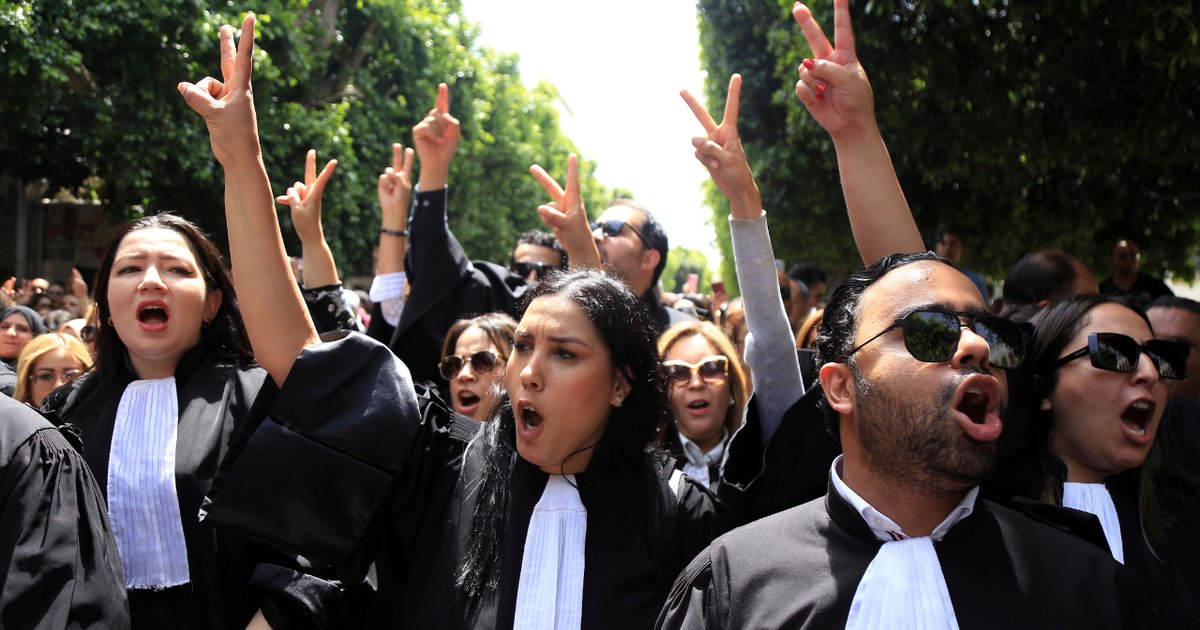
The Tunisian Bar Association has vehemently condemned the Tunisian judiciary's decision to suspend the Human Rights Association for a month, which has sparked a wave of outrage and warnings about the repercussions of this decision on democracy in the country.
In an official statement, the association expressed deep concern over this decision, which many view as a dismantling of one of the last bastions of democracy in Tunisia. This decision comes at a sensitive time for the country, as civil society strives to uphold human rights and fundamental freedoms.
Details of the Event
The Tunisian judiciary issued a ruling to freeze the activities of the Human Rights Association, provoking angry reactions from numerous human rights organizations and unions. The association deemed this decision a blatant violation of fundamental rights and a reflection of the regression in public freedoms.
In a related context, the Labor Union, one of the largest unions in Tunisia, urged the authorities to provide a safe environment for civil society. The union emphasized that such an environment is essential for the effective exercise of rights and freedoms, highlighting the importance of supporting human rights organizations in the country.
Background & Context
Since the revolution in 2011, Tunisia has been undergoing a democratic transformation; however, recent years have witnessed a noticeable decline in public freedoms. Many human rights organizations have faced increasing pressures, raising fears of a return to authoritarianism.
The Human Rights Association was established in Tunisia in 1977 and has since played a pivotal role in defending human rights and fundamental freedoms. Nevertheless, it currently faces significant challenges amid the prevailing political conditions.
Impact & Consequences
The suspension of the Human Rights Association's activities could undermine civil society's efforts to defend rights and freedoms. Additionally, this decision may contribute to increased social tension and exacerbate the political situation in the country.
This move is seen as an indicator of the decline of democracy in Tunisia, which could negatively impact the country's image in the international community. This may lead to a loss of external support for democratic efforts in Tunisia.
Regional Significance
Tunisia is considered a model in the Arab world following the success of its revolution, but the decline in freedoms could have adverse effects on other countries seeking to achieve democracy. Any regression in Tunisia may influence protest movements and calls for reform in other Arab nations.
In conclusion, the future of democracy in Tunisia hangs in the balance, dependent on civil society's ability to confront current challenges. Preserving fundamental freedoms is vital to ensuring the country's stability and progress towards true democracy.