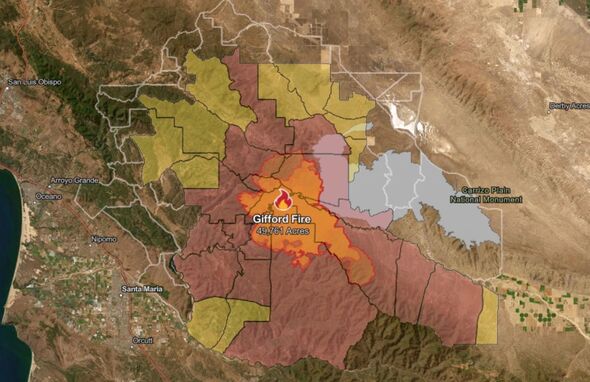
Rapidly spreading wildfires have erupted in Southern California, leading to the evacuation of residents from affected areas. The fire, exacerbated by strong winds, threatens homes and properties in the region. Local authorities have declared a state of emergency in several areas as firefighting teams work to control the rapidly spreading blaze.
Reports indicate that the fire began early this morning and quickly spread due to the strong winds sweeping through the area. Residents from several neighborhoods have been evacuated and directed to temporary shelters. Additionally, some major roads have been closed to facilitate the movement of firefighting teams.
Details of the Incident
The fire, referred to as the Capri Fire, ignited in a mountainous area, where weather conditions have worsened the situation. Firefighting teams are working to contain the blaze, but challenges are significant due to strong winds and high temperatures. Local authorities have confirmed that the fire could worsen if current conditions persist.
At the same time, relief efforts are ongoing to assist families affected by the fire. Food and medical assistance have been provided at shelters, where many residents are suffering from the loss of their homes and belongings. Psychological support teams have also been deployed to help those affected cope with the aftermath of the fire.
Background & Context
Wildfires in California are a recurring phenomenon, with the region experiencing numerous devastating fires in recent years. This is attributed to a combination of factors, including climate change, which increases the likelihood of fire outbreaks. In 2020, California witnessed widespread fires that led to the evacuation of thousands of residents and the destruction of many homes.
California authorities are striving to improve fire-fighting strategies, including enhancing firefighting teams and developing early warning systems. However, challenges remain, especially with the ongoing climate change that intensifies fire severity.
Impact & Consequences
Wildfires significantly impact the environment and the local economy. In addition to the direct damage to homes and properties, fires lead to deteriorating air quality and increased health risks for residents. The costs of firefighting and relief require substantial financial resources, affecting local budgets.
Moreover, wildfires impact wildlife and natural habitats. Many animal and plant species are at risk due to habitat loss. This situation necessitates significant efforts to preserve biodiversity in the region.
Regional Significance
Many Arab countries are also experiencing wildfires, particularly in mountainous and forested areas. The challenges faced by these countries are similar to those faced by California, where climatic conditions increase the likelihood of fire outbreaks. Therefore, exchanging experiences between countries could positively impact improving fire-fighting strategies.
In conclusion, wildfires remain an urgent issue that requires global attention. Countries must work together to develop effective strategies for combating fires and protecting the environment, as climate change poses a global challenge that necessitates collective efforts.