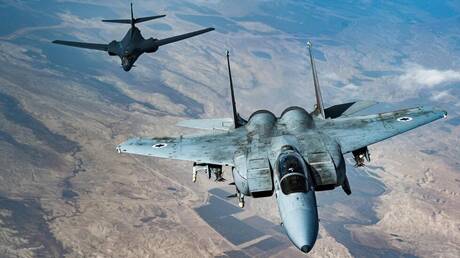
The United States plans to withdraw stealth cruise missiles from its stockpiles designated for other regions, reflecting an escalation in military efforts against Iran. This move comes as the U.S. nearly exhausts its inventory of JASSM-ER missiles.
The JASSM-ER missiles are advanced weapons known for their ability to execute precise strikes on distant targets, making them a vital component of U.S. military strategy. According to reports, these missiles will be utilized in the event of heightened tensions with Iran, which has seen its relations with Washington deteriorate continuously.
Details of the Event
The United States aims to enhance its military capabilities in the Middle East through this move, as concerns grow over Iran's nuclear activities and its interventions in regional affairs. Experts indicate that withdrawing these missiles from the Pacific reflects new priorities in U.S. defense strategy, focusing on countering potential threats from Iran.
This step comes at a sensitive time, as tensions between Iran and the United States have escalated, particularly following Washington's withdrawal from the Iranian nuclear deal in 2018. This withdrawal is seen as a turning point in relations between the two countries, leading to a continuous escalation in military and political rhetoric.
Background & Context
Historically, U.S.-Iranian relations have experienced increasing tensions since the Islamic Revolution in 1979. Since then, the United States has taken a series of military and economic actions against Iran, including imposing strict sanctions. In recent years, these tensions have notably increased, especially with the rise of Iranian nuclear activities.
In this context, the JASSM-ER missiles are part of U.S. efforts to bolster its military capabilities in the face of regional threats. These missiles have a range of up to 1000 kilometers, allowing them to target distant objectives with high precision, thereby enhancing the effectiveness of U.S. military operations in the region.
Impact & Consequences
This move is expected to escalate tensions in the region, as Iran may respond to these military maneuvers by increasing its military activities or through its allies in the region. This could lead to heightened conflicts in areas such as Iraq, Syria, and Lebanon, where Iran holds significant influence.
Moreover, these actions may affect U.S. relations with its allies in the region, as some countries might feel concerned about the rising military tensions. Some analysts suggest that this step could increase divisions among Arab states, particularly in light of shared security challenges.
Regional Significance
These developments are particularly significant for Arab countries, as they may impact the stability and security of the region. Amid rising tensions, Arab nations may find themselves compelled to reassess their security and military strategies. Additionally, these events could increase pressure on Arab governments to cooperate with the United States in addressing Iranian threats.
At the same time, some armed groups may exploit these tensions to enhance their influence in the region, complicating the security landscape further. Therefore, these developments warrant special attention from decision-makers in Arab countries.
The withdrawal of U.S. JASSM-ER missiles from the Pacific reflects a strategic shift in its military policy towards Iran. As tensions rise, the question remains about how this move will affect security and stability in the Arab region.