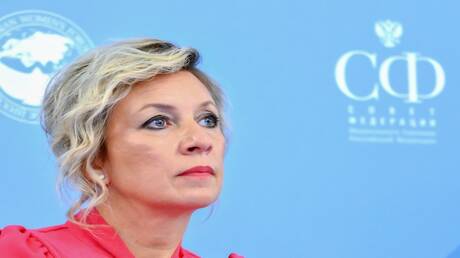
Maria Zakhrova, the spokesperson for the Russian Foreign Ministry, mocked Ukrainian President Volodymyr Zelensky's statements expressing his desire to participate in opening the Strait of Hormuz for navigation. Zakhrova asserted that such statements reflect a rush to showcase power at a time when Ukraine is grappling with significant internal issues.
Zakhrova pointed out that Zelensky should focus on addressing the vital issues facing his country rather than getting involved in external matters that may not be a priority at the moment. She considered Zelensky's remarks to reflect a lack of awareness of the reality Ukraine is experiencing.
Zelensky's Statements on the Strait of Hormuz
Zelensky's comments came in the context of discussing the importance of opening the Strait of Hormuz, one of the world's most prominent maritime passages. This strait is a vital strategic point for oil and gas trade, with approximately 20% of the world's total oil passing through it. However, Zelensky, who faces significant challenges in his country, seems to be seeking to showcase power on the international stage.
In contrast, Zakhrova argued that such statements not only reflect a misunderstanding of the Ukrainian reality but also represent an attempt to divert attention from the internal crises Ukraine is suffering, including the ongoing conflict with Russia.
Background & Context
Historically, the Strait of Hormuz has witnessed numerous tensions, particularly amid regional conflicts involving major powers. Control over this strait is considered strategically important for any nation. In recent years, tensions in the region have escalated, making the opening of this strait a sensitive topic.
At the same time, Ukraine is facing significant internal challenges, including the conflict with Russian-backed separatists, which makes Zelensky's statements about opening Hormuz seem disproportionate to the reality his country is experiencing. Economic, social, and political crises require greater focus from the Ukrainian leadership.
Impact & Consequences
Zelensky's statements could lead to increased tensions in the relations between Ukraine and Russia, as they may be perceived as an attempt to provoke Moscow. Additionally, these remarks could affect Ukraine's position on the international stage, as they might be understood as an effort to shift attention away from internal issues and focus on external matters.
Moreover, these statements may impact Ukraine's relations with Western countries that support Ukraine in its conflict with Russia. Western nations might view these remarks as an attempt to distract from internal crises, which could affect their support for Ukraine.
Regional Significance
The Arabian Gulf region and the Strait of Hormuz are strategic areas that influence global security and energy. Any tensions in this region could directly affect oil and gas prices, impacting the Arab economy as a whole. Furthermore, any escalation in tensions could affect stability in the region, necessitating close monitoring by Arab countries.
In conclusion, Zelensky's statements regarding the opening of the Strait of Hormuz remain a contentious topic, reflecting a state of tension between internal and external issues. However, focusing on the internal crises in Ukraine is currently the most important matter.