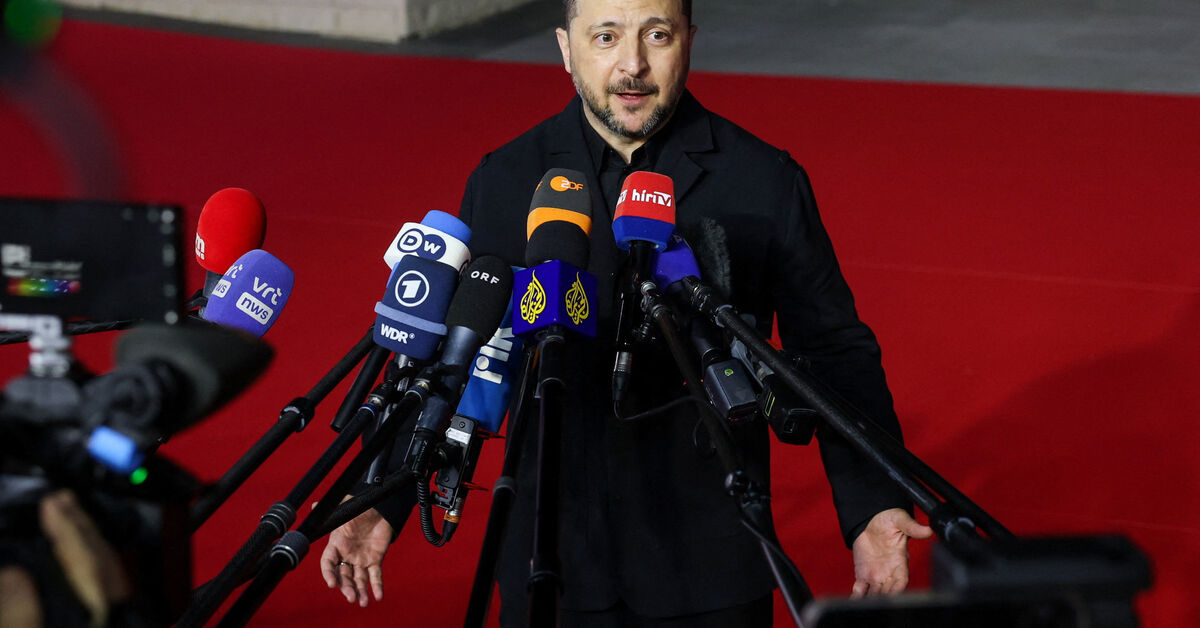
In a controversial statement, Ukrainian President Volodymyr Zelensky asserted on Tuesday that Israel's purchase of wheat from Ukrainian lands occupied by Russia cannot be considered a legal act. This statement followed the arrival of a new ship loaded with Ukrainian wheat at an Israeli port, where Zelensky indicated that such trade is unacceptable.
Zelensky stated via the social media platform X: "Another ship carrying this wheat has arrived at a port in Israel and is preparing to unload its cargo. This is not – and cannot be – a legal act." He confirmed that the Ukrainian government is preparing to impose strict sanctions on individuals or entities attempting to benefit from this illegal trade.
Details of the Incident
Concerns are growing in Ukraine that purchasing wheat from occupied territories may encourage Russia to continue its occupation. Zelensky pointed out that these commercial activities reflect a lack of respect for Ukrainian sovereignty and contribute to the worsening humanitarian crisis the country is experiencing.
This statement comes at a sensitive time as Ukraine seeks to strengthen its international position in the face of Russian aggression. Ukrainian wheat is one of the most important agricultural exports, relied upon by many countries to secure their food needs.
Background & Context
Since the onset of the Russian-Ukrainian war in 2014, Ukraine has faced numerous violations by Russian forces, including the seizure of agricultural lands. This conflict has led to a deterioration of the economic situation in the country and increased suffering among local populations.
Historically, Ukraine has been known as the breadbasket of Europe, producing large quantities of wheat and barley. As the conflict escalates, it has become increasingly difficult for the country to maintain this vital industry, negatively impacting global food security.
Impact & Consequences
These statements may escalate tensions between Ukraine and Israel, as purchasing wheat from occupied territories is viewed as implicit support for Russian policies. Additionally, imposing sanctions on Israeli entities could affect trade relations between the two countries.
Furthermore, this situation may contribute to increased international pressure on Russia, as Ukraine demonstrates that it will not tolerate any form of exploitation of its natural resources. This could lead to new diplomatic moves by Western nations to support Ukraine in its stance.
Regional Significance
The situation in Ukraine is of particular importance to Arab countries, many of which rely on imports of Ukrainian grains. Any deterioration in production or export could directly affect food security in the region.
Moreover, the political and economic crises in Ukraine could lead to a rise in global grain prices, adversely impacting Arab nations already facing economic challenges. Therefore, monitoring developments in this context is vital for Arab countries.
In light of these circumstances, the international community must take a clear stance against Russian violations in Ukraine and work to support Kyiv's efforts to restore its sovereignty and protect its natural resources.