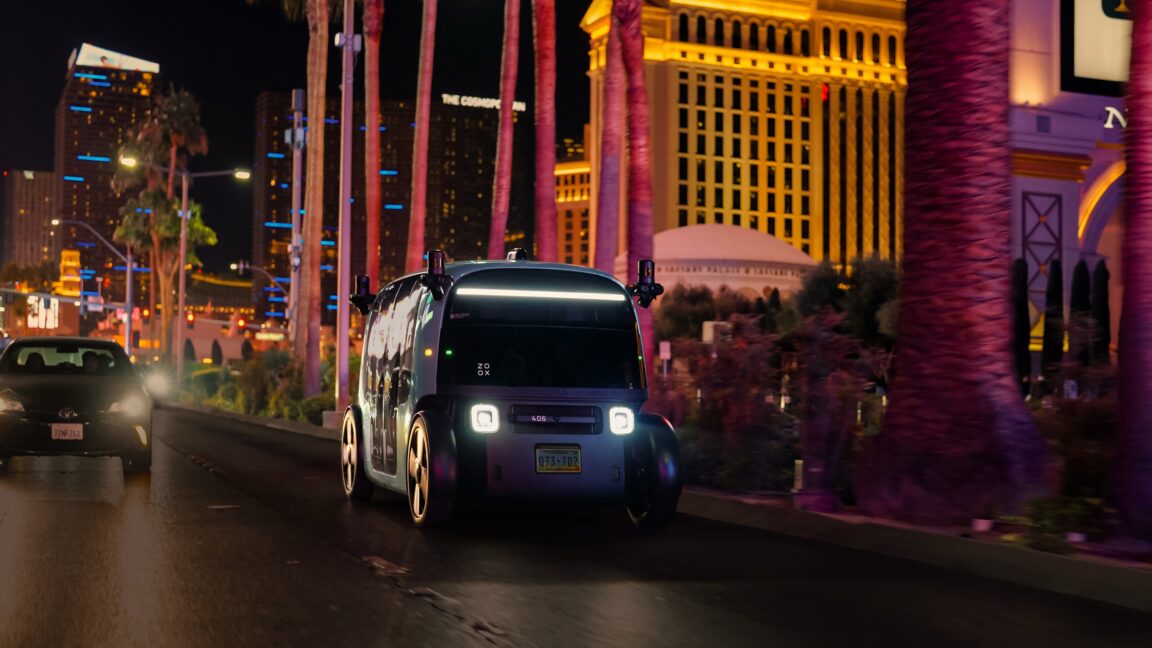
Zoox, a company specializing in the development of self-driving cars, has unveiled its bidirectional design for a robotic taxi, representing a significant leap in the field of smart transportation. This design is characterized by its ability to operate efficiently in urban environments, making it an ideal choice to meet the increasing transportation needs in major cities.
Zoox is part of the global trend towards developing smart transportation solutions, focusing on innovation in the design of autonomous vehicles. The bidirectional design allows the car to move in both directions without needing to turn around, saving time and enhancing traffic flow in congested streets.
Technical Details of the Robotic Taxi
The Zoox vehicle features a unique design that enables it to operate in complex urban environments. This design includes a range of advanced sensors that help the car recognize and interact safely with its surroundings. Additionally, the vehicle is equipped with cutting-edge technology that allows it to navigate smoothly through traffic, enhancing its ability to provide effective transportation services.
Zoox aims to transform urban transportation by offering innovative solutions that contribute to reducing traffic congestion and carbon emissions. The use of robotic taxis could significantly improve air quality and reduce reliance on traditional transportation methods.
Background & Context
Historically, the transportation industry has undergone significant transformations with technological advancements. The concept of self-driving cars has been emerging for several years, and with the evolution of technology, this idea is becoming closer to reality. Founded in 2014, Zoox has been among the leading companies in this field, striving to provide innovative solutions that align with modern demands.
In recent years, investments in self-driving vehicles have surged, with many major companies seeking to develop new technologies that enhance transportation methods. Innovations such as Zoox's bidirectional design represent an important step towards achieving this goal.
Impact & Consequences
Zoox's bidirectional design could have significant implications for the transportation industry. This innovation is expected to enhance user experience, as robotic taxis can provide more efficient and safer transportation services. Furthermore, this design may reduce traffic accidents caused by human error, thereby improving road safety.
Moreover, the widespread adoption of robotic taxis could lead to changes in traditional business models within the transportation sector. Traditional transportation companies may face new challenges that require them to adapt to rapid technological innovations.
Regional Significance
The introduction of Zoox's robotic taxi design is particularly significant in urban areas where traffic congestion and pollution are pressing issues. By integrating such technology into public transport systems, cities could witness a transformation in how residents commute, leading to a more sustainable urban environment.
In conclusion, the advancements made by Zoox in the field of robotic taxis not only promise to enhance transportation efficiency but also contribute to broader environmental goals. As cities continue to grow, the need for innovative transport solutions becomes increasingly critical.