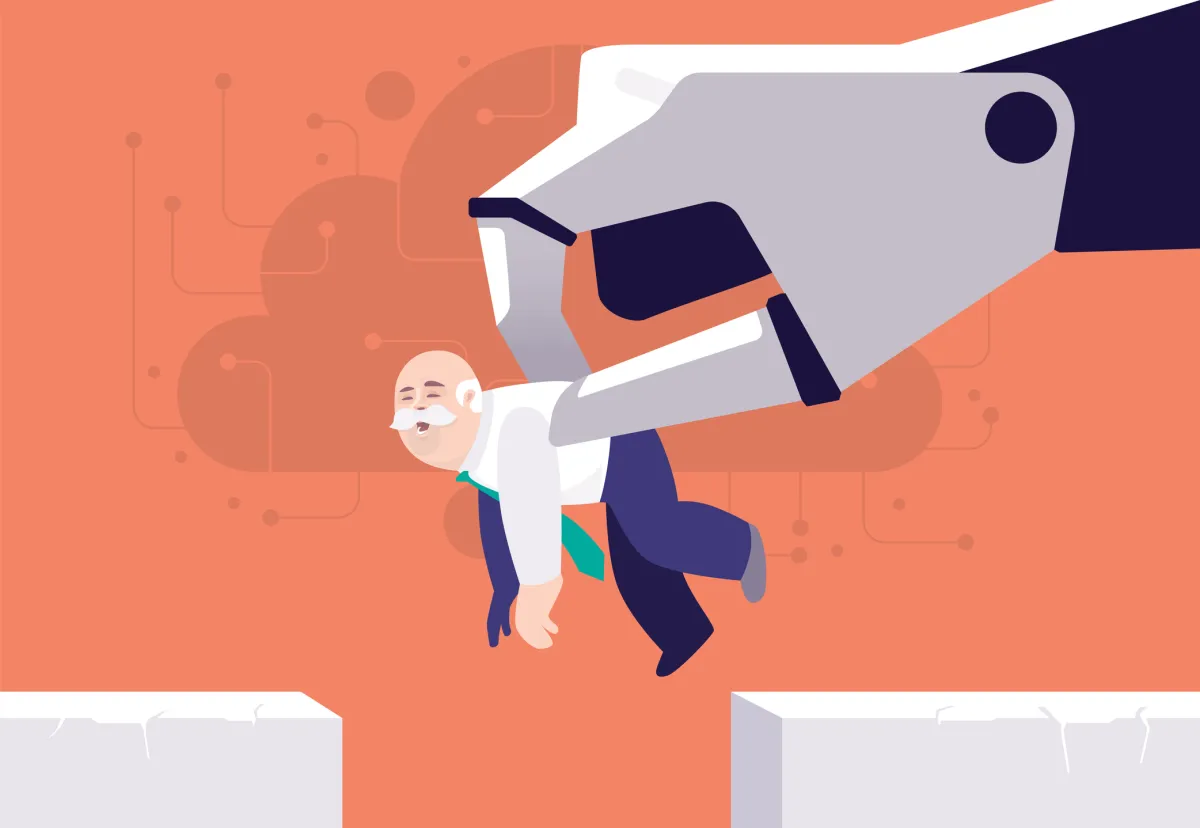
A recent survey reveals that approximately 15% of Americans are open to working under managers who rely on artificial intelligence. This shift reflects a significant transformation in the workplace, where some layers of traditional management are being replaced by advanced AI systems. This trend is referred to as the "great transition".
The survey indicates that many employees see AI as an opportunity to enhance efficiency and reduce bureaucracy, potentially leading to smoother and more effective work environments. However, this transformation raises questions about the role of humans in management and how it will impact organizational culture.
Details of the Trend
In recent years, many major companies in the United States have witnessed a notable shift towards using artificial intelligence in various aspects of work, including management. This trend involves the use of AI systems to analyze data, make decisions, and even communicate with employees. As reliance on these systems increases, it is becoming possible to find virtual managers overseeing work teams.
Research shows that using AI in management can lead to improved performance and increased productivity. However, the question remains whether these systems can understand the human and social aspects required in traditional management.
Background & Context
Historically, workplaces have undergone significant transformations due to technological advancements. Since the Industrial Revolution, innovations have changed how businesses are managed. With the emergence of artificial intelligence, companies have entered a new phase of transformation, where many administrative tasks that previously required human intervention can now be automated.
This phenomenon is part of a broader shift in the global economy, where technology is increasingly integrated into all aspects of daily life. These trends are expected to continue to grow, prompting companies to rethink their management strategies.
Impact & Consequences
The potential consequences of using artificial intelligence in management are manifold. On one hand, it can lead to improved efficiency and reduced costs, enhancing companies' competitiveness. On the other hand, this shift may raise concerns about the loss of traditional jobs, as some human positions could be replaced by AI systems.
Moreover, this transformation might affect organizational culture, as communication between employees and management could become more formal and less human. This could impact employee morale and lead to new challenges in team management.
Regional Significance
In the Arab region, this trend could have significant effects on labor markets. As reliance on technology increases, Arab companies may find themselves compelled to adopt these systems to enhance their efficiency and competitiveness. However, companies must consider cultural and social aspects when implementing these transformations.
There is also an urgent need to develop digital skills among the Arab workforce to ensure they can adapt to these changes. Clear strategies for training and development must be in place to ensure that opportunities presented by artificial intelligence are not missed.
In conclusion, the use of artificial intelligence in management represents a major shift in the workplace, necessitating that companies consider how to adapt to these changes. While this transformation can provide new opportunities, it must be approached cautiously to ensure that human values are not lost in work environments.