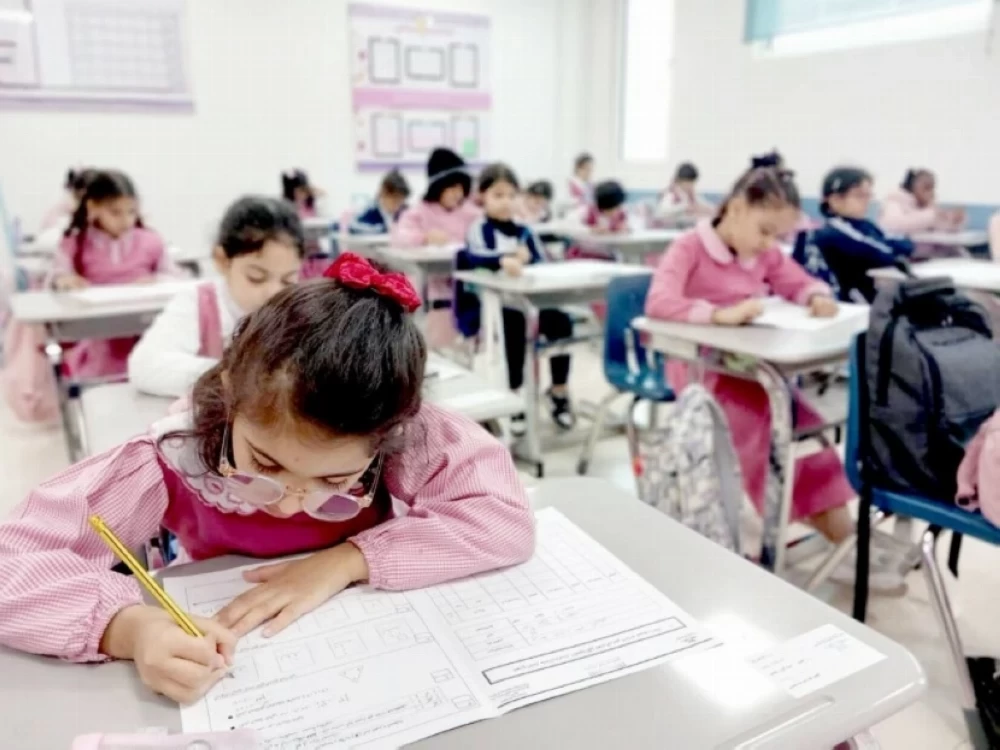
The Saudi Education and Training Evaluation Commission has announced four main factors that contribute to student success during the 'Nafes' tests, which launched today (Sunday). These factors include family support, student seriousness, school cooperation, and community awareness.
The Commission explained that family support involves encouraging students psychologically and assisting them in preparing for the tests, in addition to involving them in surveys related to the tests. It also emphasized the importance of student seriousness in their performance, as they must answer questions with focus, honesty, and interest.
Details of the Event
The national 'Nafes' tests began in more than 28,000 primary and intermediate schools across various regions and provinces of Saudi Arabia. These tests cover mathematics and reading for third-grade primary students and early childhood schools, as well as mathematics, reading, and science for sixth-grade primary students and the same subjects for third-grade intermediate students.
The tests target more than 1.5 million students, with over 3 million surveys directed at students, teachers, school principals, and parents, aimed at collecting comprehensive data about the educational environment.
Background & Context
The 'Nafes' tests are part of the Human Capacity Development Program, which aims to improve the quality of education in the Kingdom. These tests are considered an essential tool for measuring educational performance indicators, helping to provide accurate data for decision-makers and stakeholders.
Additionally, the tests aim to promote excellence and positive competition among schools and educational administrations, supporting national efforts to enhance the educational process and increase its efficiency.
Impact & Consequences
The 'Nafes' tests contribute to improving the quality of education by providing accurate information about student and school performance. This data helps identify strengths and weaknesses in the educational system, allowing for informed decisions to enhance performance.
Moreover, these tests raise community awareness about the importance of education and its development, contributing to creating a better educational environment for students.
Regional Significance
Saudi Arabia's experience in implementing the 'Nafes' tests serves as a model for other Arab countries, potentially contributing to improving the quality of education in those nations. These tests reflect the Kingdom's efforts to develop education, which could positively impact education in neighboring countries.
In conclusion, the Education and Training Evaluation Commission, through the 'Nafes' tests, aims to achieve national objectives in developing education, contributing to building an educated generation capable of facing future challenges.