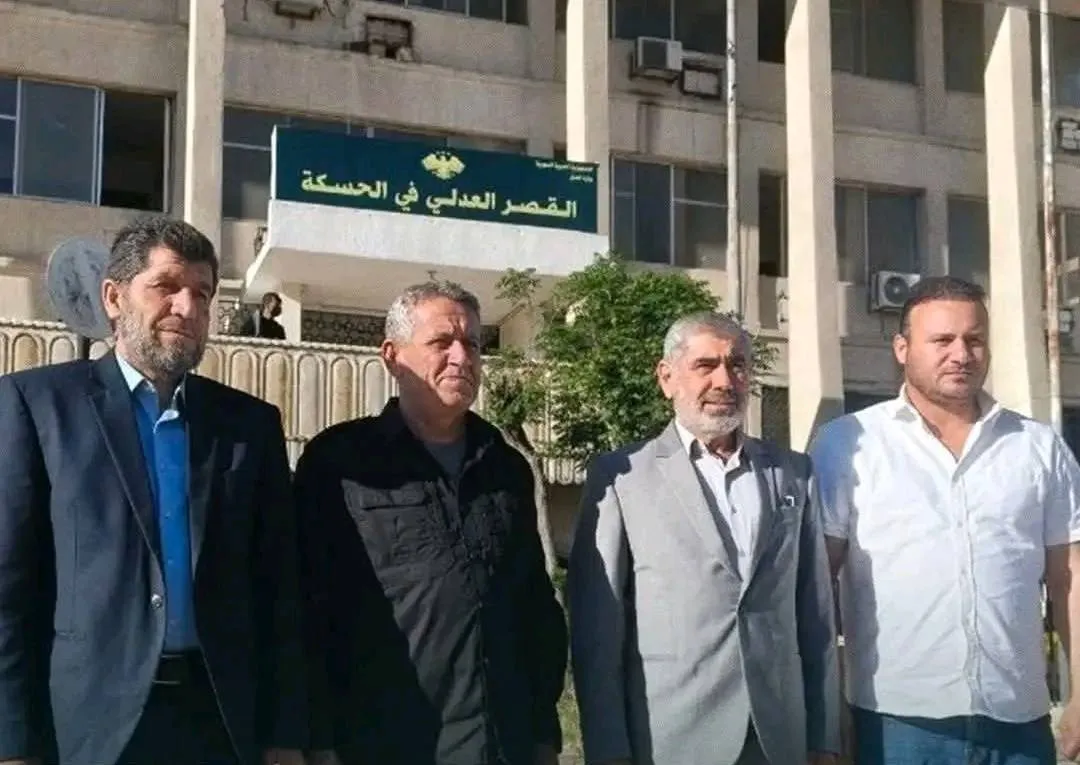
The Deputy Governor of Hasakah, Ahmad Al-Hilali, has revealed a clear absence of state flags and national symbols in areas controlled by the Syrian Democratic Forces (SDF), reflecting growing tensions between the Syrian government and the SDF. This statement was made during remarks where Al-Hilali accused "troublemakers" of obstructing the government's efforts to complete the agreement of January 29.
Al-Hilali confirmed that the Ministry of Justice has not received the judicial palace despite repeated promises, indicating that this absence reflects a lack of loyalty to the state among the SDF. In response, a leader in the "Self-Administration," Abdul Karim Omar, clarified that the signage in self-administration areas was written in three languages: Kurdish, Arabic, and Syriac, and that the removal of the Kurdish language represents a significant sensitivity related to national identity.
Details of the Event
Protests continue in Hasakah against the removal of the Kurdish language from the signage of the judicial palace, which has been removed several times by elements of the "Revolutionary Youth." Al-Hilali called on the SDF to prepare its base for accepting the integration process and enhancing national belonging, noting that the government is continuing to implement integration pathways, having released 232 members of the SDF, with preparations for a new batch.
He also mentioned that the government facilitated the return of more than 1,200 families from Afrin to their villages, contributing to the evacuation of 8 schools and institutes that were used as shelters. He affirmed that Decree No. 13 serves as an important entry point for establishing the rights and freedoms of Kurdish citizens, and that the Kurds will have a voice within the Syrian parliament.
Background & Context
These statements come at a sensitive time, as northeastern Syria is witnessing tensions between the Syrian government and the SDF, which controls areas with a Kurdish majority. The Decree No. 13 mentioned by Al-Hilali stipulates the cultural and linguistic rights of the Kurds, considering them an essential part of the Syrian people. This context reflects the significant challenges facing the Syrian government in rebuilding trust with various community components.
Leader Omar pointed out that the removal of the Kurdish language from signage contradicts what is stipulated in the decree, further escalating tensions. This dispute also reflects deeper issues related to identity and belonging, as Kurds feel that the government is using the Kurdish language issue as a means of pressure.
Impact & Consequences
The current tensions could negatively affect national reconciliation efforts in Syria, as the absence of state symbols in SDF-controlled areas may reflect a lack of recognition by these forces of the government's authority. This situation could lead to an escalation of protests and increased polarization among the different components of Syrian society.
Moreover, the continuation of these tensions could impact the security situation in the region, as any escalation could worsen humanitarian conditions and increase civilian suffering. The Syrian government needs to find effective solutions to address these issues and enhance trust with the Kurds and other components.
Regional Significance
These events are part of a broader regional landscape, reflecting the challenges faced by countries in managing cultural and linguistic diversity. The Kurds in Syria represent a model of communities suffering from a lack of recognition of their rights, raising questions about how to address these issues in other contexts in the region.
Ultimately, the situation in Syria requires ongoing efforts from all parties to achieve stability and build a shared homeland that recognizes the rights of all its components. This necessitates honest dialogue and cooperation between the government, the SDF, and other components.