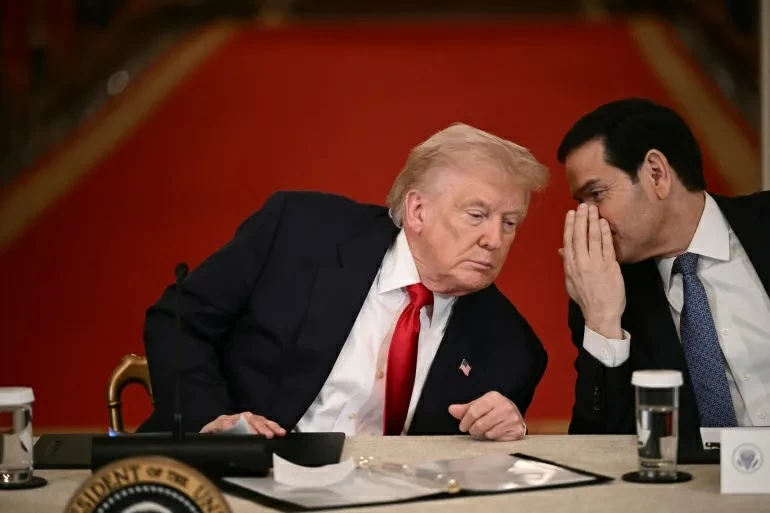
The absence of US Secretary of State Marco Rubio from negotiations with Iran, one of the most significant political issues today, raises numerous questions about the future of American diplomacy. Does this absence signify the end of the traditional role of the State Department, or is it a calculated political choice?
According to Newsweek, this absence is linked to the management style of President Donald Trump, known as an "unconventional president" who uses his business background to steer diplomatic affairs. It seems that Trump prefers to "privatize" foreign policy, delegating tasks to trusted figures such as Jared Kushner and David Whitcomb, who are leading negotiation efforts not only with Iran but also on other issues like Ukraine, the Middle East, and Russia.
Details of the Event
Interestingly, Rubio holds a title that has not been held by anyone since Henry Kissinger in the 1970s, combining the roles of Secretary of State and National Security Advisor. However, the Financial Times revealed that Rubio has traveled only for 71 days since taking office, the lowest rate for any US Secretary of State this century.
Rubio justifies his absence from travel by stating that he no longer needs to move around, as world leaders come to him in Washington, allowing him to hold meetings that combine both of his roles in one room. Yet, behind this explanation lie complex political calculations, as Rubio is viewed as a serious contender for the presidency in 2028, much like Vice President J.D. Vance.
Context and Background
While some analysts dismiss the notion of a direct link between Rubio's absence and the 2028 elections, the Financial Times tends to interpret this deliberate distancing from Middle Eastern crises as an early presidential ambition. A former Republican aide points out that a successful negotiation with Iran would be a significant victory for the Vice President, who polls indicate is a potential candidate for 2028.
Some wonder: what if the talks fail? In that case, J.D. Vance's failure could be a positive point for Rubio. This explains the Secretary of State's focus on efforts in safe regions, such as Latin America, where he can achieve tangible victories, like those in Venezuela, Cuba, and Nicaragua, distancing himself from the complex crises in the Middle East.
Impact and Consequences
Recent polls indicate that Rubio's fortunes have risen significantly, jumping from 3% to 35% in a conservative political action conference survey. This reflects how distancing from regional crises may positively impact his political ambitions.
Rubio's absence from negotiations with Iran may contribute to shaping a new American foreign policy, relying on figures close to Trump, which could affect US relations with its allies in the region.
Impact on the Arab Region
Considering the potential impact of this absence, it may lead to changes in regional dynamics, as the United States might adopt a less interventionist approach to Middle Eastern issues. This could open the door for other regional powers to enhance their influence in the area.
In conclusion, Rubio's absence from negotiations with Iran marks a significant point in American foreign policy, raising questions about the future of US-Iranian relations and its impact on regional stability.