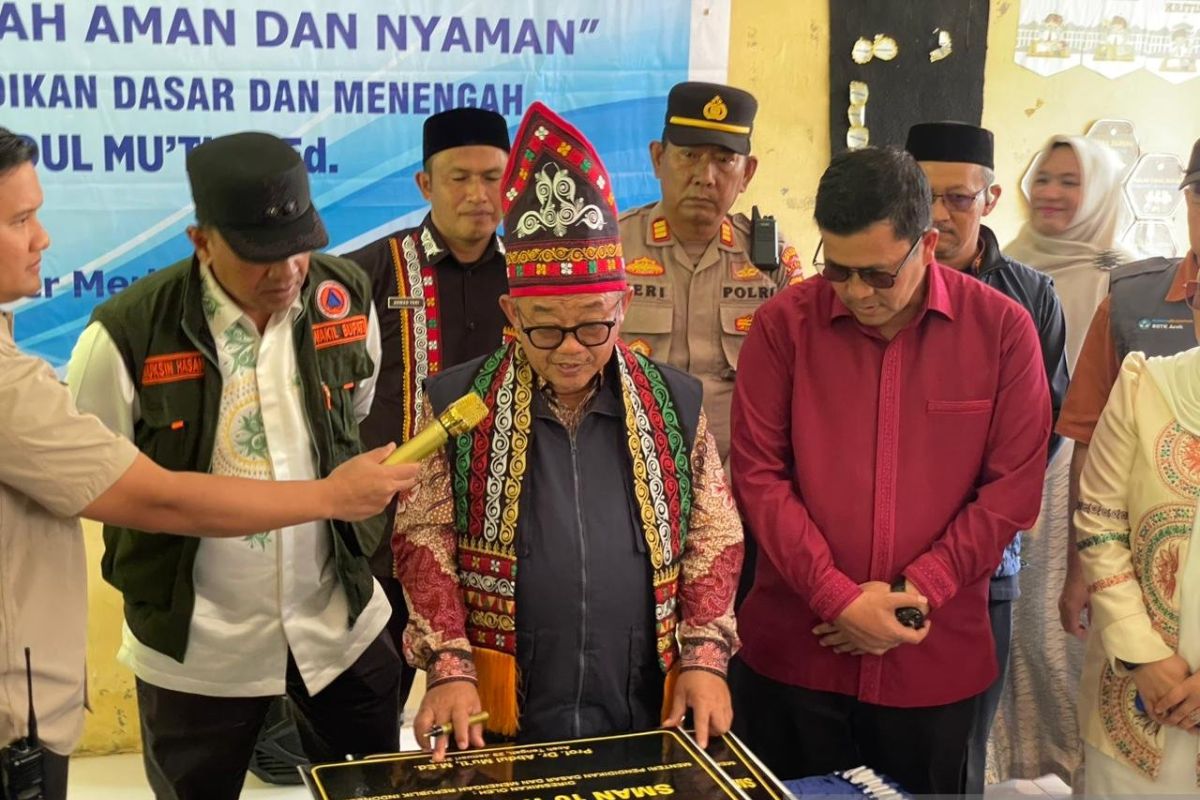
The Rehabilitation and Reconstruction Acceleration Unit (PRR) in Indonesia is working to expedite the rehabilitation of educational facilities that have been affected by hydrometeorological disasters in the regions of Aceh, North Sumatra, and West Sumatra. Reports indicate that a total of 4,922 educational facilities have been damaged, with 3,120 of those located in Aceh alone.
In North Sumatra, 1,149 facilities were reported damaged, while West Sumatra recorded 653 affected facilities. Despite these challenges, the educational process in these areas has fully resumed, with most classrooms returning to operation.
Details of the Rehabilitation Efforts
The PRR unit announced that 3,046 educational facilities in Aceh have resumed classes in their original classrooms, while in North Sumatra, 1,133 facilities have returned to operation, and in West Sumatra, 640 facilities are back to functioning. The unit is actively working to improve educational conditions, as some students are still receiving education in tents or temporary classrooms.
The head of the PRR unit, Tito Karnavian, acknowledged that educational conditions remain less than ideal, noting that the Minister of Primary and Secondary Education, Abdul Mu'ti, is making significant efforts in this regard. Cooperation agreements have been signed between the ministry and relevant stakeholders to rehabilitate the damaged educational facilities.
Background & Context
Natural disasters in Indonesia, including floods and earthquakes, pose ongoing challenges for the country. These disasters have led to the destruction of numerous educational facilities, negatively impacting the educational process. Historically, Indonesia has experienced many natural disasters that have resulted in loss of life and property destruction.
The Indonesian government is striving to enhance educational infrastructure as part of its sustainable development strategy, considering education a fundamental pillar for achieving social and economic development.
Impact & Consequences
Natural disasters significantly affect education, as students face disruptions and loss of learning opportunities. Nevertheless, the efforts to rehabilitate educational facilities reflect the Indonesian government's commitment to improving educational conditions. The resumption of education in these areas is a positive step towards recovery.
These efforts also indicate the resilience of communities in adapting to crises, as students in the affected regions have shown a strong desire to return to their studies, exemplified by Nouraitch, a twelfth-grade student, who emphasized the importance of education in her life.
Regional Significance
Indonesia's experience in dealing with natural disasters and rehabilitating educational facilities serves as a model for Arab countries facing similar challenges. Natural disasters are not confined to specific regions; thus, sharing experiences and cooperation among countries can contribute to improving government responses to crises.
In conclusion, the efforts to rehabilitate educational facilities in Indonesia exemplify the strong will of communities to face challenges, reflecting the importance of education as a fundamental right for every individual.