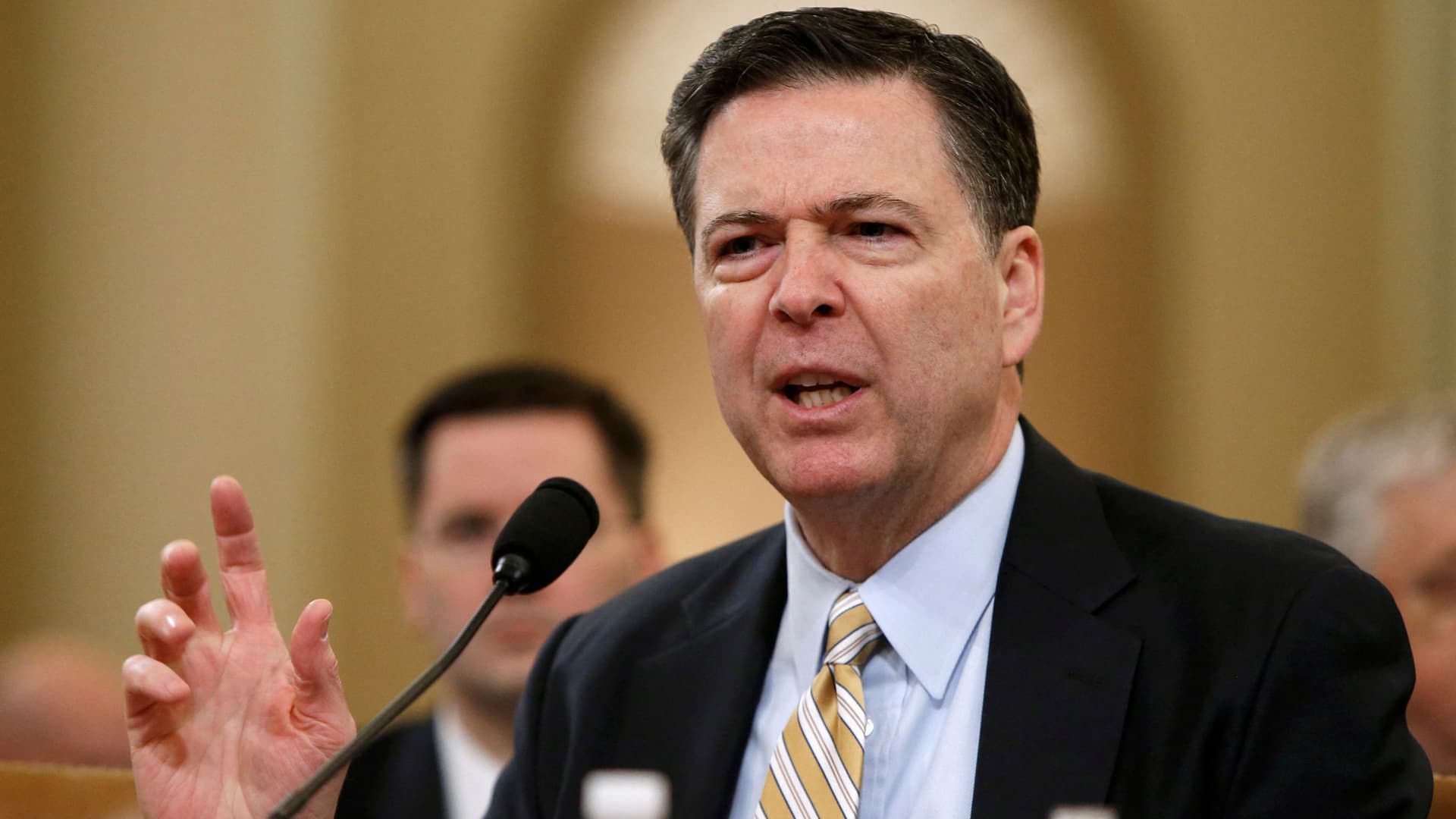
James Comey, the former director of the Federal Bureau of Investigation, has been accused of threatening U.S. President Donald Trump through an Instagram post he shared in May of last year. It is alleged that Comey used an image of seashells displaying the numbers 8647, provoking strong reactions from Trump, who interpreted Comey's message as a call for his assassination.
Details surrounding the accusations against Comey have not yet been fully disclosed, but this is not the first time he has faced allegations in a federal case since the onset of Trump's second presidential term. Trump has repeatedly labeled Comey as his arch-nemesis, complicating their relationship further.
Incident Details
The incident dates back to May 15, when Comey posted an image on his Instagram account that included the numbers 8647. This number, sometimes used in the restaurant industry to indicate the removal of a menu item, sparked widespread controversy. Some viewed it as an indirect call to violence, a claim Comey later denied, stating he was unaware that these numbers could be interpreted as a threat.
Following the post, Comey deleted the image, affirming his opposition to any form of violence. However, investigations did not cease, as the Trump administration looked into the post, although no direct charges were initially filed. Approximately four months later, Comey faced accusations in Virginia related to providing false statements to Congress and obstructing justice.
Background & Context
This case is part of a series of legal and political disputes that have unfolded in the United States in recent years. The tense relationship between Comey and Trump began when Trump dismissed Comey from his position in 2017 after he led the investigation into potential Russian interference in the U.S. elections. Since then, Comey has become a controversial figure in American politics, with Trump frequently accusing him of conspiring against him.
Last November, a federal judge dismissed the criminal case against Comey, ruling that the attorney who brought the accusations had been appointed illegally. This decision added further complexity to the case and highlighted how the American legal system can be influenced by politics.
Impact & Consequences
This case illustrates how politics can affect the legal system, as the law is sometimes wielded as a tool in political conflicts. The accusations against Comey could lead to increased division in the American political landscape, exacerbating polarization between Trump supporters and opponents. Additionally, this case may pave the way for further investigations into the conduct of former officials.
Moreover, these events may raise questions about freedom of expression and its limits, especially concerning public figures. How can a simple social media post be interpreted as a threat? This question could spark widespread debate within American society.
Regional Significance
Although this case pertains to American politics, it has indirect implications for the Arab region. U.S. relations with Arab countries may be influenced by changes in domestic politics, as these disputes could affect the United States' foreign policies. Furthermore, political polarization in America might reflect on how it addresses Arab issues, such as the Israeli-Palestinian conflict or crises in Syria and Libya.
Ultimately, this case serves as an example of how politics and law intertwine in the United States and how these dynamics can impact the international arena.