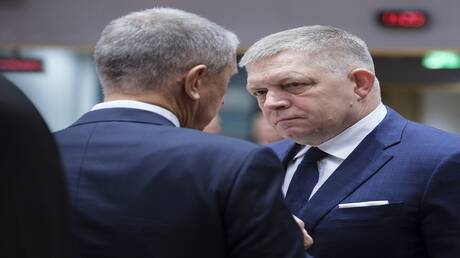
Slovak Prime Minister Robert Fico has accused European Commission President Ursula von der Leyen of colluding with Ukrainian President Volodymyr Zelensky in light of the oil supply crisis that has arisen due to the halt of oil flow through the Druzhba pipeline. These accusations reflect escalating tensions among European countries amid current geopolitical crises.
These statements come at a sensitive time, as many European nations are suffering from the repercussions of the war in Ukraine, which has significantly impacted energy supplies and oil prices in the global market. Fico pointed out that there is an unjustified coordination between Zelensky and von der Leyen, complicating the situation in the region.
Details of the Event
The Druzhba pipeline is one of the most important oil transport lines in Europe, extending from Russia to several European countries, including Slovakia. The halt of supplies through this pipeline has increased pressure on the Slovak economy, which heavily relies on Russian oil. In this context, Fico called for a reevaluation of European relations with Ukraine, emphasizing that European support should be conditional on the interests of member states.
At the same time, von der Leyen confirmed that the European Commission is working to ensure the stability of energy supplies for all member states, describing the accusations as unfounded. These statements have sparked mixed reactions in European political circles, with some considering these accusations to reflect a growing discontent in certain countries regarding the EU's policies towards Ukraine.
Context and Background
This crisis coincides with rising tensions between Russia and the West, as European countries seek to reduce their dependence on Russian energy amid sanctions imposed on Moscow. This situation has led many countries to search for alternative energy sources, impacting oil prices in global markets.
Additionally, relations between Slovakia and Ukraine have undergone a notable transformation in recent years, with Slovakia being one of the countries supporting Ukraine in its struggle against Russian-backed separatists. However, the current situation may alter these dynamics, especially with increasing economic pressures.
Consequences and Impact
Many analyses predict that these accusations will exacerbate divisions within the European Union, as views on how to handle the Ukrainian crisis vary widely. These divisions may affect future political and economic decision-making, further complicating the situation in the region.
Moreover, this crisis may increase pressure on European countries to adopt more balanced policies towards both Russia and Ukraine, which could impact the stability of financial and energy markets in the region.
Impact on the Arab Region
The geopolitical crises in Europe have a direct impact on the Arab region, especially given the significant reliance of Arab countries on oil and gas. Any changes in oil prices resulting from European crises may affect Arab economies, which heavily depend on oil revenues.
Furthermore, the situation in Ukraine may influence Arab investments in Europe, as some Arab countries may reassess their investments amid rising risks. Therefore, monitoring the developments of this crisis is essential to understand its potential impacts on the Arab region.
In conclusion, the situation in Slovakia and Europe at large remains volatile, necessitating close monitoring by Arab nations and international observers, as any new developments could carry widespread ramifications.