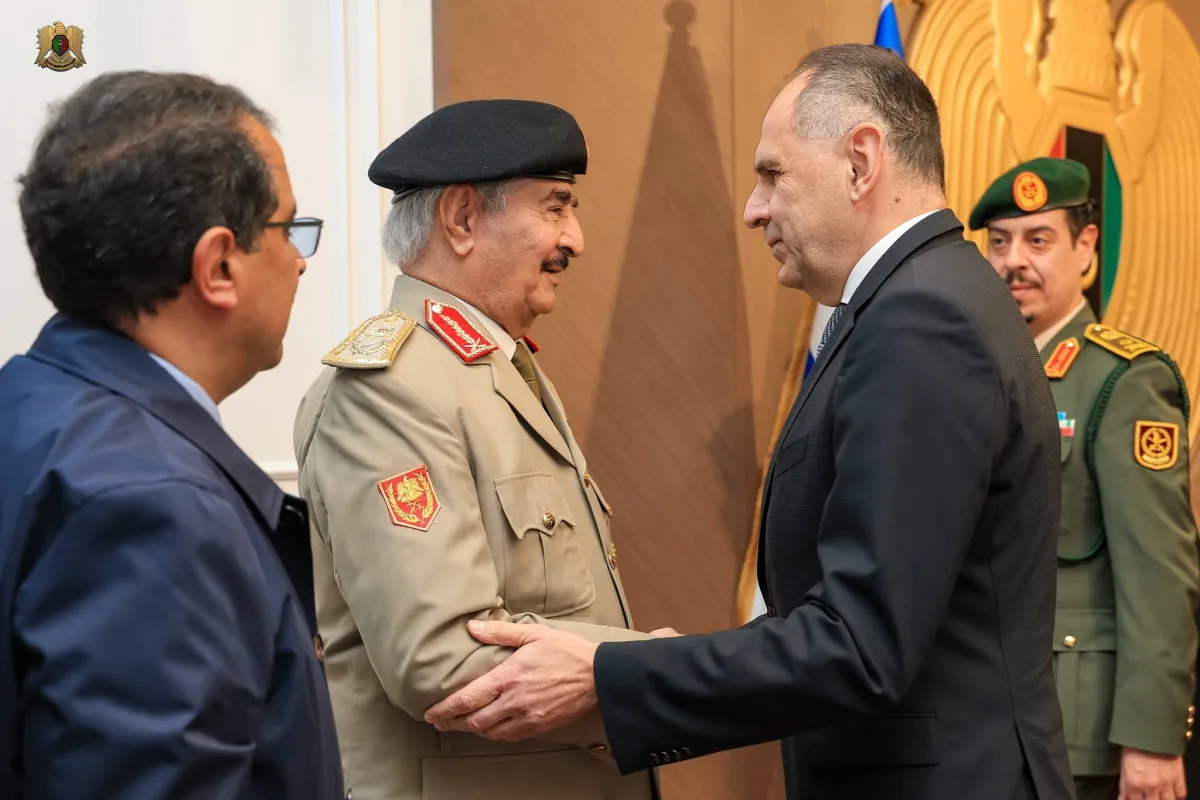
The issue of irregular migration took center stage in discussions between the Commander of the Libyan National Army, Khalifa Haftar, and Greek Foreign Minister George Gerabetridis. The importance of cooperation between the two countries to combat this phenomenon was emphasized during a meeting held on Saturday, which was attended by Haftar's deputy and son, Lieutenant General Saddam Haftar.
According to a statement issued by Haftar's office, the significance of coordination between the two sides to combat illegal migration was discussed, serving the interests of both countries and the region as a whole. These talks come at a sensitive time, as the Greek Coast Guard announced the death of 22 migrants who were stranded for six days on a rubber boat in the Mediterranean Sea after departing from the Libyan coast.
Details of the Incident
Reports indicate that the Greek Coast Guard rescued 26 individuals, including a woman and a minor, from a boat belonging to the European Border and Coast Guard Agency, Frontex, off the coast of Crete. The boat had left the area of Tobruk in eastern Libya on March 21, heading towards Greece, which is considered a major gateway for migrants seeking to reach the European Union. The statement clarified that the passengers lost their direction during the journey and remained at sea for six days without food or water, leading to the deaths of 22 individuals.
The statement also noted that the bodies of the victims were thrown into the sea on the orders of a smuggler, while two young men from South Sudan were arrested on suspicion of involvement in the smuggling operation.
Background & Context
Libya is considered a major transit point for thousands of irregular migrants heading to Europe annually, with incidents of drowning and fatalities occurring frequently along this route. According to figures from the International Organization for Migration, the number of migrants within Libya has reached unprecedented levels, approaching one million. Recent data shows there are 939,638 migrants, the highest number since monitoring operations began, reflecting a significant increase compared to previous estimates.
During the meeting, the official statement did not address the boat incident but merely welcomed the Greek minister and his accompanying delegation, reaffirming the depth of the historical and economic ties between the two countries.
Impact & Consequences
These discussions come at a time when pressure is increasing on European governments to address the migration crisis, with growing concerns over the rising numbers of irregular migrants. The Greek Foreign Minister highlighted the importance of strengthening bilateral relations, particularly through the involvement of Greek companies in reconstruction and infrastructure projects.
He also emphasized the importance of developing trade exchanges between the two countries and opening maritime routes that facilitate the movement of goods and commodities. This cooperation could contribute to enhancing stability in the region, but it also requires addressing the root causes of the migration problem.
Regional Significance
These events coincide with the escalation of the National Consensus Bloc in the High State Council in western Libya, which has intensified its rhetoric against foreign interventions, describing them as suspicious. The country has also witnessed calls rejecting foreign military presence, reflecting a state of concern over external interventions and their impact on national sovereignty.
At the same time, pressure is mounting on the Libyan government to provide effective solutions to the migration problem, amid increasing numbers of migrants and the associated risks. This situation reflects the significant challenges facing Libya amid ongoing political and economic crises.
In conclusion, the issue of irregular migration remains one of the most complex issues in the region, requiring effective international cooperation and comprehensive strategies to address the root causes of this phenomenon.