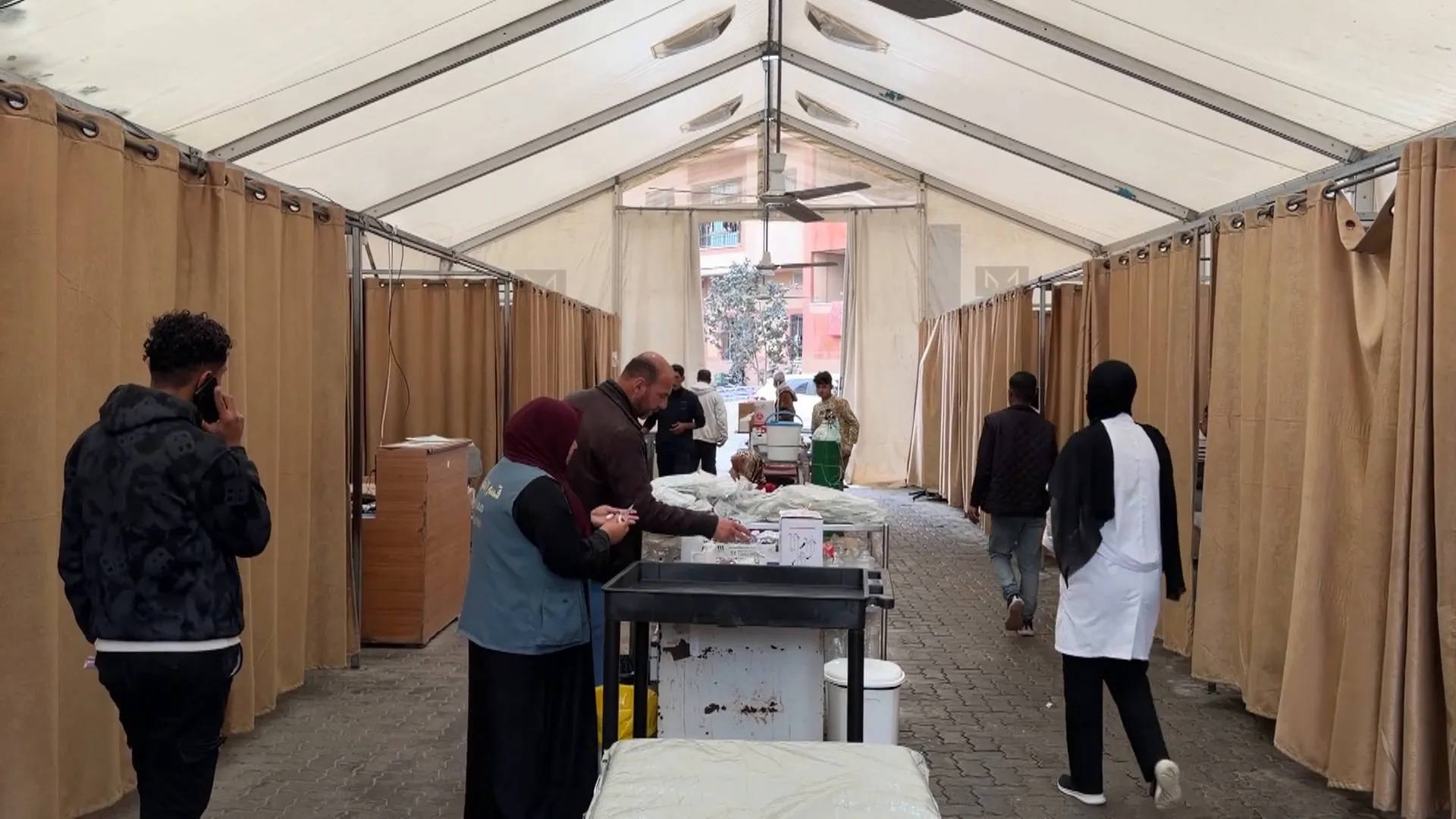
Displaced individuals in Khan Younis, located in southern Gaza, are enduring a suffocating humanitarian crisis, where their suffering extends beyond food and water shortages to include their fundamental right to medical treatment. This silent battle for access to medications is endangering the lives of many, particularly those suffering from chronic illnesses.
The tragedy of these displaced individuals is exemplified by the story of injured Raed Al-Muraydi, who lies in a dilapidated tent, suffering from severe convulsions without access to treatment. Al-Muraydi has lost the ability to swallow food and water, resulting in significant weight loss. His wife recounts her struggles to find medication to alleviate her husband's pain, especially after losing vital nerve medications.
Details of the Crisis
Al-Muraydi's wife bitterly describes his condition, stating that "his situation worsens day by day due to the lack of treatment." She watches him helplessly, as the absence of medications that once controlled his health condition leaves them in despair. Often, their search for medicine ends in front of empty pharmacy shelves, forcing pharmacists to sometimes direct patients toward inaccurate alternatives or to return to doctors in hopes of finding therapeutic formulas similar to what is missing.
Another story reflecting the plight of chronic illness sufferers in Gaza is that of fifty-year-old Nasser Al-Aqqad, who suffers from gland diseases. Al-Aqqad is forced to accept doses much lower than his body requires, taking a 50-milligram dose as a substitute for the missing 100 and 200-milligram doses, merely to stay alive.
Background & Context
From a medical perspective, Dr. Ahmed Abu Taha, head of the endocrinology department at Nasser Hospital, confirms that the cessation of primary care points from distributing chronic medications has increased the burden on patients and exposed them to serious complications. Official statistics from the Ministry of Health indicate a real disaster; approximately 46% of essential drug types (around 285 types) are completely unavailable in the sector, while 66% of necessary medical supplies have run out, rendering hospitals and medical centers incapable of providing even the most basic levels of service.
This medicine crisis is part of a comprehensive war launched by Israel on the Gaza Strip since October 7, 2023. According to reports from the Palestinian Ministry of Health, the war has resulted in the martyrdom of over 72,000 Palestinians and injured more than 172,000 others, the majority of whom are children and women. Amidst the targeting of the health system, thousands of displaced patients in Gaza face imminent danger due to the depletion of medications.
Impact & Consequences
The effects of this crisis extend beyond the borders of Gaza, reflecting the deteriorating health situation faced by Palestinians under current conditions. The unavailability of essential medications endangers the lives of patients and exacerbates their daily suffering. Additionally, this crisis affects the ability of the health system in Gaza to provide necessary care for the wounded and injured, complicating the humanitarian situation further.
This crisis requires an urgent response from the international community to provide necessary humanitarian assistance and ensure the availability of essential medications to those in need. The absence of medical support could lead to a worsening of health conditions in Gaza, increasing the suffering of displaced individuals who are already facing harsh circumstances.
Regional Significance
The medicine crisis in Gaza serves as a stark example of the humanitarian challenges faced by many regions in the Arab world. The situation in Gaza highlights the urgent need for humanitarian and medical support for the displaced and needy. This crisis also underscores the importance of Arab and international solidarity in addressing humanitarian crises.
In conclusion, concerted efforts are needed to alleviate the suffering of displaced individuals in Gaza and ensure that medications and treatments reach those who need them. Silence regarding this crisis will only exacerbate humanitarian conditions, and urgent action must be taken to save lives.