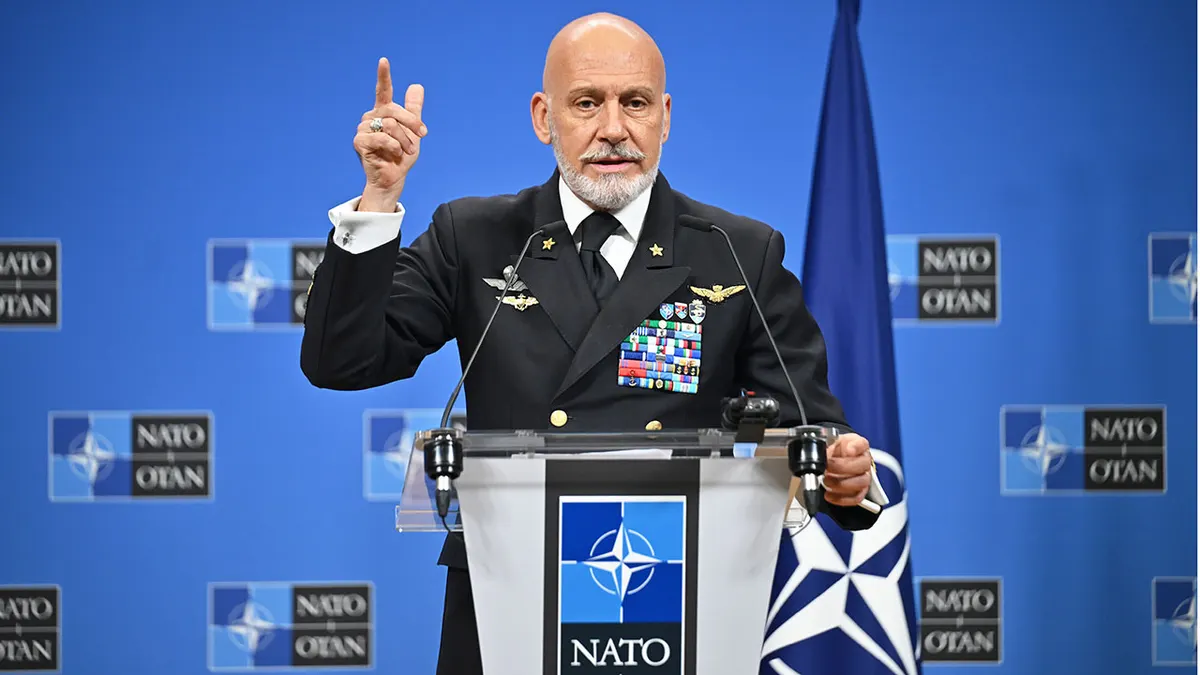
In striking remarks, Admiral Giuseppe Cavo Dragoni, the Chairman of the North Atlantic Treaty Organization (NATO) Military Committee, confirmed that the alliance has a notable technological edge over Russia. This statement came during an interview with a Ukrainian media outlet, where he pointed out that Russia continues to represent "the number one threat" to NATO, reflecting growing concerns about Russian military activities in the region.
Dragoni, who has held his position since 2021, expressed confidence in NATO member states' ability to confront the challenges posed by Russia. He asserted that the alliance is prepared to tackle any potential escalation, highlighting the importance of cooperation among member countries to enhance defensive capabilities.
Details of the Statement
During the interview, Admiral Dragoni discussed recent developments in the Ukrainian conflict, noting that NATO is closely monitoring the situation. He also mentioned that the alliance is working to bolster its military presence in Eastern Europe as a direct response to Russian threats. Dragoni confirmed that NATO continues to provide support to Ukraine, including military assistance and training.
The admiral also addressed the significance of modern technology in enhancing military capabilities, indicating that NATO is investing in the development of new systems to ensure its superiority over Russia. He emphasized that these investments reflect the alliance's commitment to the security of member states and that NATO is ready to face any future challenges.
Background & Context
Admiral Dragoni's remarks come at a sensitive time, as relations between NATO and Russia have been increasingly strained since the onset of the conflict in Ukraine in 2014. These tensions have led NATO to strengthen its military presence in Eastern Europe, raising concerns in Moscow. Russia views NATO's eastward expansion as a threat to its national security, exacerbating tensions between the two sides.
Historically, the region has witnessed numerous conflicts and disputes, with Ukraine at the heart of these tensions. Since the outbreak of the conflict, NATO has become a key player in supporting Ukraine, reflecting its commitment to European security. The alliance is also seeking to enhance cooperation with partner countries in the region to address shared security challenges.
Impact & Consequences
Admiral Dragoni's statements carry significant implications for European and international security. The emphasis on technological superiority reflects NATO's strategy in countering the increasing threats from Russia and strengthens the alliance's position on the global stage. Additionally, these statements may lead to heightened tensions between NATO and Russia, potentially adversely affecting stability in the region.
Moreover, enhancing NATO's military capabilities could trigger a new arms race in the area, further escalating tensions. At the same time, these developments may impact relations among NATO member states, as strengthening military capabilities requires close coordination among countries.
Regional Significance
In the context of global events, tensions between NATO and Russia may influence the situation in the Arab region. Developments in Europe could affect the security policies of Arab countries, especially those with close ties to NATO. Furthermore, conflicts in the region may be impacted by changes in global military balances.
Additionally, the situation in Ukraine could contribute to reshaping regional and international alliances, prompting Arab nations to reconsider their own security strategies. Under these circumstances, it becomes essential for Arab countries to enhance cooperation among themselves to address the increasing security challenges.