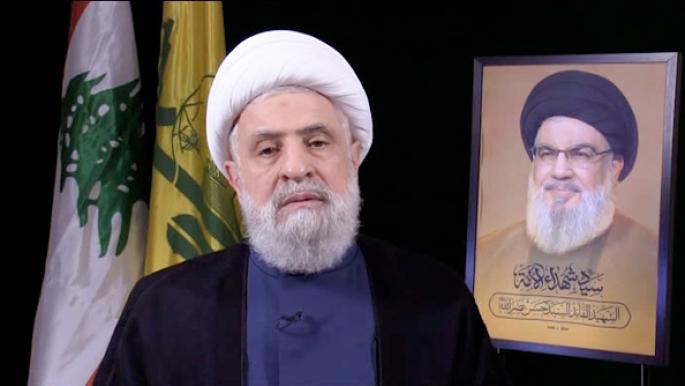
In a statement today, Naeem Qassem, the Secretary-General of Hezbollah, called on the Lebanese government to adopt a strategy of indirect negotiations with the Israeli occupation. This request arises amidst the tense conditions prevailing in the region, where Qassem pointed out that the solution lies in achieving the five points previously outlined.
These remarks are part of Hezbollah's strategy in addressing regional issues, as the party seeks to bolster Lebanon's position in the face of challenges posed by the Israeli occupation. Qassem also affirmed that direct negotiations are not the optimal choice at this time, noting that history has proven their ineffectiveness in yielding tangible results.
Details of the Five Points
The five points mentioned by Qassem relate to Lebanon's fundamental demands, which include Lebanon's rights in its territorial waters, the recovery of occupied lands, and issues concerning Palestinian refugees. These points have been raised on several previous occasions, but no significant progress has been made regarding them.
These statements come at a sensitive time, as the region is witnessing an escalation of tensions among various parties. Hezbollah believes that indirect negotiations could provide a better opportunity to achieve Lebanon's interests without the need for direct confrontation with the occupation.
Background & Context
Historically, Lebanese-Israeli relations have experienced numerous crises, with previous attempts at negotiation often ending in failure. Since the end of the Lebanese Civil War, the Lebanese government has sought to rebuild its relationships with the international community, but tensions with Israel have persisted.
Hezbollah, founded in the 1980s, considers itself the defender of Lebanese rights against the occupation and has played a pivotal role in resisting the Israeli occupation in southern Lebanon. However, its strategies in dealing with the occupation have sparked widespread controversy both within Lebanon and abroad.
Impact & Consequences
Qassem's call for indirect negotiations could lead to a shift in the political dynamics within Lebanon, potentially opening the door for broader dialogue with other political forces. This move may also impact Lebanon's relations with Arab countries, which are closely monitoring the developments in the situation.
If this call is accepted, the Lebanese government may adopt a more open policy in dealing with the occupation, which could result in changes in regional and international attitudes towards Lebanon.
Regional Significance
The importance of these statements lies in the ongoing tensions between Lebanon and Israel, and they may open new avenues for dialogue. The potential for indirect negotiations could reshape the landscape of Lebanese politics and its interactions with neighboring countries.
In conclusion, Hezbollah's initiative for indirect negotiations reflects a strategic shift that could have far-reaching implications for Lebanon's future and its position in the region.