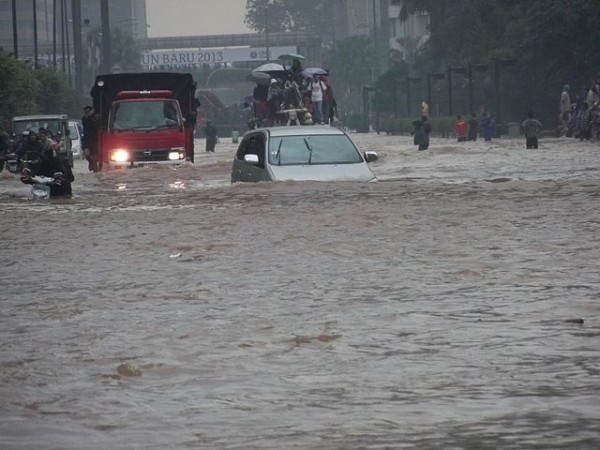
The World Resources Institute (WRI) in Indonesia has revealed the urgent need to change the approach to combating flooding in Jakarta and its surrounding areas, advocating for strategies that focus on water retention rather than rapid drainage. Researcher Yudhistira Pribadi emphasized that this new direction will contribute to improving the effectiveness of water management in the city.
Pribadi explained that nature-based solutions (NbS) should consider the geographical characteristics of different areas, such as upper, middle, and lower regions. For instance, restoration efforts in upper areas should focus on creating multifunctional green spaces, while in middle areas like Depok and Bogor, water retention ponds could be more beneficial.
Details on Implementation
In this context, Pribadi highlighted the importance of creating artificial ponds or water retention areas in lower regions, which experience high population density. These ponds can integrate with public parks to provide green spaces for citizens, thereby improving the quality of life in the city. It was also noted that the use of water pumps and dams should accompany these natural solutions to achieve optimal results.
The Jakarta provincial government is working on designing a series of dams and ponds that not only store water but also aim to provide public green spaces. This approach reflects an increasing understanding of the importance of integrating infrastructure with natural ecosystems, making them more resilient to climate changes.
Background & Context
Historically, Jakarta has experienced numerous devastating floods, prompting authorities to seek effective solutions. With the increasing impacts of climate change, the need for sustainable strategies has become more urgent. Nature-based solutions are not new, but they have started to gain greater attention in recent years as part of global efforts to address environmental challenges.
It is worth noting that some recently constructed dams, such as the Brigif, Asiini, and Lebak Bulus dams, are adopting these new concepts, although they are still in their early stages. These projects represent a step towards improving water management in the city and reducing flood-related risks.
Impact & Consequences
These new strategies are considered an important step towards improving water management in Jakarta, as they could lead to a reduction in flood damage. Additionally, integrating natural solutions into urban planning can contribute to enhancing environmental sustainability, benefiting the community as a whole. Furthermore, these initiatives could inspire other cities in the region to tackle similar challenges.
Regional Significance
The adoption of these strategies is crucial for enhancing water management and reducing flood-related risks, which ultimately promotes environmental sustainability. As Jakarta faces ongoing challenges from climate change, the implementation of nature-based solutions could serve as a model for other urban areas grappling with similar issues.
In conclusion, the shift towards natural strategies in flood management not only addresses immediate concerns but also lays the groundwork for a more sustainable urban future.