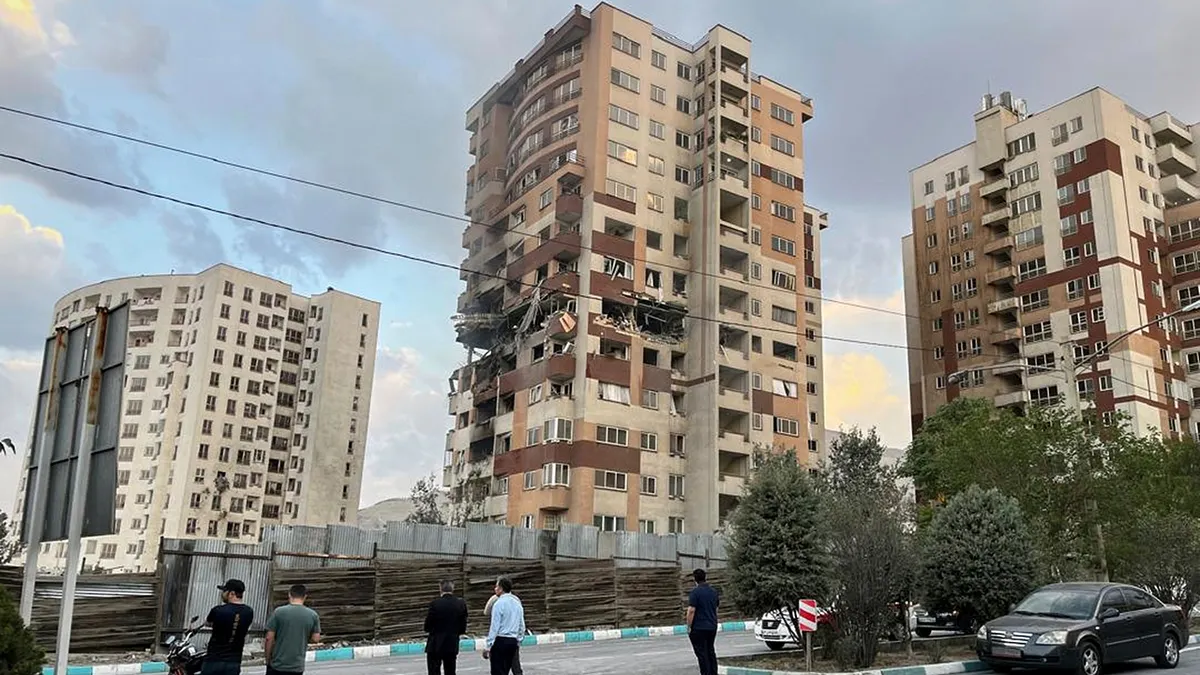
Ahvaz, Iran, witnessed intense bombing on Friday evening from American and Israeli aircraft, resulting in widespread panic among civilians. As the city was engulfed in protests against the war, peaceful marches transformed into scenes of chaos and terror.
At around 10:30 PM, Al Jazeera's correspondent found himself caught in traffic in the "Golestan" neighborhood, where an anti-war march was taking place. While loudspeakers blared national anthems, the roar of aircraft filled the skies, creating a state of panic among the attendees.
Details of the Incident
As the fighter jets approached, pedestrians looked up at the sky, where they heard a deafening sound that was not an ordinary explosion, but rather the sharp sound of a missile strike. This was followed by a massive blast, leading to utter chaos in the street, as people rushed from the park into the crowded street in an attempt to escape the danger.
With the sounds of women and children's screams rising, the Al Jazeera correspondent opened his car windows for fear of them shattering. As the explosions continued, he felt a wave of hot air and the smell of gunpowder, which heightened the panic among the children playing in the park.
Background & Context
These events come at a sensitive time, as Iran is experiencing a military escalation from the United States and Israel, targeting nuclear facilities and infrastructure within the country. These operations have heightened tensions in the region, directly impacting the lives of civilians.
Three weeks prior, the Al Jazeera correspondent had a similar experience, where he was inside a house with windows shattering, but its walls protected him and his children. However, on that night, he realized that the reality of war is entirely different from what media reports convey.
Impact & Consequences
These events illustrate how war is not merely numbers or locations on a map, but rather painful human experiences. The children playing in the parks did not know whether they were fleeing from a game or a missile. These experiences reflect a bitter reality faced by civilians in conflict zones.
The bombing that targeted Ahvaz reflects a new logic in aggression, where strikes are no longer limited to military barracks but also target streets near civilian gatherings, increasing anxiety and fear among the population.
Regional Significance
The repercussions of the bombing in Ahvaz extend beyond Iranian borders, raising widespread concern in the Arab region. Armed conflicts in the Middle East affect the stability of neighboring countries and exacerbate the suffering of civilians in conflict areas.
The continuation of these military operations could lead to a worsening of humanitarian conditions, necessitating urgent international intervention to protect civilians and ensure their safety.
In conclusion, the question remains: if peaceful marches and residential neighborhoods become targets, where do people go to say "no to war"?