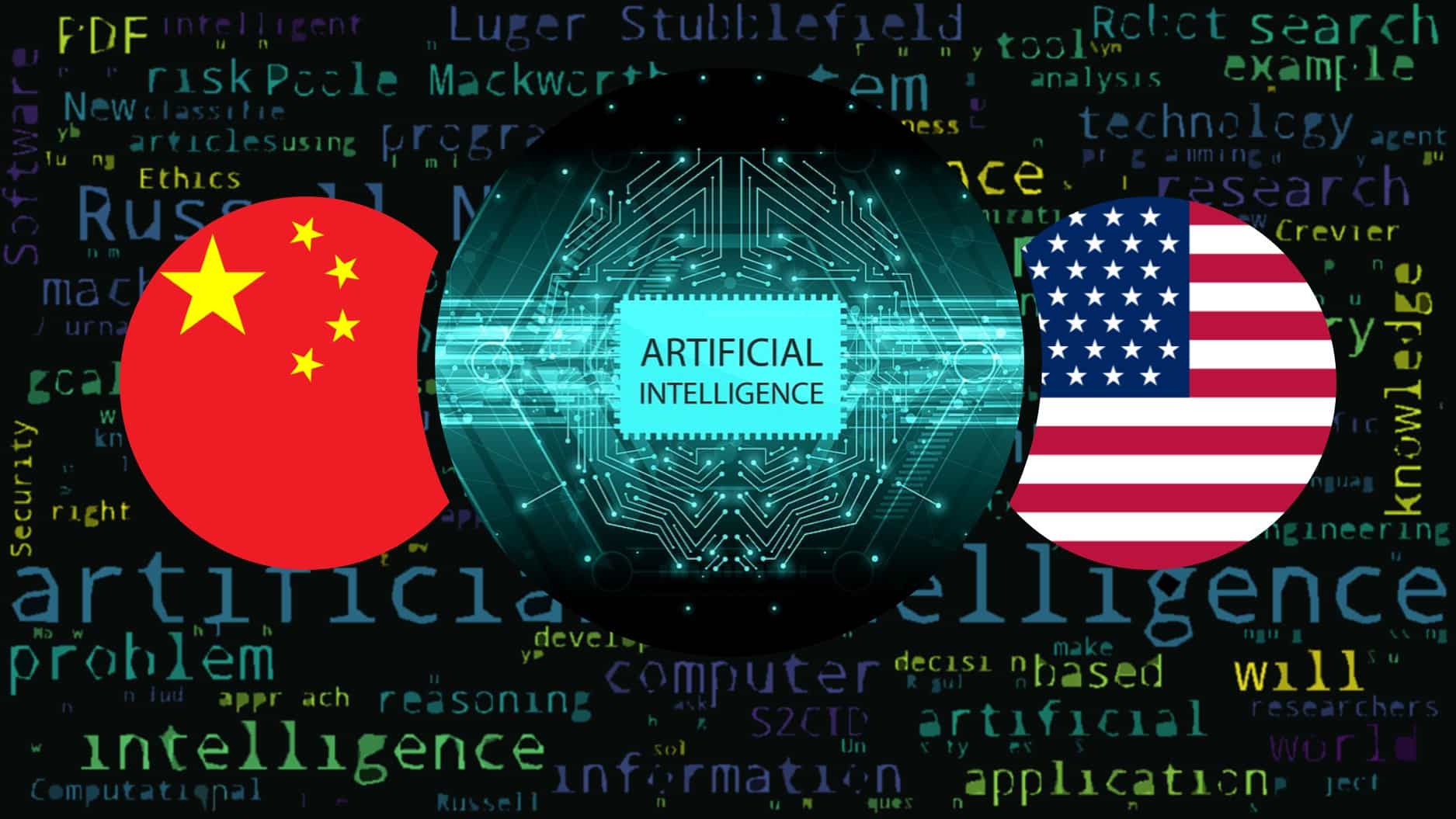
Artificial intelligence is evolving from a mere technological race into a geopolitical battleground that is reshaping global power dynamics. As China's ambitions in this field accelerate, the United States is striving to maintain its supremacy, while Europe seems to be a bystander.
The Swiss newspaper Le Temps emphasized that controlling artificial intelligence means controlling the world, noting that this technology permeates all aspects of life, from the economy to politics.
Details of the Event
Several European newspapers, such as Le Figaro and Le Monde, agree that the conflict is not limited to the number of processors or the power of algorithms, but rather concerns global influence. Language models are not neutral; they reflect cultural and political choices, making them a tool of soft power that China has skillfully exploited.
Beijing aims to disseminate its global technologies through open models, creating gradual dependency without direct imposition. These models set standards in content and interaction methods, granting China influence that extends beyond its borders.
Background & Context
In another report, Le Temps considered that the disaster feared by the United States has already occurred with the rise of Deep Seek. The launch of a powerful and low-cost model, developed using Chinese chips from Huawei, represents a critical turning point in the race for technological independence.
The proliferation of these models may make Chinese technology a global standard, especially given the significant price difference compared to Western models. These developments reveal a counterproductive outcome of American sanctions, as export restrictions have accelerated the development of an independent Chinese technological system.
Impact & Consequences
While Washington and Beijing compete for leadership, Europe struggles to develop first-class models. Despite some initiatives, the continent still lacks a comprehensive system that combines financing, innovation, and the speed necessary to keep pace with this race.
American investor Charles Ferguson warned that artificial intelligence is evolving at a pace that exceeds societies' ability to adapt, pointing to profound risks such as media misinformation and wealth concentration. In a dialogue with French economist Philippe Aghion, they agreed that artificial intelligence poses challenges as much as it offers opportunities.
Regional Significance
Attention is turning to how these developments will affect the Arab region, where modern technology could present significant opportunities for economic growth. However, the challenges associated with rapid transformations in the labor market may require an immediate response from Arab governments.
Amid these dynamics, experts agree on the necessity of implementing deep reforms in education and the labor market to ensure that society benefits from this technological revolution.
In conclusion, the contours of a new world are forming where algorithms become tools of influence and language models serve as means of dominance. Whoever controls artificial intelligence holds the keys to power in the coming world.