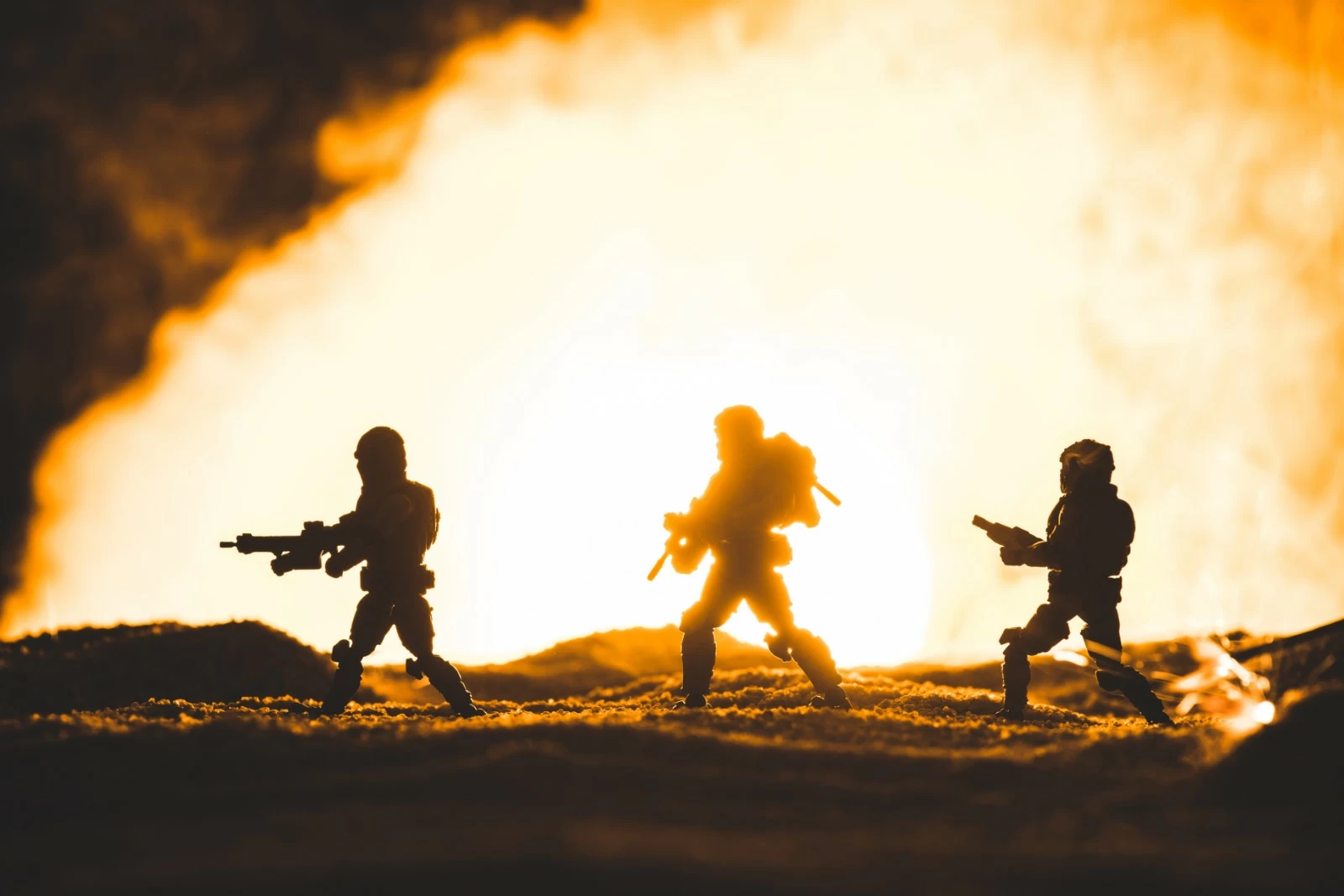
In modern warfare, battles are increasingly fought on screens, with artificial intelligence creating realistic scenes that blur the line between reality and fiction. As technologies for generating images and videos evolve, deepfakes become sophisticated tools where entire scenes are constructed with intricate details of light, shadow, and motion.
Cities burn without being touched, faces scream without a real existence, and video clips that never occurred are presented as part of a living reality. This level of fabrication keeps the audience in a constant state of confusion, caught between what they see and what they should believe.
Details of the Event
The greatest challenge lies not in the existence of misleading content, but in its rapid spread. With a single click, a fabricated scene can transform into a "narrative" circulated by millions before the truth finds its way to the surface. As these clips accumulate, the public perception of events distorts, intertwining fear with illusion, deepening the state of confusion among the audience.
This transformation redefines the concept of conflict, as confrontations are no longer confined to the battlefield but extend into the minds of the followers. A single scene can disrupt public opinion, shape impressions, and perhaps change stances. In this reality, truth becomes slower than lies and more susceptible to erosion amidst a flood of misleading content.
Background & Context
In recent years, the world has witnessed a remarkable evolution in artificial intelligence technologies, enabling the creation of expertly crafted visual and audio content. These technologies have not only been used in entertainment but have also extended to politics and warfare, leading to new challenges regarding information verification and credibility.
Historically, wars were conducted through conventional weapons, but with the advent of digital media, conflict has taken on new dimensions. The battle is no longer confined to the battlefield; it has moved into the digital realm, where narratives are crafted and rewritten.
Impact & Consequences
This new phenomenon requires a higher digital awareness and greater capabilities for information verification. The responsibility of social media platforms in curbing the spread of fabricated content becomes paramount. The battle is no longer just on the ground but for awareness itself, where narratives are shaped and reality is sometimes rewritten without truth.
The impact of this phenomenon extends to various aspects of life, as misleading information can destabilize social and political stability and alter public attitudes towards specific issues. Therefore, addressing this phenomenon requires joint efforts from governments and communities.
Regional Significance
In the Arab region, this shift poses a significant challenge, as many countries suffer from internal and external conflicts. The use of artificial intelligence in producing misleading content can exacerbate these conflicts and negatively affect peace and stability efforts.
Thus, enhancing digital awareness and developing information verification skills are priorities in confronting this challenge. There must be clear strategies for dealing with misleading information, especially in times of crisis.
In conclusion, artificial intelligence emerges as a double-edged sword, capable of having both positive and negative effects. Therefore, awareness and digital education are the means to face the challenges posed by this technology in times of war.