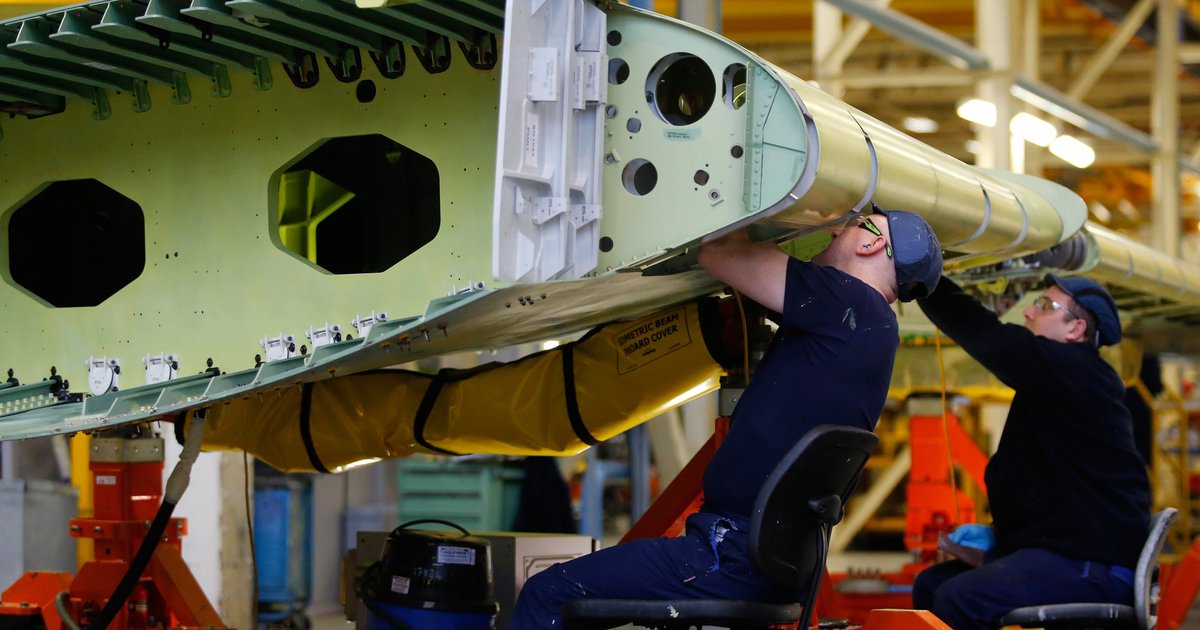
Airbus reported a sharp decline in its adjusted operating profit during the first quarter of the current year, recording €300 million, which represents a 52% decrease compared to the same period last year. This downturn occurs at a time when the company has experienced a slowdown in the delivery of its commercial aircraft, adversely affecting its financial performance.
Airbus's sales in the first quarter amounted to €12.65 billion, while analysts had forecasted sales of €12.58 billion. The company also recorded earnings per share of 74 cents, surpassing analysts' expectations of 44 cents.
Details of the Event
Despite the weak financial performance, Airbus confirmed that it delivered 114 commercial aircraft during the first quarter, compared to 136 aircraft in the same period last year. The company indicated that it still aims to deliver 870 commercial aircraft by 2026, which is lower than previous forecasts of around 880 aircraft, due to a shortage of engines stemming from issues with one of its suppliers, Pratt & Whitney.
Airbus CEO Guillaume Faury stated that the company is closely monitoring any potential impact from the ongoing conflict in the Middle East, without providing further details. He confirmed that Airbus continues to ramp up production according to its plan, despite the shortage of Pratt & Whitney engines.
Background & Context
Airbus is considered one of the largest aircraft manufacturers in the world and has witnessed significant growth in demand for its aircraft in recent years, especially amid the crises faced by its main competitor, Boeing, due to design and production issues with its best-selling 737 MAX. However, the beginning of 2023 has seen a shift in investor sentiment towards Airbus, as Boeing has started to recover from its crises.
Last week, Boeing announced a lower-than-expected loss in the first quarter, experiencing improvements across all its business sectors, including the commercial aircraft unit. This improvement comes at a time when Airbus is struggling with a slowdown in demand for its aircraft.
Impact & Consequences
The decline in Airbus's profits is an indicator of the challenges it faces amid the current global economic conditions, including supply shortages and geopolitical tensions. This situation may affect the company's future strategies and its ability to compete in the global market.
Moreover, the decline in demand for commercial aircraft could lead to negative impacts on the company's supply chain, increasing pressures on Airbus in the future. At the same time, these challenges may present opportunities for other companies like Boeing to strengthen their market position.
Regional Significance
The aviation industry is a vital sector in the Arab region, playing an important role in boosting tourism and trade. Any decline in the performance of major airlines like Airbus could impact investment plans in this sector, necessitating special attention from governments and companies in the region.
In conclusion, Airbus remains in a precarious position that requires it to reassess its strategies to address current challenges, while closely monitoring the impact of regional conflicts on the global aviation market.