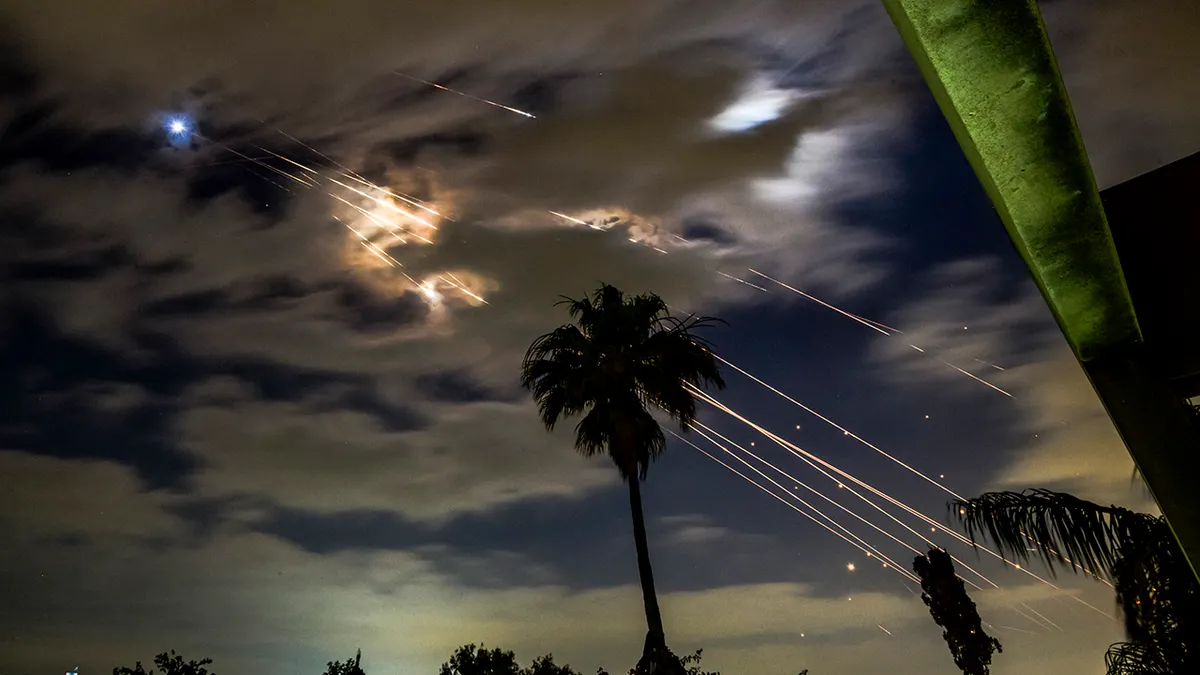
The United States and Israel launched airstrikes early Monday on vital facilities in Iran, targeting the capital Tehran and other cities, leading to material damage and power outages in some areas. These attacks come at a sensitive time, as the region is experiencing escalating tensions.
Official reports indicated that the bombing targeted Mehrabad International Airport, which is considered one of the most important airports in Iran, located west of Tehran. Al Jazeera's correspondent noted that this is the first direct targeting of the airport, following a series of previous attacks that targeted its vicinity. It is worth mentioning that the airport is nearly devoid of air traffic, as flights have been suspended since the beginning of the conflict.
Details of the Incident
In addition to Mehrabad Airport, the airstrikes targeted residential areas in Tehran, resulting in injuries among civilians. A branch of the national bank and a cardboard factory in the southern parts of the city were also bombed. The Iranian Red Crescent published images showing the damage inflicted on citizens as a result of these strikes.
In Alborz Province, the director of the electricity distribution company confirmed the restoration of power after outages caused by the attacks, which affected some areas of the capital. On the other hand, Fars News Agency reported that a petrochemical production unit in the city of Tabriz in the northwest of the country was similarly attacked, noting that the strike did not result in any toxic material leaks.
Background & Context
These airstrikes come amid rising tensions between Iran, the United States, and Israel, with the parties exchanging accusations regarding military activities and interventions in internal affairs. The recent attacks indicate a shift in the attack strategy, now directly targeting vital facilities, which raises the level of tension in the region.
Moreover, attacks on universities, such as the targeting of the physics department at the Iran University of Science and Technology, reflect an escalation in attacks on educational infrastructure, raising concerns about the impact on education and scientific research in the country. Earlier, Isfahan University of Technology was attacked for the second time within a week, increasing anxiety among students and staff.
Impact & Consequences
These airstrikes have a significant impact on the daily lives of Iranian citizens, leading to power outages and the destruction of vital facilities. The military escalation may provoke reactions from the Iranian government, potentially increasing tensions in the region.
The economic and political pressures facing Iran may worsen as a result of these attacks, as the government seeks to strengthen its position against external pressures. Additionally, these events could affect relations between Iran and other countries, especially amid ongoing regional tensions.
Regional Significance
These airstrikes are part of a broader regional conflict between major powers in the Middle East, where Iran plays a pivotal role in many disputes. The military escalation could have indirect effects on neighboring Arab countries, as security and economic conditions in the region may be impacted.
In light of these developments, the situation in the Middle East remains fragile, with increasing fears of a larger escalation that could affect regional stability. It is crucial to closely monitor events, as any new escalation may lead to serious repercussions for security and peace in the region.