Amazon recently announced a significant achievement in network design, having implemented this new technology in its data centers since late last year. The company claims to have substantially increased data speeds while reducing energy consumption, potentially giving it a competitive advantage in the race among companies to build faster cloud systems.
The new technology relies on a "semi-random" design that combines elements of traditional structured networks with the advantages of more random architectures. Random networks have been explored for decades, but no one has successfully scaled this technology until now. Amazon believes it has solved this dilemma.
Event Details
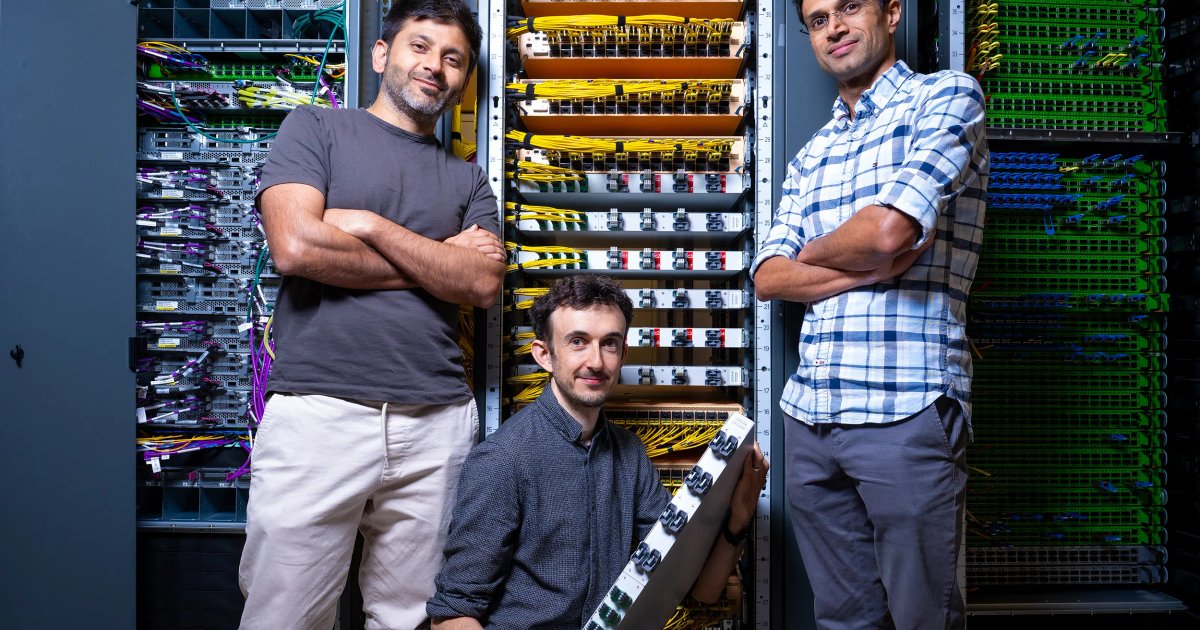
Math Ryder, Vice President of Network Engineering at Amazon Web Services, stated that the use of this technology in the real world is "remarkable." A team of engineers and researchers at Amazon has been working on solving the random networking problem since 2023, designing a new device for data centers called ShuffleBox, which automatically mixes the cables required for this type of network.
In a research paper published last month titled "RNG: Flat Datacenter Networks at Scale," Amazon presented its new network design. RNG stands for "Resilient Network Graphs," which are neither fully structured nor entirely random. Ryder notes that the RNG design has made Amazon's data centers more efficient and flexible.
Background & Context
Since the mid-1980s, communication networks, from telecommunications to data centers, have primarily been designed using a "fat tree" structure, which involves vertical layers of switches and routers. However, this design has shown some limitations, relying on complex cabling and needing improvement.
In 2012, a group of researchers at the University of Illinois introduced a concept known as "Jellyfish," proposing a random network design that could be more efficient and scalable. However, this design also faced new challenges in planning and data routing.
Impact & Consequences
These developments in network design represent an important step toward improving data center efficiency, with estimates indicating that the RNG design uses 69% fewer routers and switches, provides a 33% increase in data flow, and reduces energy consumption by 40%. These improvements could lead to a 27% reduction in operational costs.
The first application of the RNG design was launched in a data center in Dublin in 2024, and the technology has since been expanded to data centers in Germany and Spain. Amazon states that most new data centers are now equipped with the RNG network protocol.
Regional Significance
These innovations in network design are particularly significant for the Arab region, where many countries are striving to enhance their digital infrastructure and expand cloud computing services. These developments could contribute to improving the efficiency of digital services and meeting the growing demand for data in the region.
In conclusion, Amazon's advances in network design represent a crucial step toward a more efficient and sustainable future for data centers, which could positively impact the technology industry worldwide.